

Despite the ruling from the International Court of Justice, Israel persists in bombing Gaza, including the city of Rafah. As Rafah comes under attack at this moment, here’s a comprehensive overview of the situation unfolding.

Today marks the 233rd day of Israel’s genocidal war on Gaza. As of May 26th, at least 35,984 people have been killed, including more than 15,000 children. Additionally, over 80,643 people have been injured, and more than 10,000 are missing.
Since October 7, there have been numerous cruel and inhumane acts carried out by Israel. Hospitals, schools, journalists, doctors, civilians, and armed forces have all been targeted. Tragically, over 33,137 Palestinians have been killed in Gaza, including more than 13,000 children, as of April 6, 2024. The violence has not stopped; now, the destruction is ongoing in Rafah, which is under attack.
What Happened Last Night In Rafah?
Last night in Rafah, Israeli missiles hit a camp for displaced Palestinians, killing more than 50 people and injuring dozens more. The strike targeted tents in a designated safe zone to the west of Rafah city, causing significant casualties. The Wafa news agency reported that many victims were burned alive inside their tents in the Tal as-Sultan area. Although the death toll varies, the Palestine Red Crescent Society (PRCS) estimated 40 deaths, while Reuters reported 35 deaths based on information from Gaza’s Ministry of Health.
Israeli airstrikes in Rafah targeted a Hamas compound using precise ammunition based on specific intelligence, according to the military. The attack happened in the Tel Al-Sultan neighborhood, where thousands had taken refuge from earlier ground offensives. Videos from the scene showed a large explosion and intense fires, indicating severe destruction. This strike occurred two days after the International Court of Justice ordered Israel to halt its military operation in Rafah. Many civilians are still sheltering there, making the situation increasingly dire and urgent for international attention.

International Court Of Justice Ruling
Judges at the top United Nations court have ordered Israel to halt its offensive in the southern Gaza city of Rafah and withdraw from the enclave. This ruling came in a case brought by South Africa, accusing Israel of genocide and citing the “immense risk” to the Palestinian population.
Friday’s decision marked the third time this year that the 15-judge panel has issued preliminary orders aimed at reducing the death toll and alleviating humanitarian suffering in Gaza. Although these orders are legally binding, the court lacks the means to enforce them.
Reading out the ruling, the president of the International Court of Justice (ICJ), Nawaf Salam, stated that the provisional measures ordered by the court in March did not fully address the ongoing situation in Gaza. Conditions have now met the criteria for a new emergency order. The court’s directive mandates Israel to “immediately halt its military offensive, and any other action in the Rafah Governorate, which may inflict on the Palestinian group in Gaza conditions of life that could bring about its physical destruction in whole or in part.” Salam described the humanitarian situation in Rafah as “disastrous.”
The ICJ, also known as the World Court, is the highest UN body for hearing disputes between states. While its rulings are final and binding, they have been ignored in the past. In a significant ruling in January, the court ordered Israel to take all possible measures to prevent genocidal acts in Gaza but stopped short of halting the fighting.
Israel has consistently dismissed the genocide accusations as baseless, asserting that its operations in Gaza are acts of self-defense targeting Hamas fighters, who launched an attack on Israel on October 7.
Why Is Rafah important?
Rafah holds significance as Gaza’s southernmost exit point, bordering Egypt’s Sinai peninsula, facilitating vital access. It stands alongside two other border crossings, Erez and Kerem Shalom, which are currently closed. Erez, in northern Gaza, serves people, while Kerem Shalom, in southern Gaza, handles commercial goods. Following the October 7 attack, Israel shut both Erez and Kerem Shalom, leaving Rafah as the sole operational crossing.
Rafah’s importance has surged as it’s now the exclusive point for humanitarian aid and people’s passage in and out of Gaza. Additionally, it hosts Gaza’s largest refugee camp, sheltering thousands displaced by ongoing violence. Rafah’s strategic location and humanitarian role are vital for delivering medical supplies, food, and water to Gaza.
An estimated 1.5 million people, over half of Gaza’s population, are sheltering with no place to escape from Israel’s offensive, which has devastated much of the urban area. United Nations officials have warned that an attack on Rafah would be catastrophic, with over 600,000 children at risk. Such an assault could also lead to the collapse of the humanitarian aid system that is crucial for Gaza’s survival. Israel’s Western allies have voiced their concerns as well. Rafah, Gaza’s southernmost city bordering Egypt, originally had a population of about 275,000. The United Nations Relief and Works Agency for Palestine Refugees (UNRWA) estimates that 1.4 million people, half of them children, are now seeking refuge there.
Gaza’s Tragic Losses Since October 7
Since October 7, Israel’s war on Gaza has resulted in the deaths of at least 35,984 Palestinians, with up to 80,643 people wounded.
The question of when the conflict will end looms over Gaza, with Rafah now caught in the midst of ongoing violence. As casualties mount and infrastructure crumbles, the toll on civilians continues to rise. International efforts for peace negotiations remain elusive amidst the relentless airstrikes and ground offensives. With each passing day, the situation in Gaza and Rafah grows increasingly dire, leaving many to wonder when the cycle of destruction will finally cease.
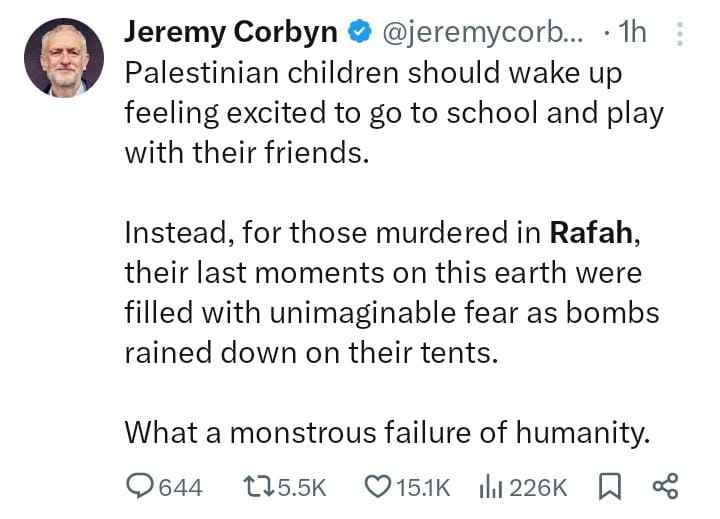
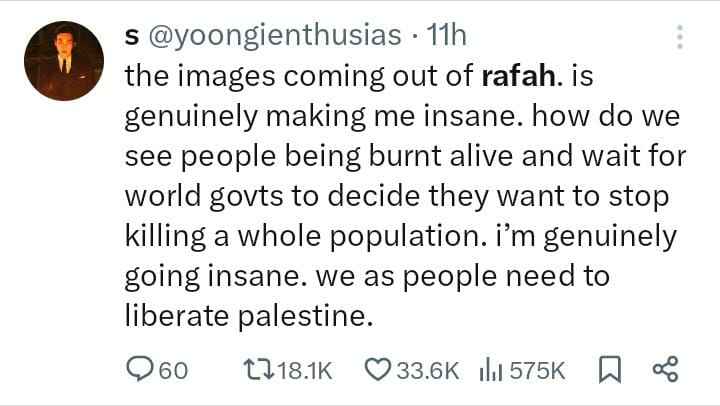
Here’s How The Twitter Is Reacting To This Attack!

Sources: Al Jazeera, Reuters, and BBC.

