


The week in rewind – here’s everything you missed (or couldn’t stop talking about)

1. Neeli Kothi Promises Chemistry and Drama With Talha Chahour and Anmol Baloch

Hum TV’s upcoming drama Neeli Kothi is creating a buzz by bringing together Talha Chahour and Anmol Baloch for the very first time a pairing that has fans excited already. The project is directed by Anjum Shahzad, a name that carries weight in Pakistani television thanks to hits like Abdullahpur Ka Devdas, Pehli Si Mohabbat, and Idiot. With his track record, it’s clear that Neeli Kothi isn’t aiming to be just another ordinary drama.
The script comes from celebrated writer Saima Akram Chaudhary, who is returning after a two-year hiatus. She revealed the project herself on Instagram, instantly delighting her fans. So far, the teasers have kept the story under wraps, though they hint at a fun dynamic between Talha and Anmol. Backed by Moomal Productions, known for quality storytelling, the drama already has viewers curious about what lies behind the name Neeli Kothi.
2. Mohra: Nimra’s Conversation With Her Dad Is Something Every Girl Needs To Have

The father-daughter relationship is incredibly important. We have often heard that if one parent is strict, the other should be softer so that children do not feel suffocated. This was shown clearly in Mohra. Armeen is the mother who wants everything her way, cannot take denial, and is extremely dominating, while Fareed is the father who listens, understands, and allows the children to express what they are holding inside.
When Nimra expressed her wish to marry Dayim, Armeen reacted aggressively, even slapping Nimra, because of the huge status gap between them. What Armeen did was balanced by Fareed’s response after he heard Armeen and Nimra’s point of view.
When Fareed went to Nimra’s room and spoke to her with an open heart, it was the kind of conversation every girl wishes to have with her father. It shows that even if one parent refuses to listen, there will always be the other who listens with understanding and acceptance.
3. Why The Domestic Violence (Prevention and Protection) Bill, 2025 Is a Landmark Step

PPP MNA Sharmila Faruqui has introduced a bill in the National Assembly aimed at creating a structured framework to address domestic violence complaints in Islamabad. The move comes after Sindh passed similar legislation in 2013.
The bill cites rising reports of domestic violence in the federal capital and Pakistan’s obligations as a signatory of the Convention on the Elimination of All Forms of Discrimination Against Women (CEDAW) as reasons for its introduction. Read more here!
4. Dear Bollywood: Stop Making Pakistan the Villain, Try Mumbai’s Underworld Instead
Dear Bollywood, if you’ve run out of scripts, maybe it’s time to look a little closer to home. While your latest spy thriller drops Ranveer Singh into Karachi’s Lyari portrayed as the global epicenter of terrorism—the truth is that your own backyard in Mumbai is overflowing with stories far more cinematic, dangerous, and real. Instead of inventing tales to paint Pakistan in a negative light, why not mine the true underworld dramas of Mumbai? Gang wars, notorious dons, daring cops – these stories are stranger than fiction and already proven hits.
Here are five real-life underworld stories from Mumbai that could easily rival any thriller – no imagination required, check out here!
5. All We Know About The Crimes-Against-Humanity Verdict Against Sheikh Hasina
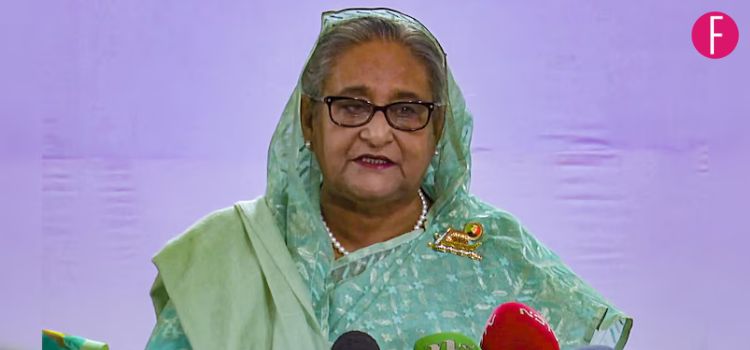
The International Crimes Tribunal-1 (ICT-1) in Dhaka has sentenced former Bangladeshi Prime Minister Sheikh Hasina to death in absentia, concluding one of the most significant and controversial trials in the country’s political history.
The judgment, delivered on 17 November 2025, focuses on the deadly state response to the student-led uprising of 2024, which ultimately resulted in the fall of Hasina’s long-standing government. The tribunal’s 453-page verdict outlines findings about the chain of command within the government, the conduct of security forces, and the nature of violence used against civilians during the unrest.
6. SharPasand: 3 Things I Absolutely Loved

SharPasand isn a perfect mix of everything. It blends suspense and conspiracy with real-life emotional moments, occasionally touches on familiar tropes, but always manages to stay relatable. The drama knows how to balance storytelling with social messaging, and that makes it stand out from the usual fare. Even though I already had an idea of what was coming, the latest episode kept me completely absorbed. The reveal about Fida’s infertility was handled with such subtlety and care that it felt raw and personal.
Before moving on to the good things, one thing that could have been handled better was the medical explanation. In an age where many diseases and conditions that couldn’t be treated earlier are now manageable, the doctor’s approach felt rushed, and for a topic as sensitive and complex as infertility, a little more context would have gone a long way. Infertility affects men and women differently, and there are many conditions – some treatable, some not. Even a brief discussion about second opinions or treatment options could have offered hope and guidance to viewers who might be facing similar situations. SharPasand is doing important work by starting this conversation, but a bit more depth here would have made the episode even stronger and more informative.
Read full article here!
7. Balochistan Cracks Down on Child Marriage: Law Holds Everyone Accountable

Balochistan has taken a historic step by passing the Child Marriages Restraint Act 2025, officially setting 18 as the minimum legal age for marriage and introducing some of the toughest penalties Pakistan has ever seen. This move places Balochistan alongside Sindh as one of the provinces taking a firm, uncompromising stand against child marriage — and this time, the law does not stop at punishing parents. It goes after everyone who enables, performs, registers, arranges, or facilitates a child marriage.
For years, child marriage continued because loopholes allowed the people who solemnised the nikah, registered it, or “arranged” it to walk away without consequences. This new Act finally shuts that door. Whether it’s a nikah khawan, a registrar, a union council secretary, or any person involved in planning or promoting the marriage, they can now go straight to court and face serious punishment.
Under the new law, an adult male who contracts a marriage with a minor, or anyone who arranges, performs, promotes, or abets such a marriage, will face 2 to 3 years of rigorous imprisonment and a fine between Rs 100,000 and Rs 200,000. This is not symbolic — it is real jail time. And if the offender refuses or fails to pay the fine, courts can impose an additional three months of imprisonment.
8. 5 Things We Learned from This Week’s Case No. 9 About the Character of the Victim in Rape Trials

This week’s episode of Case No. 9 cut through decades of courtroom misogyny to expose one of the oldest defence strategies in rape trials: attacking the character of the victim. In many cases, when evidence is strong, the defence pivots to the woman herself – her past, her relationships, her body, her morals. The drama didn’t just call this out; it dismantled it using two landmark judgments: Atif Zareef vs. The State (Supreme Court) and Sadaf Aziz vs. The State (Lahore High Court).
Both judges hold that such questions violate Article 14’s guarantee of dignity, Article 4’s protection of body and reputation, and Article 25’s promise of equality before the law.
Since the drama only touched upon these rulings briefly, we took the liberty to dig deeper into both judgments, and what we found is not only powerful but transformative for how rape trials must be conducted.
Read full article here!
That’s all from us for this week – see you again with more stories next week!
Comments 1