

Sudan has been in violent conflict since April 2023, when the Sudanese Armed Forces (SAF) and the Rapid Support Forces (RSF) clashed in a struggle for control over the country.
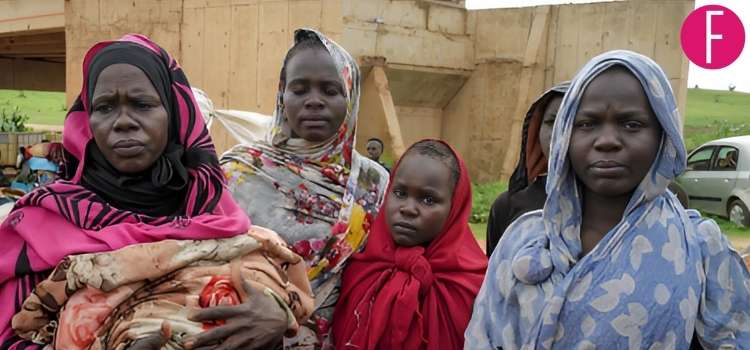
The RSF, led by Mohamed Hamdan Dagalo, known as Hemedti, originated from the Janjaweed militias that were active during the Darfur crisis in the early 2000s. The SAF, under Abdel Fattah al-Burhan, is the country’s official army. What began as a struggle for control over the military quickly spread across Sudan, causing tens of thousands of deaths, displacing more than 12 million people, and collapsing essential services like hospitals, food supplies, and water access.
The Tragedy Of El -Fasher
El-Fasher, the capital of North Darfur, became a tragic symbol of Sudan’s conflict. It had been the last major stronghold of the Sudanese Armed Forces (SAF) in Darfur and endured an 18-month siege, leaving civilians without food, water, or medical care. On October 26, 2025, the Rapid Support Forces (RSF) captured the city, immediately unleashing mass violence. Eyewitness accounts, satellite images, and videos documented executions of civilians, attacks on hospitals, and ethnic-targeted violence against groups such as the Zaghawa, Fur, and Masalit. In one particularly shocking event, at least 460 people were reportedly killed in a maternity hospital.
Since the takeover, large numbers of civilians have fled. The UN’s migration agency reported that more than 36,000 people left the city immediately, while about 177,000 civilians remain trapped with their fate unknown. Satellite imagery and eyewitness reports reveal clusters consistent with bodies, large red stains possibly indicating blood, and videos of RSF fighters executing civilians.
A central figure in these atrocities is RSF brigadier Al‑Fateh Abdullah Idris, nicknamed “Abu Lulu.” Videos show him participating in executions, filming the acts, and boasting of his “kill count,” at one point claiming he may have killed more than 2,000 people. On October 31, 2025, the RSF announced that Abu Lulu and several other fighters had been arrested. They are reportedly under investigation by legal committees for breaches of military conduct, wartime discipline, and international law, including the Geneva Conventions.
While the arrests suggest some form of accountability, rights groups remain skeptical. Many atrocities were filmed and shared by RSF fighters themselves, suggesting the violence was systematic rather than isolated. Satellite imagery shows mass graves, burn scars, and clusters of bodies consistent with house-to-house operations. The RSF framed the arrests as a measure to prevent “violations that offend human dignity” and dismissed claims that these were part of a wider pattern of abuse, portraying the arrests as evidence of internal discipline.
Thousands of civilians fled El-Fasher after the takeover, while many remain trapped without safe access to food, water, or medical care. Reports suggest at least 2,000 civilians were killed in the days following the RSF’s entry. The city’s fall marks a critical moment: the RSF now claims control over all five state capitals in Darfur, consolidating power in the west while leaving the SAF in central and eastern Sudan. For civilians, this signals a shift from open battles to occupation, terror tactics, and humanitarian collapse.
The arrest of Abu Lulu is a headline, but it cannot be considered proof of justice. The victims remain in the streets, survivors are still fleeing, and much work remains: documenting crimes, supporting survivors, and demanding accountability. Without urgent international attention, Sudan faces a growing humanitarian disaster and the risk of long-term division.
This is a developing story.
Sources: Al Jazeera, Arab News, and Middle East Monitor.

