

Indonesia is picking up the pieces after a powerful 7.7-magnitude earthquake struck off the coast of Flores Island, killing at least 53 people and leaving more than 130 injured. Homes have collapsed, roads have been buried under landslides and thousands of residents have been forced to leave their homes as rescuers continue searching for survivors.
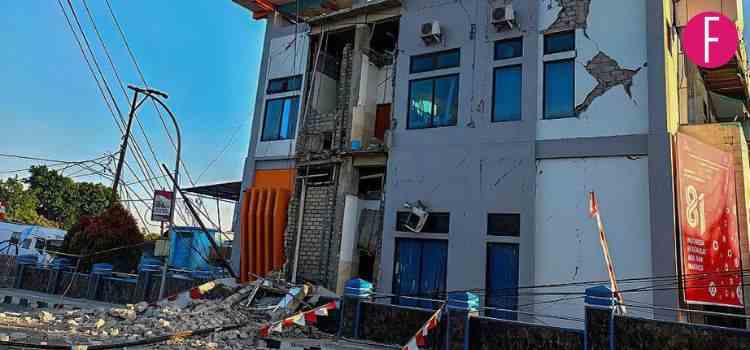
The earthquake hit early Saturday morning and was followed by hundreds of aftershocks, keeping already frightened residents away from damaged buildings. For communities across Flores, the disaster has meant not only loss of life, but also damaged hospitals, schools, roads and essential infrastructure.
A 7.7-magnitude earthquake hits Flores
The earthquake struck the Flores region in East Nusa Tenggara at around 5am local time on Saturday. According to the US Geological Survey, it had a magnitude of 7.7 and occurred at a shallow depth of roughly 10km beneath the surface.
The shallow quake sent powerful tremors across Flores, with residents describing buildings shaking violently and belongings being thrown from shelves. In some areas, people ran from their homes in panic as the ground continued to move.
A tsunami warning was issued following the earthquake, prompting thousands of people in coastal areas to move towards safer ground. The warning was lifted several hours later after no major tsunami was detected, although some coastal areas recorded waves.
The main earthquake was followed by hundreds of aftershocks, with the strongest measuring above magnitude 6. These continued to worry residents, many of whom chose to sleep outside rather than risk being trapped inside damaged buildings.
At least 53 people have died
The death toll has continued to rise as emergency teams reach more affected areas.
At least 53 people have been killed, while more than 130 have suffered injuries. Manggarai and East Manggarai have reported some of the highest numbers of casualties, with deaths also recorded in Sikka, Ende, Nagekeo and West Manggarai. Some victims were killed when buildings collapsed around them, including people who were asleep when the earthquake struck.
The damage is extensive. More than 900 homes have been destroyed or badly damaged, while hundreds of other structures, including schools, healthcare facilities, churches and government buildings, have also been affected. Ruteng Regional Hospital was among the facilities damaged, forcing some patients to be treated in temporary medical areas outside the building.
Thousands have been forced from their homes
For many survivors, escaping the earthquake was only the beginning.
Around 5,000 people have been displaced, with residents moving into temporary shelters or staying outdoors because they are afraid to return to homes that may no longer be structurally safe. In some communities, people have also moved towards higher ground following the tsunami warning and continued to remain cautious because of the aftershocks.
The situation is particularly difficult in Flores because of its mountainous landscape. Landslides have blocked sections of the Trans-Flores Highway, cutting off roads connecting different communities and making it harder for emergency teams to reach villages.
Power and telecommunications have also been disrupted in parts of the affected region, adding another challenge to an already difficult rescue operation.
Rescuers continue searching through rubble
Search and rescue teams have been working through collapsed buildings and clearing landslides in an effort to reach people who may still be trapped.
Manggarai, East Manggarai and Nagekeo are among the areas receiving particular attention, with rescuers searching damaged homes and buildings while working to reopen routes to isolated communities.
The response is not only about finding survivors. Authorities are also trying to get basic necessities to thousands of displaced people. Rice, ready-to-eat food, drinking water, blankets and medicines are being distributed, while temporary shelters and emergency medical facilities are being arranged. Restoring electricity and communication services is another priority, particularly for communities that have been cut off by damaged roads and landslides.
For people whose homes are no longer safe, the immediate need is simple: somewhere to sleep, food to eat and access to medical care.
Another powerful earthquake hits Indonesia
While Flores was dealing with the aftermath, another powerful earthquake struck Indonesia.
A 6.9-magnitude earthquake hit near Pematangsiantar in North Sumatra later on Saturday, thousands of kilometres away from Flores.
There were no immediate reports of deaths or major damage from the second earthquake, and no tsunami warning was issued. Still, the timing of the two powerful earthquakes added to the fear in a country that is no stranger to seismic activity.
Sources: BBC, Turkiye Today, Japan Today, France 24

