

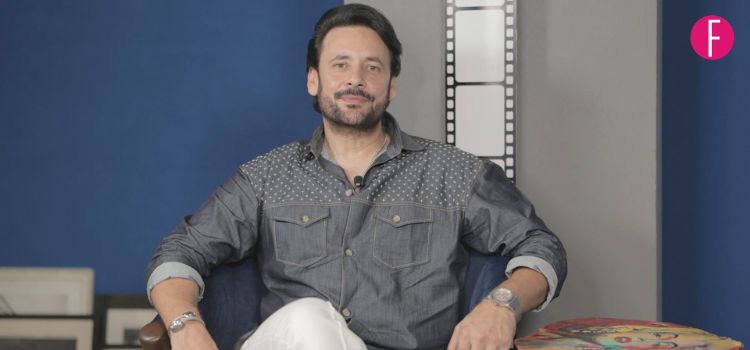
We have Tipu Sharif with us today in GupShup with FUCHSIA, where he talks about his journey, his experiences working in dramas, and the roles that have shaped his career.
Leading Roles
Tipu Sharif’s reflections on his career don’t romanticise the idea of leading roles as a destination, but instead question how the industry defines importance itself. He speaks openly about early misjudgements in his career, including decisions where he turned down opportunities without fully understanding their long-term weight, something that later became clearer when he saw those projects grow in other hands. In his own words, mentorship was limited, and instinct often replaced strategy, especially in the early years when the industry itself felt new and unstructured.
What stands out in his journey is not the absence of opportunity, but the shifting nature of roles — from leads to supporting characters, from brief appearances to deeply impactful moments that often arrived when least expected. He describes how actors are frequently positioned within fixed labels, as heroes, villains, brothers, or guest appearances, and how breaking out of those labels requires both patience and reinvention rather than constant visibility. Yet he does not frame this as loss, but as evolution, where depth often matters more than duration, and where even smaller roles can reshape audience perception if the performance carries honesty.
New Opportunities in 2026
Looking at his recent trajectory, Tipu Sharif’s career reflects the unpredictable rhythm of return that defines much of the entertainment industry. After years marked by inconsistent work, personal challenges, health setbacks, and periods of silence, he describes phases where acting opportunities felt distant, almost as if the industry had moved on. Yet, as he narrates it, those pauses were never final, only temporary shifts before new doors opened again.
By 2025 and moving into 2026, he finds himself stepping back into projects that reintroduce him in varied roles — from father figures to layered character parts and impactful appearances that carry narrative weight. These opportunities often arrive through trust built over years rather than sudden breakthroughs, reflecting how relationships and reputation continue to shape casting even in a rapidly changing media landscape. At the same time, he acknowledges how visibility, social media presence, and perception now play a stronger role in shaping opportunities than before, making the industry both more competitive and more fluid than ever.
Making the World a Better Place
Beyond acting, Tipu Sharif’s reflections often return to a more philosophical place, where personal experience meets a broader sense of responsibility toward the world. He speaks about life not as a straight path of control, but as something shaped by setbacks, learning, and constant recalibration. From career failures to personal losses, including the passing of his adopted mother, he describes moments that forced him to rethink not only his profession but his place within the world itself.
There is a recurring idea in his narrative that the desire to “fix the world” often comes from within, but reality gradually teaches acceptance rather than control. Across his experiences, he keeps returning to the importance of humility, learning, and self-awareness, suggesting that real change begins with oneself rather than external correction, and that comparison and ego only blur growth rather than support it.
Love for Animals
His relationship with animals, as he tells it, began in contrast to how it stands today. He admits that he was once afraid of dogs and indifferent in his early years, seeing them more through fear than familiarity. That changed after a deeply personal loss in 2012, when he lost his adopted mother, an event that reshaped his emotional landscape and quietly shifted how he began to see vulnerability around him.
Shortly after, abandoned kittens outside his home became an unexpected turning point. What started as hesitation turned into responsibility, as he began feeding and caring for them, learning through experience how human actions often decide the fate of stray animals. Over time, fear dissolved into comfort, and that comfort became advocacy, where speaking against cruelty and neglect was no longer a choice but a natural extension of what he had begun to feel and observe.
Tipu Sharif, a well-known name in the Pakistani drama industry, has been captivating audiences with his performances for more than a decade. Over the years, he has taken on a variety of roles, bringing depth and emotion to every character he portrays. With a career filled with memorable dramas and diverse performances, he has established himself as a respected actor.
This article is an excerpt from the YouTube interview.
Want to hear more? Stay tuned for full conversation coming out soon on FUCHSIA’s YouTube channel!

