

Iran has launched a major missile strike against Israel, marking the second such attack this year. According to the Israeli military, Iran fired approximately 180 missiles toward Israeli territory, surpassing the scale of April’s assault, which involved at least 110 projectiles.
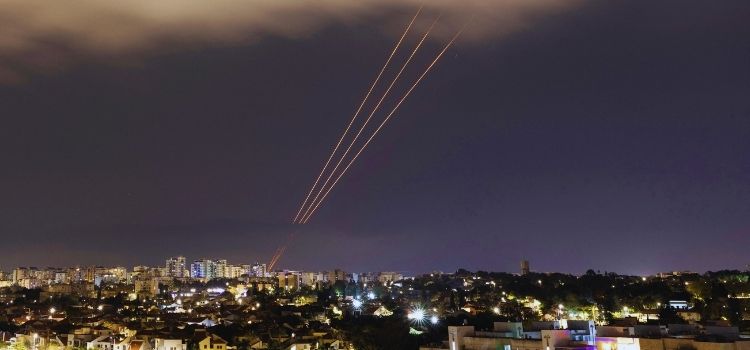
Footage aired on Israeli television captured some of these missiles flying over the Tel Aviv area at around 19:45 local time. While the Israeli army confirmed that several of the missiles made an impact, they highlighted that their defense systems intercepted many. The military noted that the attacks appear to have ended for now, though the overall extent of the damage is still being assessed.
The Islamic Revolutionary Guard Corps (IRGC) of Iran stated that the strikes were a response to Israel’s recent killing of key figures, including Hezbollah leader Hassan Nasrallah and IRGC commander Abbas Nilforoshan in Beirut. They also referenced the killing of Hamas leader Ismail Haniyeh in Tehran back in July, an act widely believed to have been carried out by Israel, though not officially acknowledged.
Iranian state media reported that the missiles targeted three Israeli military bases, claiming an 80% success rate in hitting their intended targets.
Israel’s Defense Forces (IDF) spokesperson, Rear Admiral Daniel Haggari, described the attack as “serious” and warned of repercussions. He emphasized that Israel remains on high alert and will respond at a time and place of its choosing. Similarly, U.S. Defense Secretary Lloyd Austin issued a stern warning, stating that there would be “severe consequences” for Iran if it continued its aggression towards Israel.
In response to these warnings, the IRGC threatened that any Israeli retaliation would be met with an even harsher and more destructive response from Iran.
Over the past two weeks, Israeli strikes in Lebanon have resulted in the deaths of over 1,000 individuals, while a reported ground operation that commenced overnight on Tuesday has heightened concerns about a potential regional war. Additionally, at least 45,000 Palestinians have lost their lives during this period.
As tensions in the Middle East escalate to dangerous new heights, the specter of an all-out regional war looms larger than ever. The recent exchange of missile fire between Iran and Israel has brought us perilously close to a point of no return—one that could drag the entire region into a catastrophic conflict, with consequences that would ripple across the world. At this critical juncture, the international community must rally to advocate for an immediate ceasefire and a return to dialogue, before the flames of war engulf us all.
Source: Al Jazeera, Middle Eastern Eye

