

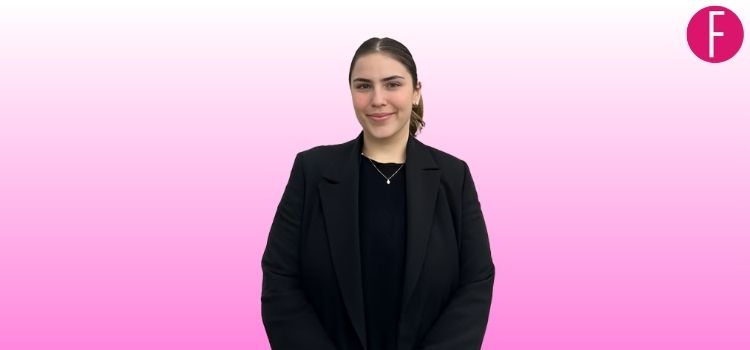
Mahnoor Omer, a Lahore-based lawyer, is advocating for menstrual health equity in Pakistan by calling for tax-free access to sanitary products. Read on to learn more.
In Pakistan, menstrual health remains both a taboo and a financial burden. Sanitary pads, a basic necessity for menstrual hygiene, are taxed at rates that treat them as luxury goods rather than essential health items. Under the Sales Tax Act of 1990, locally manufactured sanitary pads are subject to an 18 percent sales tax, while imported pads and their raw materials face an additional 25 percent customs duty. When combined with other regulatory and local taxes, this creates an effective tax burden of approximately 40 percent, according to UNICEF Pakistan’s 2023 Policy Brief on Menstrual Health and Hygiene (MHH) Tax Reforms.
In a country where the per capita monthly income is around $120, and only 12 percent of women use commercially produced sanitary products, such taxation disproportionately impacts women, particularly those from low-income and rural communities.
The Legal Challenge: Menstruation as a Constitutional Issue
In September 2024, Mahnoor Omer, a lawyer and women’s rights activist, filed a petition before the Lahore High Court’s Rawalpindi Bench, challenging what she and many others describe as a “period tax.” The petition argues that the taxation of menstrual products is discriminatory, as it targets women for a biological process over which they have no control.
It invokes key constitutional provisions — Articles 9, 14, 25, and 38 — which collectively guarantee equality before the law, protection of human dignity, and the promotion of social and economic well-being. By taxing menstrual hygiene products as luxury items, the state, the petition contends, violates these guarantees and perpetuates gender-based inequality. The case thus reframes menstrual health not as a private or social matter, but as a constitutional and human rights concern requiring state intervention.
Economic Impact: The Cost of Menstruatio
The financial implications of these taxes are severe. A standard pack of ten sanitary pads in Pakistan costs approximately Rs. 450 ($1.60). For many families, particularly in rural areas, this represents the cost of a meal for four people. Eliminating or reducing the current 40 percent tax could make these essential products significantly more affordable, enabling more women to access safe menstrual hygiene options.
UNICEF’s policy brief estimates that the removal of taxes on raw materials and finished products could lower retail prices by up to 22 percent, improving accessibility and reducing health risks associated with poor menstrual hygiene. The high cost of pads contributes directly to the widespread reliance on unsafe alternatives, deepening gendered economic inequality and limiting women’s mobility and participation in public life.
Health and Social Consequences of Period Poverty
Menstrual health is intrinsically linked to women’s dignity, health, and social participation. Period poverty — defined as the lack of access to adequate menstrual hygiene products, education, and sanitation facilities — remains a pervasive issue in Pakistan. The UNICEF brief highlights that one in five girls in Pakistan misses school because of her period, leading to an average loss of one year of education over her academic life.
Inadequate menstrual hygiene practices increase the risk of urinary tract infections, toxic shock syndrome, and reproductive health complications. This lack of access also limits women’s workforce participation and overall productivity, reinforcing existing gender disparities in education and employment. When women are unable to manage menstruation safely and with dignity, it becomes not only a health issue but a barrier to gender equality and economic empowerment.
Menstruation in Crisis: Lessons from the 2022 Floods
The issue of menstrual health was further exposed during Pakistan’s 2022 floods, which displaced approximately 8 million women and left them without access to basic menstrual products. According to field studies in Sindh’s flood-affected districts, many women resorted to using plastic bags, rags, leaves, and newspapers during menstruation. These unhygienic alternatives increase the risk of infections and compromise women’s dignity.
Despite over $9 billion in international aid being pledged for relief efforts, menstrual hygiene was largely overlooked in distribution plans, reflecting deep-rooted stigma and policy neglect. This crisis revealed that menstrual hygiene management (MHM) must be integrated into disaster preparedness and humanitarian response frameworks — as a matter of both public health and gender equality.
Global Reforms: A Comparative Perspective
Globally, there has been a clear movement toward eliminating taxes on menstrual products as a means to promote gender equality and health equity. Kenya became the first country to abolish VAT on sanitary products in 2004, followed by Canada (2015), Australia (2019), and India (2018), which removed its 12 percent GST on sanitary pads after widespread advocacy. Scotland went even further, making menstrual products free for all residents, while countries like Rwanda, South Africa, and New Zealand have introduced policies to distribute pads in schools.
These reforms demonstrate that menstrual health is increasingly being treated as a matter of human rights and gender-responsive governance rather than consumer choice. Pakistan, however, continues to treat sanitary products as non-essential luxury goods, placing it behind regional and global counterparts in recognizing menstrual equity as a development priority.
Policy Recommendations: Reforming the Tax Regime
The UNICEF Policy Brief (2023) provides clear and actionable recommendations to address this issue. It calls for designating locally manufactured sanitary napkins as “essential items” under the Sixth Schedule of the Sales Tax Act, 1990, which would make them exempt from sales tax.
It also recommends adding key raw materials such as SAP paper to the Eighth Schedule to make them eligible for reduced tax rates and input tax adjustments. SAP paper, which constitutes roughly 26 percent of the total product cost, currently faces the highest sales tax rate of 25 percent, significantly inflating production costs.
Additionally, UNICEF suggests introducing supportive fiscal measures to strengthen local production — including reducing import duties on manufacturing machinery, providing low-interest loans for small and medium enterprises (SMEs), and promoting market competition to lower prices and improve accessibility. Such reforms would not only reduce the cost of menstrual products but also stimulate local industry, generate employment, and promote women’s economic inclusion.
The taxation of sanitary pads effectively penalizes women for a natural biological process, reinforcing gender-based disparities in health, education, and economic participation. Menstrual health is neither a private concern nor a luxury — it is a public health priority and a human rights obligation.
If Pakistan is to uphold its commitments under the Constitution and the Convention on the Elimination of All Forms of Discrimination Against Women (CEDAW), menstrual products must be recognized as essential goods and exempted from taxation. Addressing period poverty through tax reforms, menstrual education, and improved sanitation is not only an economic necessity but a moral imperative.
By removing the financial barriers to menstrual health, Pakistan can take a significant step toward gender equality, dignity, and social justice — ensuring that no woman is taxed simply for being a woman.
Sources: Al Jazeera, Dawn, UNICEF


Comments 1