

When a Kohistan glacier returned a man lost 28 years ago, it wasn’t just a tragedy remembered – it was climate change confronting Pakistan, up close
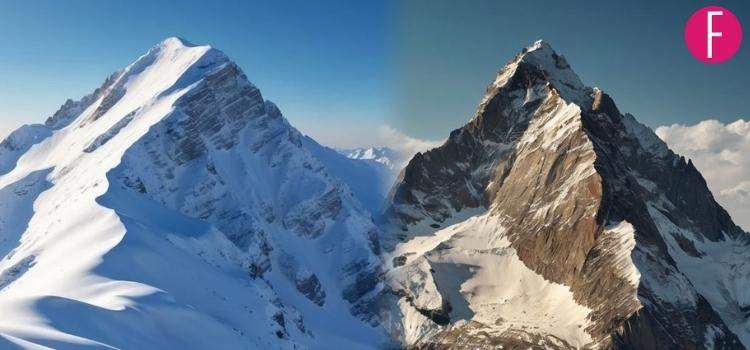
Naseeruddin went missing in the frozen folds of Kohistan’s Lady Valley in 1997, just a man taking a treacherous shortcut home through ice and silence. His body was found this week, perfectly preserved in the same glacier that swallowed him nearly three decades ago. Clothes intact. Skin frozen stiff in time. As if he never left. It wasn’t science or police work that brought him back – it was the glacier melting. And the glacier is melting fast.
Pakistan’s mountains are giving up their secrets. And not just stories of missing men. As glaciers retreat, what lies beneath isn’t just memory, it’s danger. This isn’t fiction. It’s climate change unzipping the north of Pakistan, one thaw at a time.
A Country on Fire and Under Water At the Same Time
By now it’s no secret: Pakistan is highly prone to climate change. It’s been ranked as the 5th most vulnerable country.
By July 2025, temperatures across Pakistan reached new and punishing extremes. Parts of southern Punjab and interior Sindh clocked in at over 50°C, breaking records set just a year before. Heatwaves struck in waves, not days. Cities like Lahore saw extreme heat events lasting more than a week, while Karachi grappled with high humidity that pushed the heat index to lethal levels.
But as the south baked, the north unraveled. In July, a flash flood tore through Babusar Top, the very place tourists visit to beat the heat. A sudden glacial lake outburst (GLOF) had sent thousands of cubic meters of water surging down in minutes, sweeping away roads, homes, and lives. These aren’t isolated events. According to the Pakistan Meteorological Department, the number of GLOF events has more than doubled in the past decade. Over 3,000 glacial lakes have formed in the northern regions, and more than thirty are now considered highly dangerous.
This summer’s monsoon season added fuel to the fire. Or, rather, water. Inconsistent and erratic, it brought sudden cloudbursts and hailstorms to some areas while skipping others entirely. A single night’s rainfall in Balochistan flooded roads in Quetta. In KP, entire villages reported landslides triggered by unseasonal rain. Heavy rainfall in the capital have swept away as much as lives. This is the relaity. It’s a pattern now: too much water where the land can’t hold it, and none where it’s needed most.
What’s Melting Up North Isn’t Staying There
The north is melting and that has consequences far beyond Gilgit or Skardu. Glaciers in the Hindu Kush, Karakoram, and Himalayan ranges, often referred to as the “Third Pole” because of their immense frozen reserves, are Pakistan’s lifeline. They feed the Indus River, are the backbone of our agriculture, drinking water, and energy supply. But as these glaciers melt faster and earlier in the year, the timing and volume of river flows are shifting. Too much water during spring, not enough during late summer – a nightmare for farmers already dealing with erratic weather and rising input costs.
And the worst part? Scientists now warn that Pakistan could lose up to 80% of its glacier volume by the end of this century if current emissions continue. It’s not just a rural problem. Urban Pakistan depends on that water too – and with more than 220 million people, we can’t afford to run dry.
Climate Policy: Progress on Paper, But the Heat Is Real
Pakistan isn’t blind to these threats. In fact, it has one of the most detailed climate frameworks in the region. The National Climate Change Policy (2012), updated Nationally Determined Contributions (NDCs) in 2021, and the Pakistan Climate Change Act of 2017 all reflect a country trying to respond, trying to prepare.
The 2021 NDC commits to reducing projected greenhouse gas emissions by 50% by 2030, with 15% to be achieved using domestic resources and the rest dependent on international financial support. The REDD+ initiative, the establishment of the Climate Change Authority and Climate Council, and efforts to expand green cover are part of this effort.
But policies don’t cool temperatures. They don’t unclog storm drains or rebuild roads in the wake of every flash flood. The reality on the ground is a lot more fragile. Financial constraints choke the transition to renewable energy. Inter-ministerial coordination remains weak. And while mitigation is discussed, adaptation, especially in communities already facing the worst, is still often an afterthought.
Climate Financing and Global Responsibility
Pakistan’s climate crisis isn’t simply an internal challenge, it’s a glaring test of global climate justice. We contribute less than 1% of global emissions, yet we endure some of the worst consequences of climate chaos. So when world leaders rolled out the New Collective Quantified Goal (NCQG) at COP29 in Baku, pledging to raise climate finance to $300 billion annually by 2035, it was both a win and a letdown. The aim is to mobilize that figure across public, private, bilateral, and multilateral sources, and to build toward a total of $1.3 trillion per year but not a single dollar is flowing today. Pakistan’s loss from 2022 floods alone topped $16 billion, so the gap between talk and action is crushing. Without real and timely support, we remain stuck, scrambling to rebuild instead of building resilience.
There was some movement: the Loss and Damage Fund, agreed in earlier COPs, was finally activated at COP29 and is set to start financing in 2025. Canada, the UAE, and others have signaled interest, but pledges remain modest. Australia, for example, offered $50 million, enough to be among the top donors, but nowhere near what’s needed to tackle repeated climate disasters. Multilateral development banks also pledged increased climate lending, and there’s new momentum around private sector investment, but in the face of a global finance need that experts peg at $8.5 trillion per year by 2030, it’s still a drop in the ocean. The truth is obvious: until the big emitters step up their investments -not just promise them – the climate crisis will remain both urgent and unaddressed.
What Climate Change Feels Like in Pakistan
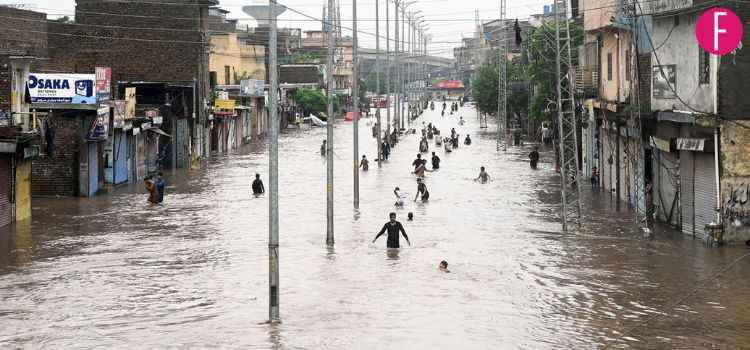
It feels like mango crops coming late and shriveling early. It feels like Lahore’s air growing thicker and deadlier with each passing winter. It feels like children in Jacobabad unable to go to school because classrooms have turned into real-life ovens. And yet, it’s also met with a kind of stubborn resilience. Communities in Chitral are building early-warning systems. Civil society groups are training women in flood-prone areas on disaster preparedness. Farmers are experimenting with climate-resilient seeds. But all of this needs scale, funding, and most importantly, urgency.
And the urgency is visible not just in melting mountains, but in the very air we breathe and the water we drink.
In Pakistan, the climate crisis is not just an environmental issue, it’s also a public health emergency. Rapid urbanization, coupled with unregulated industrial activity and vehicle emissions, has created a toxic mix in the air that people breathe. Cities like Lahore and Faisalabad have recorded air quality levels so hazardous that experts compare them to smoking dozens of cigarettes a day. And this pollution doesn’t just choke the lungs – it cuts lives short, with studies estimating that the average Pakistani loses five years of life expectancy due to air pollution alone. The impacts are particularly brutal on children, the elderly, and low-income households that rely on biomass fuels for cooking and heating.
Meanwhile, Pakistan’s water insecurity is reaching crisis levels, threatening millions with disease, displacement, and deepening poverty. Over 60% of the population lacks access to safe drinking water, and climate-driven disruptions are only making the situation worse. Erratic rainfall, glacial retreat, and groundwater over-extraction have left both urban and rural communities scrambling for solutions. Waterborne diseases surge after every flood, and in dry seasons, entire villages compete for shrinking supplies. The failure to invest in water storage, filtration, and equitable access has turned a natural resource into a looming national emergency, one that Pakistan cannot afford to ignore.
The story of Naseeruddin isn’t just a haunting reminder of the past, it’s a grim preview of the future. The same glacier that preserved him for 28 years is now melting at a pace our systems are not ready for. What else lies buried in the ice – forgotten villages, flood triggers, ecological time bombs? Pakistan’s north is unraveling under the weight of a warming world, and the country is being forced to confront the price of inaction. These aren’t isolated events, they are chapters in a larger climate crisis that is already here, already personal, already devastating.
What Pakistan needs now is not just shock, but strategy. Climate resilience can’t be a talking point – it must be and should be a policy priority. From early warning systems in flood-prone valleys to glacier monitoring, water storage solutions, and climate-smart agriculture in the plains – every level of governance must move from reactive to proactive. The climate emergency is not a far-off threat. It’s in our rivers, our crops, our lungs, and now, chillingly, in the bodies returned by the ice.
Sources: Earth, Research Gate, Climate Change Performing Index, UNICEF, Dawn, Tribune, SCP, UN Habitat, NDMA


Comments 1