

Heavy rains and dam releases have left Punjab and other regions flooded, exposing the risks of a suspended water-sharing framework.
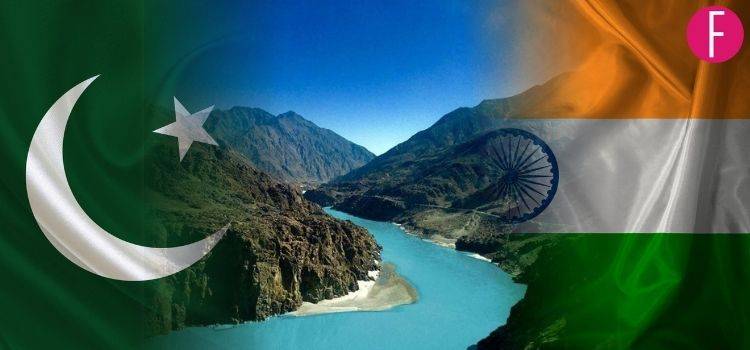
Pakistan is once again facing devastating floods, with Punjab province on exceptionally high alert after India released water from its dams. The Ravi River is already running at dangerously high levels, and evacuations are underway in several districts. Authorities have moved over 150,000 people to safer ground, while army troops are assisting in rescue and relief operations. Villages near the Ravi, Sutlej, and Chenab are particularly vulnerable, with the next 48 hours described as critical.
The Indus Waters Treaty (IWT), signed in 1960 with World Bank mediation, divides the six major rivers of the Indus basin between the two countries. India was given control of the eastern rivers, Ravi, Beas, Sutlej, while Pakistan was guaranteed rights to the western rivers, Indus, Jhelum, Chenab. India is allowed limited use of the western rivers for hydropower and irrigation, provided it does not significantly alter flows. Earlier this year, India declared the treaty “in abeyance” after the Pahalgam attack, but the current water release is not linked to that decision.
Every monsoon season, once Indian reservoirs reach capacity, excess water has to be discharged, and much of it flows downstream into Pakistan. What turns these flows into disasters is Pakistan’s lack of sufficient reservoirs and storage capacity, leaving millions vulnerable each year. At present, Kartarpur Sahib, Sialkot, and surrounding areas are already flooded as the Ravi swells beyond safe levels.
Crucially, the treaty also created a permanent Indus Waters Commission, tasked with data sharing, dispute resolution, and coordination during floods. This is the mechanism meant to ensure that both countries could manage river flows without harming each other. But earlier this year, following the Pahalgam attack that killed 26 tourists, India declared the treaty “in abeyance.” Since then, official water communication has been bypassed, with New Delhi insisting that flood alerts are shared only on “humanitarian grounds,” not as a treaty obligation.
This distinction matters. When India opens its dams – something it has to do every year once reservoirs are full – the water surges into Pakistan with little warning. In normal times, the IWT framework would regulate this: upstream and downstream authorities could coordinate, giving Pakistan critical time to prepare. With the treaty suspended, Pakistan is left scrambling, managing sudden torrents without timely data. Officials here warn that this not only undermines water security but risks setting a “new normal” where India chooses how and when to share information outside the treaty framework.
The humanitarian impact is already severe. Since late June, more than 800 people have died in floods across Pakistan. Punjab has reported over a hundred deaths, Khyber Pakhtunkhwa has suffered cloudbursts and flash floods, while the north has seen landslides triggered by glacial melt. In Buner, more than 400 people died in a single flood event, and Karachi has been submerged after days of unrelenting rain. Across the border, Indian-administered Kashmir and Punjab are also struggling, with dozens of lives lost, showing this is a shared regional crisis.
The IWT was not designed only to divide water, but to create predictability and stability, so farmers could sow crops without fear, so floods could be managed collectively, and so communities along both banks could feel secure. Its suspension leaves a dangerous vacuum at a time when the climate crisis is amplifying monsoons year after year. Without a binding framework, floods will only worsen in both countries, and cooperation – already fragile – risks disappearing altogether.
Sources: World Bank, TRT Global, Reuters, Al Jazeera, AP News,


Comments 1