

They drink matcha, carry tote bags, and play Cigarettes After Sex – but what’s really behind the rise of the performative male?
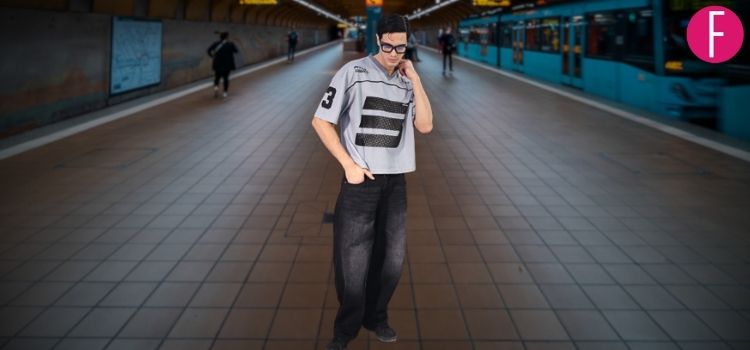
Scroll through Instagram long enough and you’ll find yourself nostalgic for a time when men seemed to have a kind of effortless presence. Think young Leonardo DiCaprio with his scruffy hair and untouchable cool, or Johnny Depp in the ‘90s before the chaos – stylish, magnetic, a little dangerous. Fast forward to today, and you’re left asking – what happened? Why does it feel like men of this age are trying too hard, yet still missing something?
Well, meet the “performative male.”
The Performative Male Starter Pack
You know him. He’s on every dating app, every social feed, every second coffee shop. His profile picture? Candidly staged with a dog (never his), or worse, a baby (definitely not his – hence the classic “not my kid” disclaimer in the bio). His tote bag? Straight from an indie bookstore, because how else will you know he reads? And what’s inside it? Usually a Jane Austin paperback strategically left sticking out.
Online, he shares “feminist” quotes, retweets political hot takes, and captions his photos with cryptic one-liners. His Spotify Wrapped looks like it was curated from Tumblr circa 2014: Phoebe Bridgers, The 1975, Mitski, Clairo. And don’t forget the iced matcha latte – bonus points if he records it for his story, rings flashing on his fingers.
Individually, none of these things are bad. It’s fine to love Indie music or carry a tote bag. But when it’s all packaged together, when it feels like every choice is made for optics rather than genuine interest, the performance shows. It’s not depth; it’s branding.
Why Men Choose the Performance
To be fair, men have always performed. The macho provider, the bad boy rebel, the smooth-talking charmer – all of these are roles, costumes men have worn to impress women. What’s changed is the aesthetic. The hyper-masculine archetype doesn’t cut it anymore. Women don’t want a protector with a cigar and a sports car; they want someone thoughtful, emotionally aware, and safe to be around.
So men adapted. Out went the flex of wealth and muscle, in came the curated “softness.” Now the performance is vulnerability – or at least the image of it. The right book, the right music, the right latte in hand. It’s easier to look feminist than to actually understand feminism. It’s easier to repost political quotes than to live by them. It’s easier to look like you “get it” than to actually do the work.
And yes, sometimes it works. This aesthetic feels safer, less threatening, more approachable. It signals: “I’m not like other guys.” But when everyone’s doing it, the act becomes obvious. You can’t trick women into believing you’re different just by adding Lana Del Rey or Cigarettes After Sex to your playlist.
When the Meme Catches Up
The funny part? The performative male has now become a meme. TikTok trends, lookalike contests, parody videos – all mocking the uniform: the tote bags, the painted nails, the wolf cut, the shoegaze playlist, the iced matcha. What started as an attempt to stand out has become an aesthetic so predictable that it’s a punchline.
The irony is that it leaves genuine guys caught in the crossfire. The ones who actually like Lana, who actually enjoy reading in cafés, who carry tote bags because they’re practical – now they risk being labeled as performative too. Suddenly everything looks like a signal, even when it’s not.
And that’s the cost of turning dating into performance. When every detail feels curated for an audience, authenticity gets lost. Men can’t just be anymore; they have to market themselves. The performative male is less about who he is and more about how he looks being perceived, and women, more than ever, can see through it.
The performative male isn’t new. It’s just the latest chapter in the long history of men dressing up, playing roles, and projecting personas to attract women. But now, with Instagram aesthetics and TikTok trends speeding up the cycle, the act feels more hollow than ever. Because at the end of the day, holding a tote bag doesn’t make you deep. Liking Lana doesn’t make you sensitive. And drinking matcha doesn’t make you safe.
It just makes you another guy trying too hard.
On This Note:
Black Honey, is holding a ‘performative male competition,’ hosted by Shehzad Malik (The Shehzad Show) and Eman Siddiqui (Burger Baachi), so if you have what it takes, then join in!
Sources: Elle, Guardian, Chris Reads, Cosmopolitan

