

Most of us probably think of dinosaurs as something confined to museum exhibits, nature shows, or our childhood dreams – huge beasts that ruled the Earth ages ago and then vanished completely. That’s the story we’ve always heard. Just gone. Done. Extinct.
But now, something found in Thailand is making scientists – and really, everyone else – take a second look at what we thought was settled.
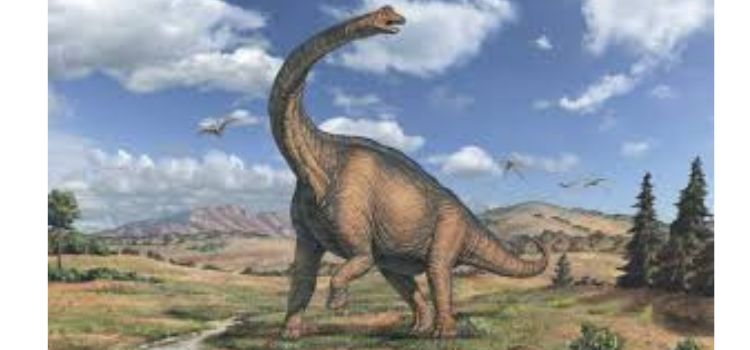
Deep in northeastern Thailand, researchers have dug up fossils of what’s now being called one of the biggest dinosaurs ever found in Southeast Asia. This species, identified as a huge, long-necked plant-eater – a type of sauropod – has been given the impressive name Nagatitan chaiyaphumensis.
And yes, it truly was enormous.
Longer than a line of city buses
Imagine a creature almost 27 meters (that’s nearly 90 feet) long, weighing about 25 to 30 tons. To give you an idea, this dinosaur was longer than a line of city buses and heavier than several elephants put together. It roamed the Earth roughly 113 million years ago, back in the Early Cretaceous period. Back then, our planet was a very different place – much hotter, lusher, and full of ancient creatures.
Unlike in the movies, these fossils weren’t found all at once in some dramatic scene. Instead, they came together slowly, from bones uncovered over many years. These included bits of spine, ribs, pelvis, and even a surprisingly long leg bone, almost 1.8 meters by itself. Putting these pieces together, scientists could picture a huge, slow-moving animal that spent its days peacefully munching on plants like conifers and ferns, wandering through old river environments.
What’s truly exciting about this discovery isn’t just how big it is, but what it means. Researchers say it’s one of the most significant dinosaur finds in that area in many decades – the largest dinosaur known from Southeast Asia, and potentially one of the youngest sauropods ever found there.
And this isn’t just another name to add to the dinosaur roster. It actually helps us fill a big gap in our understanding of how dinosaurs evolved in this part of the world – an area that hasn’t yielded many good, big dinosaur fossils compared to places like South America or Africa.
Scientists think Nagatitan lived in a warm, humid environment with lots of rivers, forests, and open spaces. It shared its home with reptiles that looked like crocodiles, flying pterosaurs, fish, and even big meat-eating dinosaurs. But given its enormous size, adult Nagatitans probably didn’t have much to fear from predators.
Just thinking about that is pretty wild: an animal so huge that the rest of its world basically had to adjust to it.
Of course, no, dinosaurs aren’t actually coming back. There’s no “Jurassic Park” scenario playing out here. But discoveries like this are a good reminder that the Earth still hides secrets deep underground, just waiting to change parts of natural history we thought we had all figured out.
In a way, it’s not about dinosaurs making a comeback; it’s about us finally understanding more about these creatures that have always been so captivating.
And deep in the soil of Thailand, a 113-million-year-old giant has just made its way back into our scientific records, showing us that extinction doesn’t always mean something is gone forever from our knowledge – sometimes, it’s just a matter of time before we find it.
Sources: The News International, BBC, and Al Jazeera.

