

NASA astronauts Sunita Williams. Barry Wilmore, Nick Hague, and Aleksandr Gorbunov have returned to Earth after spending nine unplanned months aboard the ISS. Latest updates.
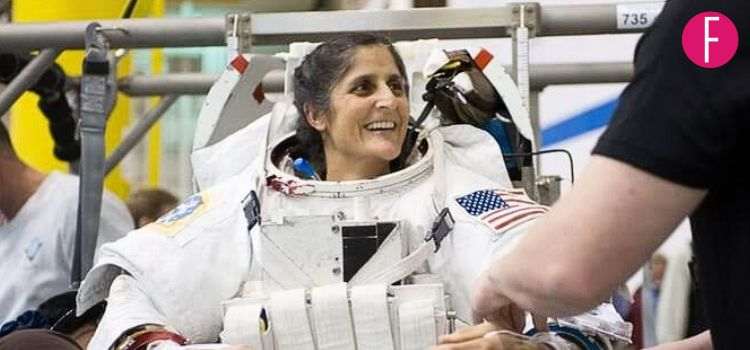
They originally launched on June 5, 2024, aboard Boeing’s Starliner spacecraft for what was supposed to be an eight-day mission to test Starliner’s capability to transport astronauts. However, technical malfunctions left the capsule unsafe for return, forcing NASA to keep them on the ISS until a safe alternative was available.
On March 18, 2025, the astronauts safely splashed down in the Atlantic Ocean aboard SpaceX’s Crew Dragon Freedom, ending their unexpectedly long mission.
Why Did Williams and Wilmore Stay in Space for Nine Months?
Williams and Wilmore were part of Boeing’s Crew Flight Test (CFT) mission, meant to demonstrate Starliner’s readiness for regular crewed flights. Shortly after docking with the ISS, engineers discovered multiple issues with the spacecraft, including Helium leaks,m alfunctioning thrusters and uncertainty over the capsule’s ability to survive reentry.
Given these problems, NASA decided not to risk their return in Starliner, opting to keep them on the ISS while engineers worked on a solution. The astronauts had to wait until a safe ride was available, which came with SpaceX’s Crew Dragon Freedom—the spacecraft that had just completed a separate mission to the ISS.
What Did They Do While Stuck on the ISS?
Despite their extended stay, Williams and Wilmore remained active, contributing to various scientific and operational tasks on the space station. Some of their key activities included:
- Biomedical Research: Conducting studies on how long-duration spaceflight affects the human body, including cardiovascular and muscle changes.
- Technology Demonstrations: Testing 3D printing in space and new life-support systems for future deep-space missions.
- Station Maintenance: Assisting with extravehicular activities (EVAs), including spacewalks for upgrading solar panels.
- Mentoring Crew Members: Since they were seasoned astronauts, they helped train and guide newer crew members on ISS operations.
Their prolonged stay provided NASA with unexpected but valuable data on how astronauts physically and mentally adapt to long missions, which is crucial for future Moon and Mars expeditions.
Return to Earth: A Dramatic Reentry and an Ocean Welcome
After months of uncertainty, Williams and Wilmore finally undocked from the ISS at 1:05 a.m. EDT on March 18, 2025. Their fiery reentry through Earth’s atmosphere was intense, with temperatures around 3,000°F (1,650°C) as Crew Dragon Freedom slowed down for splashdown.
As the capsule floated in the ocean off the coast of Florida, a pod of dolphins surrounded it, a rare sight that captured the attention of rescue crews. Medical teams quickly assisted the astronauts, who smiled and waved as they emerged. NASA noted that it would take time for their bodies to readjust to Earth’s gravity after spending nearly 300 days in microgravity
What’s Next for Boeing’s Starliner?
The Starliner failure has put Boeing’s role in NASA’s Commercial Crew Program under scrutiny. NASA originally planned to use both Boeing and SpaceX to ferry astronauts to and from the ISS, but SpaceX’s Crew Dragon has now become the primary choice due to Boeing’s repeated delays and technical issues.
NASA has stated that Starliner will not fly again until all malfunctions are resolved. Boeing engineers are currently analyzing the spacecraft, but its future remains uncertain.
Though Williams and Wilmore’s mission did not go as planned, their resilience and adaptability turned a setback into a scientific opportunity. Their extended stay provided valuable insights into long-duration spaceflight, further preparing NASA for its next major missions

