

When news broke that Dr Mahnoor Nasir had been injured in an acid attack at a hospital in Quetta, the immediate reaction was shock. Hospitals are meant to be places of healing, not scenes of violence. Yet a young doctor, someone who dedicated her life to caring for others, became the victim of one of the most horrific forms of assault imaginable.
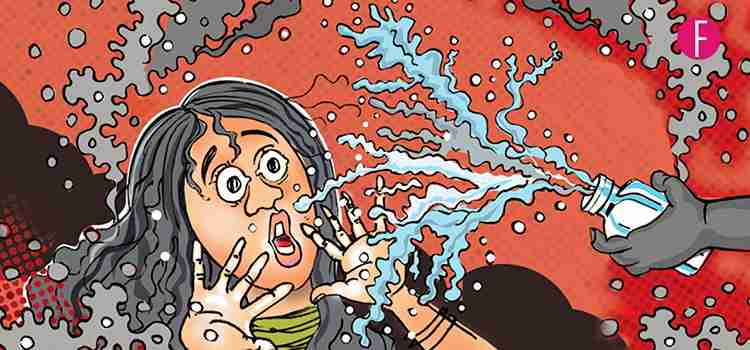
According to reports, Dr Mahnoor sustained burns to her face, abdomen, legs, and hand after being attacked at Sandeman Provincial Hospital in Quetta. She has since been airlifted to Karachi, where doctors say she is stable and receiving treatment. Her eyesight remains intact despite the injuries. These details offer some relief.
The attack is shocking not only because of its violence but because of what it represents. If a doctor can be targeted inside a hospital, what does that say about the safety of women in public spaces? What does it say about the environments in which women study, work, and build their futures every day?
For decades, acid attacks have occupied a particularly horrifying place in our collective consciousness. They are not simply acts of violence; they are acts intended to permanently alter a person’s life, identity, confidence, and sense of self. They seek to leave scars that extend far beyond the skin. The target is often not just the body, but dignity itself.
The encouraging news is that Dr Mahnoor is now in stable condition and receiving treatment in Karachi. Her eyesight has been preserved despite the acid affecting her eyes, and doctors remain hopeful about her recovery. But while the medical updates offer relief, they cannot overshadow the larger questions this incident raises.
For decades, women in Pakistan have been told to be careful. Be cautious. Avoid certain places. Avoid certain hours. Avoid certain people. Yet incidents like these force us to confront an uncomfortable reality: How much caution is enough when violence can find women even in the places that should protect them?
Acid attacks carry a unique brutality. They are not only intended to injure; they are designed to scar, to permanently alter a person’s appearance, confidence, and sense of self. They are crimes that attempt to turn a victim’s face into a lifelong reminder of someone else’s hatred, entitlement, or rage.
Across Pakistan, doctors, nurses, and other healthcare professionals already work under immense pressure. They endure long hours, overcrowded facilities, security concerns, and, increasingly, incidents of harassment and violence. Female healthcare workers often face an additional burden: navigating these challenges while confronting gender-based threats that many of their male colleagues never have to consider. The attack on Dr Mahnoor is not only an attack on an individual; it is an attack on the very people society relies upon in its moments of greatest vulnerability.
It is also impossible to ignore the broader context of acid violence in Pakistan. Approximately 150 to 200 acid attacks are reported annually, though historical estimates have placed the figure much higher. More than 80 percent of victims are women and girls, many targeted in acts of domestic abuse, revenge, rejection, or gender-based violence. Behind each statistic is a life permanently altered, a family devastated, and a survivor forced to endure years of physical and emotional recovery.
The question is one we continue to ask after every attack: why is acid still so readily available as a weapon?
Why is acid still accessible enough to be used as a weapon? Are existing regulations being enforced effectively? Are workplaces equipped with adequate security measures? Are women reporting threats taken seriously before violence occurs rather than after? Most importantly, why does every new case seem to spark the same outrage, followed by the same silence?
Women’s safety cannot continue to be treated as a women’s issue. It is a societal issue. A failure to protect women is a failure of institutions, communities, and systems that claim to value their contributions while often neglecting their security.
As Dr Mahnoor begins the difficult process of recovery, the public’s responsibility should not end with prayers and sympathy. Empathy matters, but accountability matters more. Real change requires stronger enforcement of laws, safer workplaces, quicker responses to threats, and a collective refusal to normalize violence against women.
More importantly, enforcement cannot exist only on paper. Regulations are only effective when inspections are carried out, records are maintained, suspicious purchases are monitored, and violations result in meaningful consequences. Every acid attack should prompt not only an investigation into the perpetrator but also into how the substance was obtained in the first place.
Dr Mahnoor’s case also forces us to confront a troubling societal reality. Women are often told to be cautious, to avoid certain places, certain hours, or certain situations. Yet what precaution protects a woman who is attacked at her workplace? What advice can be given to a doctor serving patients inside a hospital? Incidents like these expose the limits of placing responsibility on women to protect themselves while failing to address the systems and attitudes that enable violence.
As Dr Mahnoor begins what will likely be a long road to recovery, the conversation must extend beyond sympathy. Healthcare workers deserve safe workplaces. Women deserve to move through society without fear of violence. And survivors deserve more than temporary public outrage before attention shifts elsewhere.
The fact that Dr Mahnoor survived is a blessing. The fact that she had to survive such an attack at all should concern every one of us. Because until hospitals are safe for doctors, workplaces are safe for women, and acid is no longer easily weaponized against vulnerable individuals, this will remain not just a personal tragedy, but a collective failure.
Sources: GEO News, Tribune

