

Being famous doesn’t make you immune to chronic illness – and these celebrities have proven just that.

We often see our favourite stars as invincible — glowing skin, red carpets, blockbuster roles, and world tours. But behind all the glitz are very real health battles many of them quietly face every day. Chronic illnesses like diabetes, fibromyalgia, multiple sclerosis, and rare neurological conditions don’t skip the rich and famous. And when these celebs choose to speak out, it’s not just brave — it’s powerful. It reminds the rest of us that pain is real, invisible struggles exist, and even in the spotlight, healing is ongoing.
Bruce Willis

Bruce Willis was the guy who made action movies cool without even trying – the smirk, the one-liners, the effortless bravado. So when news broke in 2022 that he was stepping away from acting due to aphasia, a language disorder that affects speech and comprehension – fans were heartbroken. But that was just the beginning. In early 2023, his family shared a more sobering update: Bruce had been diagnosed with Frontotemporal Dementia (FTD), a rare, progressive brain disorder that impacts personality, behavior, and language. Unlike Alzheimer’s, which is more memory-focused, FTD often shows up earlier and slowly strips people of their ability to communicate, reason, or express emotions. In Bruce’s case, it has progressed to the point where he is now nonverbal – a devastating development for someone whose entire legacy was built on expression, charisma, and presence.
What’s been incredibly moving is how his family has chosen to face it all. His wife Emma Heming Willis and ex-wife Demi Moore, along with his daughters, have become a united front, not just supporting Bruce privately, but using their platform to raise awareness about FTD. Emma shares snippets of their life, showing that even in the hardest times, love, dignity, and everyday joys still exist. They haven’t romanticized the journey, but they’ve shown the world that illness doesn’t erase identity. Bruce may not be front and center in Hollywood anymore, but his story is leading a new kind of conversation, one that’s about grace, family, and what it means to show up when words are no longer an option.
Fawad Khan – Type 1 Diabetes

For someone who’s always looked effortlessly calm and in control, whether on a drama set or a movie red carpet, it came as a surprise to many when Fawad Khan revealed that he’s been living with Type 1 Diabetes since the age of 17. The diagnosis came after a severe bout of diabetic ketoacidosis, a life-threatening complication that landed him in the hospital and completely changed the course of his life. Type 1 diabetes is an autoimmune condition where the body’s immune system attacks insulin-producing cells in the pancreas, meaning the body can no longer regulate blood sugar on its own. It’s not lifestyle-related, not preventable, and requires lifelong insulin therapy, strict routine, and mental resilience.
Fawad has talked openly about how this illness shaped him, from having to give up cricket (a sport he loved) to constantly managing his health while working erratic hours in the industry. Even during demanding shoots or public appearances, he’s juggling glucose monitors, insulin injections, and careful food planning, all while making it look seamless. But what stands out is his attitude: he’s never played the victim. Instead, he uses his story to quietly advocate for awareness and prove that chronic illness doesn’t mean giving up on ambition. Fans respect him not just for the roles he plays, but for showing that strength sometimes looks like quietly fighting battles no one sees.
Nick Jonas – Type 1 Diabetes

Nick Jonas was just 13 when he was diagnosed with Type 1 Diabetes, and instead of letting it derail his life, he got ahead of it. He once revealed he was dangerously close to a coma at diagnosis , weak, underweight, and unaware of what was happening. Type 1 means your immune system attacks insulin-producing cells, so you have to manually manage your blood sugar for life. Since then, Nick’s turned into a full-on advocate, proving that chronic illness and pop stardom can go hand in hand.
He doesn’t hide it, whether it’s a visible glucose monitor on stage or co-founding Beyond Type 1, he’s constantly raising awareness. His openness has helped normalize insulin use, especially for young people who look up to him. Fans love how he talks about the highs and lows of living with it, both literally and emotionally. He’s shown that with the right tools and mindset, chronic illness doesn’t get to call the shots.
Wasim Akram – Type 1 Diabetes

Wasim Akram’s diagnosis at 30 flipped the script, a fit, world-class athlete suddenly learning he had Type 1 Diabetes. At a time when people barely knew what it was, he kept going, managing insulin quietly in dressing rooms so no one would question his fitness. He didn’t slow down, didn’t stop playing, and instead pushed through like a total powerhouse.
Later, he became one of Pakistan’s loudest voices for diabetes awareness. He now speaks openly about his routine, diet, and struggles, and he’s helped change how chronic illness is viewed, especially in South Asia where it’s often hidden. He’s not just a cricket legend; he’s a blueprint for resilience and a reminder that even with lifelong conditions, greatness isn’t off the table.
Selma Blair – Multiple Sclerosis (MS)
When Selma Blair revealed she had Multiple Sclerosis (MS) in 2018, it was a raw, emotional moment that took everyone by surprise. MS is a chronic neurological disease where the immune system attacks the protective covering of nerves, causing everything from muscle weakness and fatigue to coordination issues and brain fog. There’s no cure, only symptom management and slow progression therapies. Selma didn’t sugarcoat it. She showed up to red carpets with a cane, slurred speech, and a shaky walk and owned every minute of it.
What made her stand out was how unapologetic and open she was. She brought visibility to an invisible illness, turning it into a powerful statement rather than something to hide. She documented her stem cell treatment, her hair loss, her flare-ups, and through all of it, she kept reminding people that vulnerability is strength. Her journey has helped so many people with MS feel seen, understood, and a little less alone.
Iman Ali – Multiple Sclerosis (MS)
Iman Ali quietly battled MS for years before speaking publicly about it, and when she did, it hit hard. Pakistan isn’t exactly known for open conversations around chronic illness, especially when it comes to glamorous, high-profile women. So when Iman shared that she’d been diagnosed with MS and had struggled with delayed speech, fatigue, and physical limitations, it gave a human face to a condition most people didn’t even understand. Her experience with MS, like Selma’s, involves nerve damage and unpredictable symptoms that don’t always “look” visible.
What’s powerful about Iman’s story is that she didn’t just talk about the illness – she talked about the mental toll, the isolation, the anxiety. And yet she continued to work, appear in films, and take her time without disappearing. Her honesty gave permission to others to slow down, to heal, and to demand empathy instead of hiding their condition. In a society that equates health with worth, Iman reminded us that struggle doesn’t erase brilliance.
Salman Khan – Trigeminal Neuralgia, Brain Aneurysm & AVM

Salman Khan opened up about his health struggles a few years ago, revealing he has trigeminal neuralgia – a nerve condition so brutally painful it’s actually called the “suicide disease.” He said he’d been quietly dealing with it for years, even while filming action-packed roles. More recently, on The Great Indian Kapil Show, he casually dropped that he also has a brain aneurysm and AVM (arteriovenous malformation) – both serious brain conditions that would stop most people in their tracks.
But Salman? He’s still out here shooting movies, hosting shows, doing it all – with barely a complaint. People were stunned by how long he stayed silent about it, but even more in awe of how he keeps going despite everything. It just shows that behind the mega-celebrity persona is someone dealing with stuff most of us couldn’t imagine and still choosing to show.
Celine Dion – Stiff Person Syndrome
In a heartbreaking announcement in 2022, Celine Dion revealed she had been diagnosed with Stiff Person Syndrome, a rare and incurable neurological disorder that causes progressive muscle stiffness, spasms, and can severely affect mobility and speech. It’s so rare that most people hadn’t even heard of it before her ,which is exactly why her coming forward meant so much.
Celine had always been the picture of powerhouse vocals and unstoppable stage presence, so to hear her say she couldn’t perform anymore was devastating for fans. But the way she handled it, with grace, honesty, and hope, made her even more loved. Instead of hiding away, she raised awareness about a condition barely understood by the public. She showed that illness doesn’t take away your identity or your strength – and sometimes, vulnerability is the biggest stage you’ll ever stand on. Celine made her comeback with her performance at the Eiffel Tower, Paris, for the 2024 Olympics, leaving us all mesmerized and teary eyed.
Muhammad Ali – Parkinson’s Disease
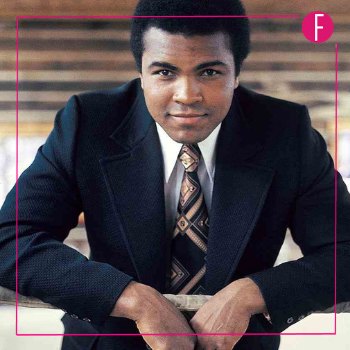
The greatest boxer of all time, Muhammad Ali, spent decades battling Parkinson’s disease, a progressive neurological disorder that affects movement, coordination, and speech. For someone whose profession relied on lightning speed and sharp reflexes, the diagnosis felt cruelly ironic. Parkinson’s slowly stripped him of his physical prowess and eventually his voice – in his final years, he was nonverbal.
But what made Ali legendary wasn’t just what he did in the ring -it was how he handled what came after. He didn’t disappear from public life. He lit the Olympic torch in 1996 with trembling hands and still made appearances, becoming a global advocate for Parkinson’s research. He redefined courage, showing the world that dignity, power, and presence don’t vanish with illness – they evolve.
Amitabh Bachchan – Myasthenia Gravis

Amitabh Bachchan revealed he was diagnosed with Myasthenia Gravis, a rare autoimmune disorder that causes severe muscle weakness and fatigue, especially after periods of activity. It affects voluntary muscles, including those that control the eyes, mouth, throat, and limbs. Imagine being one of the most physically active, energetic actors in the industry – and suddenly your body doesn’t follow your command.
Big B first talked about it during interviews following his near-fatal accident in 1982. While recovering from multiple surgeries, he began to experience unusual weakness and was later diagnosed with the condition. He never made it his public identity – but by acknowledging it and continuing to work, even through difficult moments, he showed that resilience isn’t about pretending you’re fine – it’s about choosing to keep going with whatever strength you have. His honesty inspired not just fans, but also a cultural shift in how we talk about chronic illness in the South Asian community.
Lady Gaga – Fibromyalgia
Lady Gaga has been incredibly open about living with fibromyalgia, a chronic pain condition that affects the muscles and nervous system. It’s the kind of illness that doesn’t always show on the outside but can feel absolutely crushing – widespread pain, exhaustion, and brain fog that never really lets up. Gaga didn’t just talk about it once and move on – she made it part of her documentary Five Foot Two, showing how raw and vulnerable it really gets.
What makes her openness so powerful is that she used her platform not just to talk about her own struggles, but to validate millions of others who live with invisible illnesses. She’s had to cancel shows, step back from the spotlight, and set boundaries – and she’s never sugarcoated it. People admire her not just for her talent, but for showing that even at the top, you’re still allowed to take care of your body and choose rest.
Morgan Freeman – Fibromyalgia
Morgan Freeman also lives with fibromyalgia, something he developed after a near-fatal car accident in 2008. He mentioned how it causes intense pain in his arm and shoulder and yet, he kept working. He’s said that the pain is constant but he finds ways to manage it, adapting his life and roles around the condition. He even had to give up some hobbies like flying planes and sailing, which tells you how life-changing it’s been.
But instead of making it a big spectacle, Freeman quietly set an example of resilience – of what it looks like to keep going, not because you’re pain-free, but because you’ve learned to live with it. Fans respect him not just for his iconic voice and screen presence, but for how he embodies strength without needing to shout about it.
Bella Hadid – Lyme Disease

Bella Hadid has been living with Lyme disease, a chronic illness caused by tick bites that often goes undiagnosed for years. It’s not just joint pain or fatigue, it messes with your entire system, from your brain to your gut to your mood. For Bella, it’s meant years of symptoms like brain fog, anxiety, exhaustion, and even tooth pain, things that aren’t always obvious in glamorous photoshoots or red carpets.
What’s so striking is how openly she’s shared the not-so-pretty side of it. She’s posted photos from hospital beds, shared health updates during long treatment phases, and made it clear that healing isn’t linear. Bella recently took a long break from modeling to focus on getting better, saying she couldn’t keep pushing her body past its limits. Her honesty resonates with so many people who look “fine” but are fighting something invisible – and she’s praised for breaking that illusion of perfection in an industry that often demands it.
Selena Gomez – Lupus
Selena Gomez has been living with lupus, an autoimmune condition where the body’s immune system turns against its own tissues — and in her case, it became life-threatening. In 2017, she revealed she’d undergone a kidney transplant due to organ damage caused by the illness, with her friend Francia Raisa as the donor. Behind the public silence was a long road of chemotherapy, hospital visits, and days when even getting out of bed was a battle. On top of lupus, Selena has also been candid about struggling with anxiety, depression, and later being diagnosed with bipolar disorder — something she once kept hidden but now talks about openly to break the stigma.
What sets Selena apart is how she’s used every setback as fuel for advocacy. From launching the Rare Impact Fund to promote mental health support, to producing the brutally honest My Mind & Me documentary, she’s making sure no one feels alone in their struggle. Instead of hiding her pain, she’s placed it center stage, turning vulnerability into strength. Her journey reminds people that chronic illness isn’t always visible — and that healing includes the body and the mind.
The most inspiring part? These stars didn’t just survive their chronic illnesses – they kept showing up, working, creating, and speaking out. In sharing their stories, they’ve made space for conversations around chronic pain, invisible diseases, and self-compassion. Whether it’s Bella Hadid pushing through Lyme flare-ups, or Bruce Willis’s family reminding the world of his quiet strength – their honesty breaks stigma and reminds us that vulnerability is strength too.
Sources: The Independent, Healthline, Today, People, Gulf News, Parkinson’s Europe, BBC, The Quint, Arthritis

