

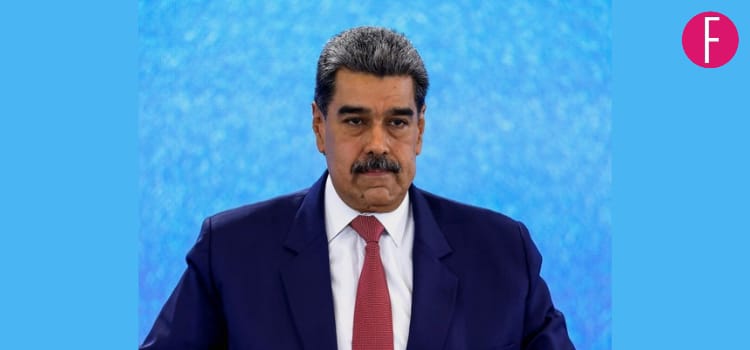
Venezuela is at the centre of global attention after reports of a dramatic U.S. military operation that allegedly led to the capture of President Nicolás Maduro, marking one of the most extraordinary interventions in recent Latin American history. The operation, referred to by U.S. officials as Operation Absolute Resolve, has triggered celebrations, protests, diplomatic outrage, and urgent questions about sovereignty, legality, and what comes next for a country already deep in crisis.
What Happened in Caracas?
According to multiple international media reports, the operation unfolded in the early hours of January 3, 2026, just after 2 a.m. local time. Residents of Caracas reported loud explosions and widespread power outages, with at least seven blasts shaking the capital. The strike allegedly involved more than 150 U.S. aircraft, including B-1B bombers, F-22 and F-35 fighter jets, and special operations helicopters.
Elite U.S. Army Delta Force units are said to have been inserted into Maduro’s heavily fortified residence, completing the raid and extraction in under an hour. President Donald Trump later confirmed via social media that Maduro and his wife, Cilia Flores, had been captured and removed from Venezuela.
A photograph subsequently released by the White House showed Maduro in handcuffs aboard the USS Iwo Jima, fueling global debate over both the operation itself and its legal implications.
Where Is Maduro Now?
U.S. officials say Maduro is being transferred to New York, where he is expected to face long-standing charges related to narcoterrorism and drug trafficking, linked to indictments first announced in 2020. The U.S. administration has framed the arrest as a law enforcement and national security action rather than a regime-change operation—though critics strongly dispute that characterization.
Who Is Governing Venezuela?
This is where uncertainty deepens. President Trump has stated that the United States will temporarily “run” Venezuela to oversee what he described as a “safe and judicious transition.” No detailed roadmap has yet been presented, and no interim Venezuelan civilian leadership has been formally announced.
Inside the country, the existing power structure has not fully collapsed. Defense Minister Vladimir Padrino López has denounced the operation as a “criminal regime change” and declared a state of external commotion, suggesting that elements of the military and bureaucracy remain loyal to the old order and may resist U.S. involvement.
What Is Happening on the Ground?
The response has been sharply divided:
- Inside Venezuela: Caracas has experienced blackouts, protests by Maduro loyalists, and heightened military presence. Supporters of the former president have described the operation as a kidnapping and an act of imperial aggression.
- In the diaspora: Venezuelan communities abroad—particularly in Miami—have held public celebrations, viewing Maduro’s removal as the end of a repressive chapter.
- Regionally: Colombia has declared a state of emergency, warning of potential refugee flows and further humanitarian strain if instability deepens.
Why Oil Matters
Oil appears to be a central factor in the post-operation strategy. Venezuela holds the world’s largest proven oil reserves, though years of sanctions and mismanagement have crippled production. President Trump has openly stated that the U.S. will be “very strongly involved” in Venezuela’s oil sector, framing this as both economic stabilization and a move to secure global energy supplies. Critics argue this reinforces claims that the intervention is resource-driven.
Global Reaction and Legal Questions
The international response has been swift and polarised:
- Russia, China, Brazil, and France have condemned the operation as a violation of international law and Venezuelan sovereignty.
- The United Nations Secretary-General has warned that the raid sets a “dangerous precedent” and risks destabilising the region.
- Within the U.S., several lawmakers—mainly Democrats—have questioned the legality of the operation, noting the absence of explicit congressional authorization. The White House has defended the action on national security grounds, citing drug trafficking and regional threats.
What Happens Next?
The biggest question remains the day after. With Maduro reportedly out of the country but key institutions still intact, Venezuela is entering a volatile transition period. The loyalty of the armed forces, the reaction of the population, and the extent of U.S. involvement will all shape what comes next.
For now, Venezuela stands at a crossroads—caught between the collapse of a long-standing regime, foreign intervention, and an uncertain path toward political stability. The coming days will determine whether this moment marks the beginning of recovery or a new phase of instability.


Comments 3