

Get to know the legendary Azra Mansoor and insights into her journey and more in this FUCHSIA Exclusive!
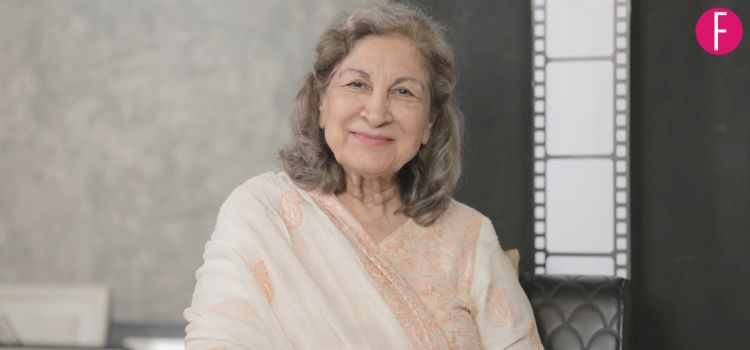
Azra Mansoor is a legendary name in the Pakistani entertainment industry, known for her incredible talent and versatility. Her career spans over five decades, making her a cherished figure in television and radio. From her early days in the industry, she impressed audiences with memorable performances in iconic dramas like Kaghaz Ke Phool, Ankahi, Sunehray Din, and many more. Her presence on screen has been a constant source of inspiration and admiration for generations of viewers.
Throughout her career, Azra Mansoor has continued to evolve, showcasing her skills in contemporary dramas such as Dastaan, Alif Allah Aur Insaan, Khamoshi, and Paristan. She also took on a significant role in the film Bin Roye. Currently, she is gracing our screens in Jafaa as Hassan’s Dadi, a very important and layered character. As a veteran artist, Her exceptional performances and contributions to Pakistani entertainment continue to earn her well-deserved respect and admiration.
Azra Mansoor: From Radio To A Remarkable Career In Sadakaari
Azra Mansoor shared that her journey in the entertainment industry began during her college days when she was encouraged by her English professor, the iconic Begum Khursheed Mirza. She would often motivate her students to pursue interests beyond academics. Azra, who enjoyed writing, got the opportunity to visit a radio station where Mr. Zahid Naqvi recognized her potential and decided to use her voice for a radio drama. Her first role was in the play Anarkali, where she faced initial challenges like managing voice modulation and mic technique. Despite her struggles, this experience marked the beginning of her career in the Arts. Later, after marriage, Azra continued to work on radio and television, balancing her passion with her personal life.
“What Begum Khursheed Mirza used to do, after 8-10 days of teaching, she would say, today we will chat with the girls. And then, she inspired us so much. She used to say, it is not necessary to just read books. You should do something else in life. Learn something else.”
Azra Mansoor
Azra took a break from her career to focus on her family but returned with renewed enthusiasm in the early 2000s. She joined FM 107, hosting a show called Ghar Hai Apno Se, which quickly became a success, gaining a large following of 500,000 listeners in just a month. The show’s popularity contributed to FM 107’s success, leading to positive recognition in the media. She later moved to Lahore and continued her work in radio on 89.4 FM.
Was The ’60s More Modern Than Today? Azra Mansoor Has Her Say!
Azra Mansoor reflects on the ’60s, noting that many perceive it as a more modern era than today. She highlights how styles from that time, like bell-bottoms, have made a comeback, emphasizing the sense of tolerance and acceptance that defined the era. People appreciated each other’s choices without judgment, fostering a sense of freedom. In her view, this was a time when both genders felt a sense of liberty in expressing themselves, marking it as a truly modern period.
Us waqt kay zamane mein ek jhijhak thi. Larkay or larkiyan, dono kay zehnon me ye cheez thi kay ye achhi cheez hai or ye buri cheez hai, we should do this and not do this. Ab, it has dipped a lot.
Azra Mansoor
She further explains that while some aspects of life have progressed, there’s a stark contrast in how societal values have shifted. Back then, there was a shared understanding of what was considered good or bad, leading to a sense of community. Today, Azra observes a dip in this awareness, with a divide between those who have access to opportunities and those who do not. Her insights reveal a longing for the inclusivity and acceptance that characterized the ’60s, showcasing how much has changed in societal dynamics.
Empowering Opportunities: Azra Mansoor On Social Work & Girls’ Education
Azra Mansoor passionately discusses the pressing need for opportunities, particularly for girls in today’s society. She shares her experience working in communities like Machhar Colony, where she has witnessed firsthand the potential and talent among young girls. Through her involvement in educational initiatives, she emphasizes the importance of empowering these girls to pursue their dreams. Many have successfully completed their education and are now giving back by teaching others, creating a ripple effect of knowledge and empowerment.
Azra used to volunteer regularly at the Kidney Center and Jinnah Hospital, helping patients in the dialysis hall, her commitment to service remains strong. She has also volunteered at the National Institute of Children and Families, particularly in the cancer ward of the Children’s Hospital in Lahore. Currently, she focuses her efforts on supporting the Khawaja Sirha community, working closely with activists like Bindiya Rana, who advocates for their rights and education.
I feel so happy to see them, talk to them, meet them. They are human beings like us.
Azra Mansoor
Her dedication to social work extends beyond education; Azra actively engages with organizations that support marginalized groups. She highlights the urgent need for resources and facilities to help these individuals thrive, suggesting the establishment of supportive spaces, such as care homes for the elderly. Azra believes that everyone deserves the chance to lead fulfilling lives, and she encourages others to contribute to these causes. By fostering awareness and collaboration, she envisions a brighter future for all, where education and opportunity pave the way for success.
What Advice Does Azra Mansoor Have For Women Facing Age Transition?
Azra Mansoor encourages women experiencing the transition of aging not to panic or feel limited by societal expectations. She emphasizes that life continues to hold joy and opportunities, regardless of age. Azra firmly believes that women should break free from age-related taboos and societal restrictions. Instead of conforming to outdated notions like avoiding vibrant colors or certain activities, she advocates for embracing life fully. Her message is clear: age is merely a number, and there is beauty and grace in every stage of life.
When I was 62, I used to feel like 26!
Azra Mansoor
Moreover, Azra stresses the importance of self-acceptance and confidence. She urges women to celebrate their individuality and not let external judgments dictate their choices. By embracing their interests, passions, and even their playful side, women can navigate this transition with positivity. She reminds them that aging can be a time of newfound freedom, where they can enjoy life to its fullest, pursue new hobbies, and cherish moments with loved ones. With this mindset, aging becomes an exciting chapter rather than a source of fear.
Insights On The Drama Serial Jafaa
In her discussion about the drama Jafaa, she highlighted the dynamics between characters, especially the character of Dadi and Hasan. She pointed out that Dadi, despite her wisdom, exhibits moments of vulnerability, particularly in her interactions with Hasan. Notably, there was a scene where Dadi seemed scared of Hasan, which marked a significant shift in her usual demeanor. This powerful performance showed her internal struggle and desire to maintain peace within the family. Dadi’s efforts to shield Hasan from the trauma of witnessing his parents’ conflicts during his childhood reveal her deep sense of guilt and responsibility.
Dadi ka guilt is there. Yeh jo Hasan ka anger management hai, yeh sahi nahi hai. Yeh jo behave kar raha hai, yeh psycho type hai. It is because of that trauma jo usne bachpan mein dekha. Dadi has the guilt that she did not explain all this to him.
Azra Mansoor
She also touched upon the show’s progressive themes, particularly regarding men’s emotional struggles. The portrayal of Hasan’s trauma challenges societal norms that often overlook male mental health. She emphasized the need to take men’s issues seriously, recognizing that traditional views about masculinity can be limiting. The character of Zara, who confidently stands up for herself and articulates her feelings, adds depth to the narrative. This highlights the importance of addressing abuse, even in seemingly “good” relationships.
Talking to veteran artists about their journeys offers valuable lessons and perspectives that can enrich anyone’s understanding of life and creativity. All thanks to Azra Mansoor for sharing her valuable time and insights with us.

