

We know you’ve been wondering — just like us — why on earth a drama is called Biryani. Is it a foodie rom-com? A tragic love story over a plate of rice? Or is there something spicier brewing? To get the real scoop, we sat down with Zafar Mairaj, the writer behind Biryani, to find out exactly how a dish made it to the title. And here’s the twist — this isn’t his first serving. From Kabuli Pulao to Dumpukht, Zafar has a knack for stirring food into his scripts. Turns out, there’s a delicious connection between his stories and the kitchen… and it’s not just about making you hungry.
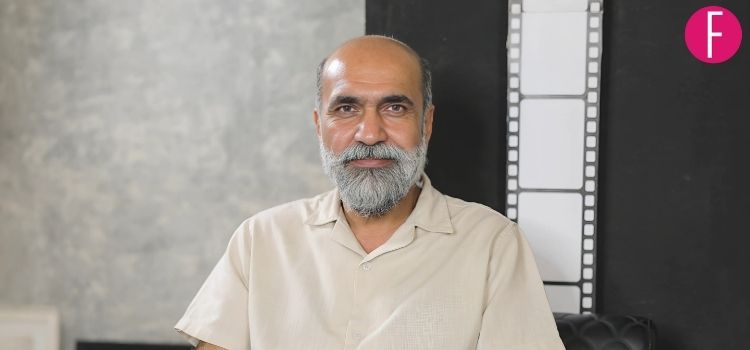
Q: Your drama titles often sound like they belong on a menu. Why this delicious connection?
To start, I want to explain why I sometimes name my dramas after dishes. In our country, during festivals and traditions like Eid, Shab-e-Barat, weddings, or even national celebrations, we seem to have lost much of the colour they once had. These occasions used to be filled with dancing, singing, playing, and sitting together. Yet one thing that still remains deeply tied to these celebrations is food. Our culture, like many others, speaks loudly through food. As a nation, we connect through it often without even realizing it. We understand through food, we interact through food, and we use it to convey feelings. That is why I name some of my scripts after dishes: to connect, to interact, and to help the viewer understand. It is as if I am presenting them, on a plate, a story I have “cooked” with love, crafted with the same patience and dedication one spends in a hot kitchen.
Q: Let’s talk flavours — how did Kabuli Pulao make it from the kitchen to your script?
For example, let’s take Kabuli Pulao. Its name is historically linked to the story. Kabuli Pulao was once served to kings and the wealthy, as its rich ingredients, caramelized carrots, raisins, and nuts were not affordable for everyone. However, as the dish gained popularity and accessibility, it spread across Afghanistan and its neighboring countries as a symbol of Afghan identity. This perfectly reflected Barbina’s origin, her identity, and her story, as she, too, had migrated from Afghanistan to Pakistan. Her courage and character were as mesmerizing as the caramelized carrots, roasted raisins, and nuts sprinkled over the pulao. The name fit perfectly.
Q: And Dumpukht? I’m guessing it wasn’t just about slow-cooked meat.
Similarly, Dumpukht connected deeply with its story. The dish slow-cooks in a sealed pot, and having no escape for the steam as the pot is sealed with dough, allowing all the flavours to meld. This mirrored Kulsoom’s journey, shaped by her environment, society, and circumstances, with no escape, and trapped in that atmosphere, she emerged as a brave, strong person, full of depth and “flavour.” The title also included atish-e-ishq, “atish” meaning fire and “ishq” meaning love, symbolizing that Kulsoom or the dish was given time to meld flavour due to the fire of love.
Q: Your new project Biryani sounds like it has more than just one recipe. Why this title?
For my latest project, Biryani, the name serves as a symbol of harmony between the Urdu-speaking community and Sindhis. Both have their variations, such as Sindhi biryani, Hyderabadi biryani, Bombay biryani etc, but at the end of the day, it’s still biryani. It is a dish that appears in moments of joy, grief, or simple celebrations. No matter the recipe, its essence remains the same. That’s why I simply named it BIRYANI. The female lead is Urdu-speaking and the male lead is Sindhi, so it perfectly resembled their chemistry. As for the “aloo” question, you’ll have to decide for yourself whether a character is an “aloo” or not. I wouldn’t want to give away any spoilers
Q: So, are we about to get a whole buffet of food-titled dramas from you?
Lastly, I should clarify, I don’t name all my projects after dishes or food. Each title reflects the heart of the story. I choose food-related titles only when I can truly sense the aroma of a dish within the script, when I can vividly see its ingredients and essence in my storytelling. It’s not a trademark, but rather a unique way to connect my dramas with the audience.
Biryani is written by Zafar Mairaj and directed by Badar Mehmood. It is produced by Big Bang Productions. The cast features Ramsha Khan, Khushhal Khan, Sarwat Gilani, Laila Wasti, Javed Rizvi, YBQ, and more.


بریانی ایک نیشنلزم کہانی جسے بڑے پیار سے محبت کے رنگ میں سجا کر بریانی کے شکل میں پیش کیا جا رہا ہے..
جس بورژوا اور پرولتایہ بھی ٹرکہ لگا دیا گیا ہے..