

In the world of Khaie, villains are intriguing characters with shades of black etched deep within their souls, but at the same time, they reinvent the villain narrative by giving us so much more to chew on than mere villainous caricatures – there is strategy, planning, impulsiveness, and then again, an evaluation of that strategy to make comebacks that remind us of the ruthlessness that they are feared for. In Khaie, what stands apart is the way these villains also provide a lift to the good vs evil narrative – both sides vying for our attention, sometimes one is victorious, and on other occasions, the tide turns and the good wins over the evil. And that’s precisely why Khaie from 7th Sky Entertainment is creating ripples in the Pakistani drama world.
7th Sky Entertainment is helmed by Abdullah Kadwani and Asad Qureshi. The duo has been delivering riveting stories & shaping the Pakistani drama landscape over the years with impactful narratives, upping the production game with every successive drama. The current drama season welcomes audiences with drama serial Khaie, off to a gripping start, keeping viewers invested in successive episodes, as the story of Zamda and Channar Khan takes on epic proportions.
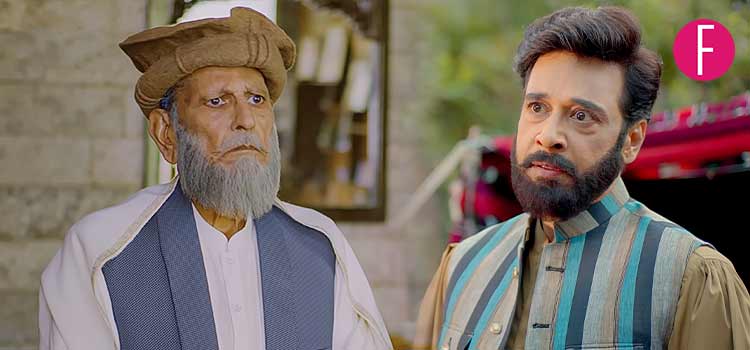
Khaie shows us that the essence of an engaging storyline extends beyond the presence of virtuous characters alone. The delicate dance between protagonists and antagonists often forms the crux of a gripping depiction. In the case of Khaie, the characters of Duraab Khan and Channar Khan emerge as notable examples of this dynamic interplay. Their enigmatic bond, coupled with a remarkable blend of shrewdness and complexity, adds layers to the overall storyline.
The father-son duo Duraab Khan and Channar Khan, with their multifaceted personalities, bring a level of unpredictability and intrigue to the story. Their unexpected vulnerabilities provide a nuanced perspective that challenges traditional character archetypes. The complexity of these dark characters coupled with the larger than life depiction of Khaie offers viewers an immersive experience that goes beyond the conventional boundaries of television drama.
1. Duraab Khan – The Strategic Mind Behind Dark Forces
Duraab Khan, portrayed with brilliance by the late Khalid Butt, emerges as the veritable maestro orchestrating the complex symphony of conspiracies. In the role of Channar’s father, he dons the dual roles of a meticulous planner and a silent observer, skilfully pulling strings to shape events. Duraab’s sagacity is palpable as he not only cleverly plans every move but also imparts valuable guidance to Channar, exemplifying the quintessential puppeteer behind the scenes. This nuanced portrayal establishes Duraab as the key element of the narrative, propelling the storyline forward through the experience of a lifetime of living in adversity.
The dynamics of characters, particularly the contrast between Duraab and his son Channar, adds more engagement in Khaie. While Channar exudes impulsiveness and a fondness for ruthless killing, Duraab embodies a calculated and methodical approach that introduces a sophisticated balance. The deliberate pacing and planning by Duraab create a magnetic tension. Where Duraab noted that Rahim Khan had razor sharp vision and was Channar’s right hand man, not to be given up so easily, he also warned his son not to leave Badal Khan alive – his words couldn’t have hit the mark more precisely.
Yet, where Duraab is sharp, he is also human, and errs in judgement. Despite his clever and sharp demeanor, his flawed judgment manifests in his perception of Zamda as a sincere person. This misplaced trust takes an unexpectedly tragic turn, unraveling a series of deaths within Duraab’s clan.
Duraab Khan evolves into an interesting manifestation of dark forces. As the narrative unfolds, the character stands as a testament to the depth and sophistication that television dramas like Khaie can bring to their audiences.
And one wonders, which villain should be feared more, son or father?
2. Channar Khan – Angry Villian Charmed By Zamda
Channar Khan, portrayed by Faysal Quraishi, embodies the avatar of a trigger-happy, passionate, and angry character. As Duraab Khan’s son, he seamlessly fits into the mainstream villain ideal, impulsively taking lives and intensifying hostilities, a fundamental element that propels this absorbing story. On one hand, Channar’s impulsive violence defines his character, a stark contrast to his strategic thinking when attempting to unveil the mastermind behind the attack on Badshah Khan, originally intended for Pameer. Despite his ruthless exterior, Channar reveals a complex layer as a father who deeply loves his son.
The dichotomy in Channar’s character intensifies as he transforms into a pragmatic thinker when trying to trace the real mastermind behind the attacks. Strategically analyzing potential culprits, he eventually connects the dots to Badal Khan. However, Channar’s character undergoes a surprising transformation when influenced by Zamda. Channar becomes a temporary Majnu, captivated and swayed by Zamda, momentarily casting aside his violent nature. This unexpected vulnerability adds a layer of complexity to Channar’s character, revealing the interplay between his unforgiving mindset and emotional weaknesses.
Faysal Quraishi’s portrayal adds a nuanced dimension, portraying Channar not just as a two-dimensional antagonist but as a multifaceted character entangled in the complexities of familial bonds, strategic pursuits, and the attraction he feels towards Zamda.
Layered Narrative Building
The drama goes beyond the conventional boundaries of a story centred solely on revenge and enmity, delving into layers that define each character. It explores the consequences of these killings, illustrating how they become the catalysts for a spill-over of events, each contributing to another Khaie. Audiences are invested in the narrative as no character can be easily categorized as mere villain or hero; instead, each one is shrouded in complex layers.
Even the members of Duraab’s family, an extension of the dark forces within, play a pivotal role, acting as guides to Zamda, shedding light on the interconnected web of consequences. They defend the killing of Zamda’s family, in response to Khaie initiated by Zamda’s family, thereby casting a shadow of darkness over the females as well, showcasing the layered behaviour and moral compass of characters who seem empathetic at times, and at times, unforgiving evil forces who fail to see the humanity of it all!
To sum it up, the dark villains in Khaie are not only offering audiences a riveting narrative nut also facilitating the forces of good – Zamda and Badal Khan’s stories to become more gripping and intriguing, leaving us wondering if seeking revenge is after all, virtuous or just as bad as the actions undertaken by perpetrators of evil in the first place!
Comment down below and share your favorite character from Khaie!

