

“Everything that the society refuses to address, social media amplifies.” Case No. 9 highlights a truth that is deeply relevant today: Social media has become the people’s courtroom.
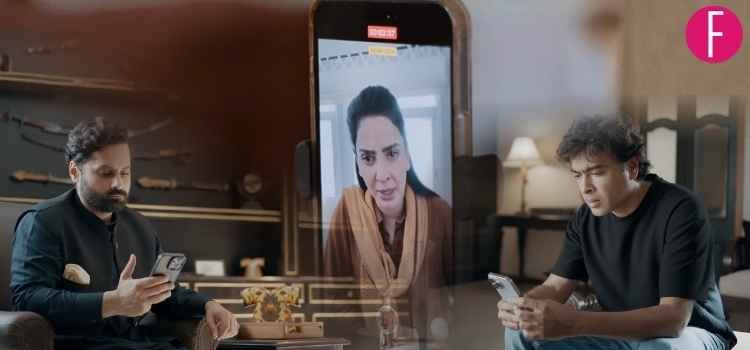
This sentiment sits at the heart of Case No. 9, a drama that has not only gripped viewers with its storytelling, but also sparked important conversations about the digital age we live in. In its latest episode, the drama masterfully portrayed how a single voice – when pushed to the edge – can find strength, support, and justice through the collective force of social media.
Sehar Moazzam’s journey has been one marked by trauma, loneliness, and a system that seems designed to silence victims. Her pain is not just emotional – it is societal. After facing relentless character assassination, difficult court proceedings, and losing hope in those entrusted with delivering justice, Sehar reaches a breaking point. With nowhere left to turn, she does what countless real-life survivors have done in the past decade: She goes online.
In a raw, vulnerable moment, Sehar records a video – her truth, her fear, her pain, her plea. Every tear she had swallowed, every scream she had muted, and every injustice she had endured suddenly finds space on the internet. Her voice, once suppressed within courtroom walls, now echoes across thousands of screens.
The Domino Effect: When Social Media Stands Up
What follows is the essence of the digital revolution: solidarity.
Within minutes, the video spreads like wildfire. Tweets pour in. Posts multiply. Hashtags emerge. People who have influence – those with platforms large enough to sway opinions – step forward.
Prominent names from the industry, activists, and socially conscious individuals begin speaking up. Among them are well-known voices like Jibran Nasir, Shehzad Roy, and leading digital platforms that have historically backed social justice movements. They share Sehar’s video, demand accountability, and urge the public to rally behind her.
A trend starts. And if there is one thing the last decade has taught us, it’s this: never underestimate the power of a trending hashtag.
A hashtag is no longer just a label – it is a movement, a protest, a collective outcry. It puts pressure on institutions, compels authorities to act, and brings injustice into the spotlight where it can no longer be ignored.
Where traditional systems fail, digital platforms rise. Where voices are ignored, social media listens. It is not merely an entertainment platform – it is a tool for activism, awareness, and accountability.
Sehar’s case getting social media traction in a social and legal climate where harassment and rape allegations are hard to prove, especially with weak or no evidence, as in Seher’s case, the survivor often finds power in public pressure. And the drama Case No.9 ties in with real world events to show us how a case can become stronger, pressurizing the courts and law enforcement agencies to delve deeper into the evidence and investigative procedures, as does SP Zoheb when he decides to overlook Seher’s case himself, so that justice is served or at least, the rape survivor gets a fair chance in the legal system.
The script bringing in social media influencers and public personalities to endorse Seher’s call to action was relatable, one would just have wanted the creators to go a step further and show that those posting pubicly for Seher, or sharing her post, had also validated Seher’s story, either from her legal counsel Beenish, or Manisha, who runs an NGO for domestic violence against women. This route would have sent a message to those seeking to malign or exact revenge through character assasination. Because while there are many who need our support, everyone’s public claim must be verified in order for us to stand up and defend their rights.
Every business runs online. Every news story breaks online. Every injustice finds visibility online. And often, real change begins with a single post, a shared video, or a hashtag that refuses to fade away.
This episode was not merely fiction – it was a commentary on the world we live in. It celebrated the courage of those who speak, and the responsibility of those who listen. It showed that even when hope seems lost, a community can rise. And sometimes, that community lives behind screens.
Case No. 9 captured the power of social media not as a weapon, but as a lifeline – one that can ignite conversations, shift narratives, and push society toward justice.
Catch Up On The Latest Drama Stories Here
Case No. 9 is written by Shahzaib Khanzada and directed by Syed Wajahat Hussain. It is produced by Abdullah Kadwani and Asad Qureshi under the banner of 7th Sky Entertainment. The cast includes Faysal Quraishi, Saba Qamar, Aamina Sheikh, Junaid Khan, Hina Khwaja Bayat, Noor ul Hasan, and more.


Comments 1