

By all accounts, Aina Asif is just a teenager. But if you’ve been paying attention to Pakistani dramas, you’ll know she’s already more than that.
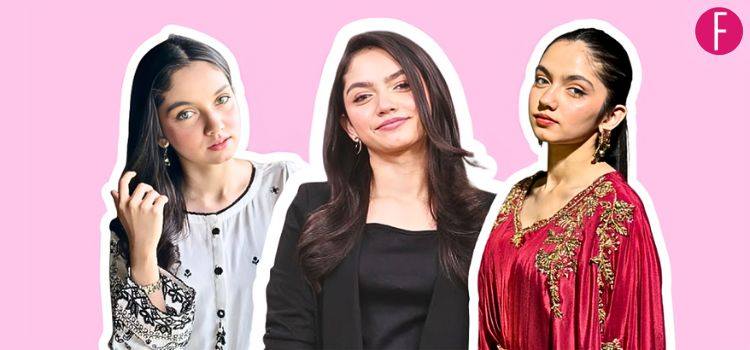
In just a few years, she’s grown from playing support characters to becoming the quiet voice behind a youth movement that doesn’t even know it exists yet. Her roles aren’t loud, her activism isn’t hashtag-heavy—but her characters? They speak volumes. And without even trying, Aina Asif is showing young viewers—especially girls—what it means to be seen, heard, and felt.
From The Corner Of The Screen To Center Stage
Aina started out like many young talents in Pakistan—via modeling and ads. But her acting debut came in 2021’s Pehli Si Muhabbat, where she played the younger version of Maya Ali’s character, Rakshi. It was a blink-and-miss appearance, but it sparked something bigger. She didn’t walk in with industry backing or viral fame. She just kept working.
Then came Ramzan 2022—and everything changed.
Mili In Hum Tum – Breaking The “Good Girl” Mold
As Mili in Hum Tum, Aina played a loud, opinionated, tomboy-ish schoolgirl—a refreshing departure from how young girls are usually portrayed on screen. This wasn’t a cutesy, obedient daughter. Mili ran, shouted, played cricket, had opinions. She felt like someone you knew in real life. That role cemented her as someone who could make even a side character memorable. It also showed something else: Aina wasn’t afraid to not be likable if it meant being real.
Annie In Mayi Ri – The Role That Demanded Courage
But it was in Mayi Ri that Aina Asif did something extraordinary. She played Annie—a teenager forced into child marriage. The show didn’t sugarcoat it, and neither did Aina. Her portrayal of Annie’s emotional shutdown, her disillusionment with family, her tentative reclaiming of agency—it was raw, relatable, and gut-wrenching.
At just 14, Aina had taken on a role that many adults would hesitate to touch. And in doing so, she brought one of Pakistan’s most painful taboos into primetime. This wasn’t just “a good role.” It was social commentary wrapped in vulnerability.
From Sweet Saman To The Twin Challenge
In Baby Baji, she played Saman—the kind-hearted, calm one in a chaotic family. It wasn’t a show-stopping role, but her natural charm made it one of her most beloved. Then, in Judwaa, she took on the ultimate acting skill test: dual roles as twin sisters.
One was outspoken and brave. The other, shy and self-doubting. And Aina managed to draw a clear line between the two, never confusing one for the other. In doing so, she showed just how deep her craft has become. It’s no longer just “good for her age.” It’s good, period.
Maya In Parwarish – Strong But Soft
Currently, Aina Asif plays Maya in Parwarish—a character slowly but surely carving her space in a household that believes it’s doing everything right. The drama doesn’t rely on high-stakes tragedy or melodrama. Instead, it quietly builds tension around something far more relatable: the suffocating pressure of “loving” control.
Maya isn’t your typical screen rebel. She doesn’t slam doors or deliver fiery monologues. She listens. She questions. She negotiates. And sometimes, she breaks down in her own room—then picks herself back up. That’s the kind of rebellion Gen Z knows too well: not loud, not dramatic, but real.
Aina plays her with restraint, with an unspoken weariness in her body language that anyone who’s grown up under expectations will instantly recognize. There’s this beautiful conflict in Maya—she’s strong but soft, assertive yet unsure, angry but still seeking approval.
You feel for her when she’s silenced. You cheer when she speaks up—even if her voice shakes. And in that performance, Aina does something special: she allows young girls to see themselves in Maya, in all their contradictions.
Maya isn’t a role model in the glossy, scripted sense. She’s the reflection of thousands of teenagers sneaking in an episode on their phones after dinner, wondering if it’s okay to want more from life. If they too, can draw boundaries without losing love. If they can be heard without being punished for it.
Aina, through Maya, isn’t telling girls what to do—she’s showing them how it might look to try, and that might be more powerful than any speech. She becomes a vessel for everything unsaid in a thousand homes.
When Speaking Up Means Standing Alone
In April 2025, Aina Asif spoke openly about mental health—and the way it’s often misunderstood in our society. Aina shared how she’s seen people suffering from mental illness, to be told to “just pray” instead of being offered professional counselling. While she clearly emphasized that prayer (namaz) brings peace and is important, she questioned why it’s often treated as the only solution for issues that need therapy and medical attention.
The reaction? Mixed—bordering on explosive. While many praised her for saying what desperately needed to be said, others accused her of being disrespectful to religion. The nuance was lost in outrage. But Aina didn’t backtrack with panic. She clarified her intent later in an interview, explaining that her message wasn’t about opposing faith, but about recognizing that mental illness, like any illness, deserves professional care—in addition to spiritual support, not as a replacement for it.
Later, in an interview, Aina expanded on what it feels like to be on the receiving end of that kind of judgment:
“As a Muslim, it’s humiliating to hear that, especially when you’re already doing your best as a Muslim. Only you know your relationship with Allah. Also, when we get sick, we need both prayers and treatment; they go hand in hand, and people with mental health issues can’t do daily life chores well.”
Aina Asif
In a culture where mental health is often buried under shame or dismissed with phrases like “just pray,” Aina’s clarity was clear, especially coming from someone so young. She wasn’t attacking religion—she was drawing a boundary between faith and health, and asking why we can’t have both.
There’s a difference between popularity and influence. Aina Asif has both. She’s not out here chasing virality. She’s chasing honesty. And with each project, she’s picking roles that give teenage girls and boys the space to be complex, angry, scared, or just… real.
She doesn’t lecture about “representation.” She just embodies it. And in doing so, she’s giving direction—maybe even unknowingly—to young Pakistanis figuring themselves out.
At a very young age, Aina Asif has marked monumental gains in her career: she’s built a portfolio that reflects real issues, not just ratings. She’s carved out a niche where her characters grow alongside her, where her silence is sometimes more powerful than dialogue.
Her generation doesn’t want perfection. It wants permission—to be flawed, to try again, to think differently. And Aina, in her calm, expressive way, is offering that permission.
Not with slogans. Just with truth.

