

At least 12 people have been killed and 54 others injured as wildfires swept across several provinces in northern Algeria, with emergency crews battling a large number of fires amid an intense heatwave gripping the country and neighbouring parts of North Africa.
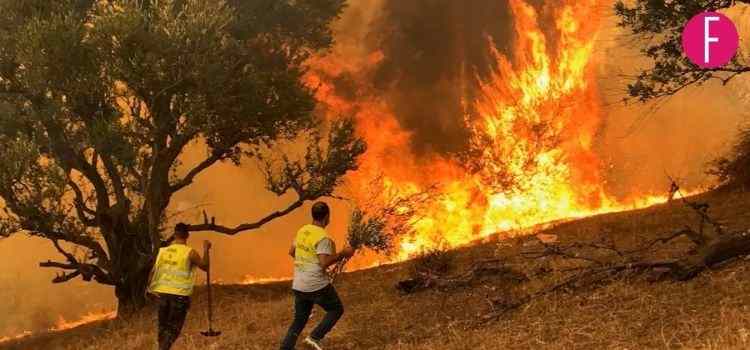
Image Credits: Asharq Al Awsat
The deaths were reported in three of the worst-hit provinces. Five people were killed in Jijel, while four died in Bejaia and three in Tizi Ouzou, Interior Minister Said Sayoud said. Among those killed in Bejaia were reportedly an eight-year-old boy and a 22-year-old woman. Of the 54 people injured, six were in critical condition and receiving intensive care.
Where Are the Fires?
The fires have affected multiple areas across northern and northeastern Algeria, with Bejaia, Jijel and Tizi Ouzou among the hardest-hit provinces.
Algeria’s Civil Protection services recorded more than 150 vegetation fires across the country on Wednesday. Bejaia alone reported 36 fires, with 18 brought under control. Fires were also recorded in provinces including Skikda, El Tarf, Bouira, Tebessa and others.
Jijel has also faced several active fires across different municipalities. The situation has forced authorities to evacuate dozens of families from areas where the flames posed a threat to homes and populated areas. Some residents were seen seeking shelter as thick smoke spread through affected communities.
The fires have also disrupted transport, with major highways in eastern Algeria closed because of the blazes near Bejaia, Jijel and Setif.
Firefighters Are Still Battling the Blazes
Emergency services have been working to contain the fires while protecting residential areas and evacuating people from locations at risk.
Authorities have managed to bring fires under control in several provinces, including Skikda, El Tarf, Bouira, Tizi Ouzou and Tebessa. However, firefighting operations have continued in Bejaia and Jijel, where multiple fires remained active.
Interior Minister Said Sayoud and Health Minister Mohamed Seddik Ait Messaoudene travelled to Bejaia to assess the firefighting response and visit injured people receiving treatment. Medical teams have been treating victims suffering from burns and smoke inhalation.
The scale of the fires has placed significant pressure on emergency services, with authorities continuing to deploy crews and equipment to contain the flames and prevent them from reaching further populated areas.
Heatwave Adds to the Danger
The wildfires are unfolding as an exceptional heatwave sweeps across North Africa, particularly Algeria and neighbouring Tunisia. Extreme temperatures, dry vegetation and strong winds can make fires spread quickly and make containment much more difficult.
Wildfires are not unusual in northern Algeria during the summer, but the country has experienced several deadly fire seasons in recent years. In 2023, more than 30 people were killed when fires tore through parts of northeastern Algeria, while thousands of hectares of forests and farmland were affected.
The latest fires have once again raised concerns about the growing risks posed by extreme heat and prolonged dry conditions, with climate change increasingly linked to more intense heatwaves and wildfire conditions.
For now, authorities remain focused on containing the active fires, keeping residents out of danger and treating those injured as emergency operations continue across the affected provinces.
Sources: BBC, Anadolu Ajansi, The Arab Weekly, France 24

