

Last week, Kafeel took a 20-year time lapse, and a few young stars, Areeka Haq, Nooray Zeeshan, Hania Ahmed, and Haya Khan entered its world. They are with us at FUCHSIA today for an exclusive interview!
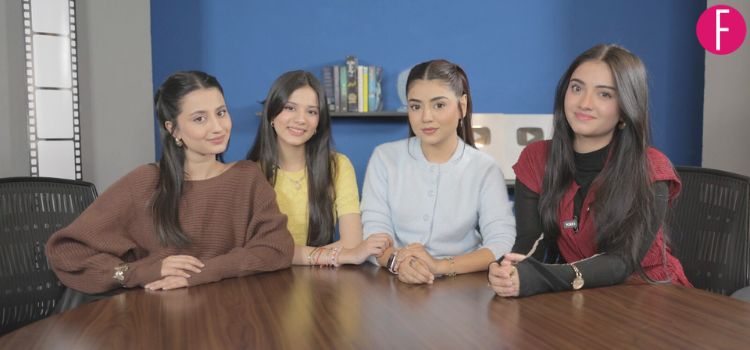
This article is an excerpt from the YouTube interview!
What Made the Girls Say Yes to Kafeel
The young cast of Kafeel shared how they got on board with the project. Areeka Haq mentioned that she was sleeping one morning when she got a call from the assistant director, Zain. After a brief chat, she met the director, Meesam Naqvi, who explained the character to her. She loved it instantly and thought it was a dream project, so she didn’t hesitate to say yes.
Hania Ahmed said she was on the set of Jama Taqseem when Zain called to arrange a meeting with Meesam Naqvi. After meeting him and reading the script, she felt really excited and chose this project over others because it was written by Umera Ahmed and directed by Meesam, whom she had enjoyed working with before.
Nooray explained that she had worked with Meesam earlier on Parwarish and trusted his direction completely. She felt confident about joining the project because the script dealt with important issues that are often ignored at home. She thought the story was meaningful and believed it needed to be shown on screen, which made her eager to take the role.
Haya agreed with Nooray and added that she had wanted to work with Meesam since her previous meeting with him for Parwarish. She found his work very impressive and felt that this team was exactly the one she wanted to be part of. When she read the script, she found the story captivating and felt it was something that really needed to be made.
Challenges of Playing These Characters
The cast shared the challenges they faced while playing their roles in Kafeel. Areeka mentioned that her character, Daneen, is a girl deeply in love and very intense in her feelings, which doesn’t match Areeka’s own way of thinking. The director, Meesam Naqvi, helped her understand that she had to see Daneen as a completely different person with her own mindset and choices. It was challenging at first, but she worked through it.
Haya said her character felt very relatable because the story touches on emotions many girls experience, like wanting their father’s love. What was tough for her was how intense and emotional the scenes were. After shooting, she would think about the moments for a long time because they felt so real, making it emotionally challenging to detach from the character.
Hania found it a little challenging because she is naturally introverted, while her character, Tanya, is outgoing and outspoken. She drew inspiration from her younger sister and gradually became more extroverted herself while portraying Tanya, learning to socialize and adopt her character’s confidence.
Nooray said her role wasn’t very challenging because there were similarities between her and her character, Javeria, in terms of maturity and handling situations calmly. Some elements of the story, like family responsibilities, were relatable to her real life, which made it easier to perform the role convincingly.
The Impact of a Father’s Personality on Daughters
The cast talked about how a father’s personality can shape a daughter’s life. They agreed that even if a father is distant or harsh, a child’s respect for him often remains, but it comes with emotional complexity.
Haya described it as a mix of love and hate. Daughters naturally want to love their father, but when he acts in ways that hurt them, it creates inner conflict and suppressed feelings. This push-and-pull can lead to tension in the relationship.
Hania explained that a father like Jami leaves a lasting impact. Daughters may start seeing their father’s traits in other people, which can cause trust issues and affect mental health. Yet, due to the mother’s guidance and societal expectations, they often continue to respect him even while feeling hurt or angry.
Nooray added that fathers, like mothers, should be actively involved in their children’s lives. When a father isn’t emotionally present, a part of the household’s support system is missing. Children need someone to turn to in difficult moments, and an absent or distant father can leave a gap that affects their sense of security.
Want to hear more? Stay tuned for full conversation coming out soon on FUCHSIA’s YouTube channel!

