

I have never been the person who had the patience to sit through a podcast. In fact, I used to genuinely question people who did. I could easily spend hours scrolling through Instagram or watching random videos on YouTube without realizing where the time went. But podcasts? Just listening to someone talk for so long? I never quite understood the appeal. This Ramazan though, something changed.
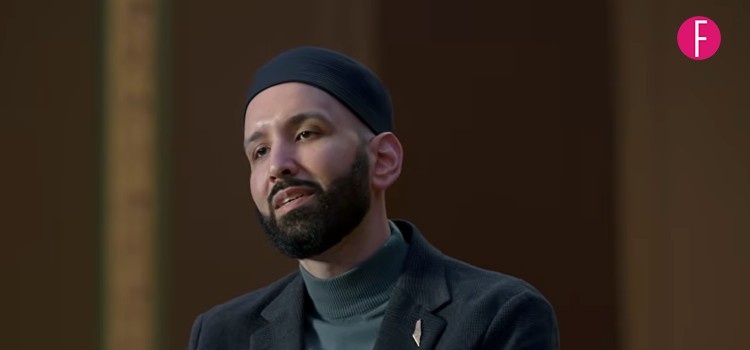
Maybe it was the quieter moments the month of Ramazan brings, or maybe I just felt like trying something different. I thought, why not give it a shot? So I asked the team at FUCHSIA for a few recommendations. Names like Omar Suleiman and Nouman Ali Khan came up. After a bit of scrolling, I decided to start with Dr. Omar Suleiman’s series The Names I Need by the Yaqeen Institute.
Honestly, I didn’t expect to get hooked.
But after watching the first three episodes — ‘How Merciful Is Allah to Me,’ ‘Who Owns Your Heart,’ and ‘When You’re Searching for Meaning’ — I started to understand why people turn to podcasts.
Many of us have experienced this: people around us try to guide us, advise us, or remind us about faith. Their intention is good, but sometimes the way it comes across feels too intense or preachy. At least for me, when that happens, I tend to mentally check out. You’re listening, but you’re not really taking anything in.
What felt different here was the tone. It didn’t feel like someone correcting you or telling you what you’re doing wrong. It felt calm, thoughtful and strangely comforting. Even the most basic ideas were explained in a way that made you pause and reflect rather than feel judged.
Here are a few things that stayed with me:
1. Feeling lost sometimes is actually normal
One thing that really stood out was how openly the conversation acknowledged feelings many of us quietly carry. Moments where you feel unsure about your direction, or times when you wonder if you’re doing enough. Instead of making those feelings seem like a failure in faith, it was explained as something many people experience. That alone felt reassuring because it reminds you that questioning and reflecting are part of growing.
2. Allah’s mercy is bigger than the guilt we carry
A lot of us tend to hold onto our mistakes for far longer than we should. We replay them in our heads and feel like we’ve somehow fallen short. What I appreciated about this discussion was the reminder that Allah’s mercy isn’t limited in the way we sometimes imagine. The emphasis was on hope rather than fear, which makes a big difference in how you think about your relationship with Allah.
3. The heart easily gets attached to the wrong things
The episode about the heart made me reflect quite a bit. We naturally attach ourselves to people, goals, success, and even validation from others. And when those things don’t go the way we expect, it can leave us feeling unsettled. The reminder here was simple but powerful: if your heart is tied only to temporary things, it will always feel unstable. Grounding it in something deeper creates a different sense of peace.
4. Searching for meaning is part of the journey
Sometimes we go through phases where we question things or try to understand our purpose more clearly. Instead of seeing those moments as doubt, they can actually push you to look inward and grow spiritually. It was comforting to hear that searching for answers doesn’t mean your faith is weak — it can actually be the reason you strengthen it.
5. Tawakkul is something we practice, not just say
I’ve always believed strongly in tawakkul — trusting Allah’s plan. But hearing it explained in a deeper way made me think about it differently. Tawakkul isn’t just about hoping things will work out. It’s about accepting that not everything will make sense in the moment, yet still believing that there is wisdom behind what unfolds. And that’s exactly what you need to hear not just in Ramazan but everyday.
What surprised me the most about this experience wasn’t just the content, but the format itself. Podcasts give you space to think in a way social media rarely does. Instead of quickly moving from one video to another, you sit with the ideas for a while. You reflect.
And sometimes that’s exactly what we need.
One part I’ve come to really look forward to is the dua at the end of each episode. After the discussion wraps up, Omar Suleiman ends with a short supplication that somehow brings everything together. It’s simple but incredibly moving. The way he calls upon Allah through His names makes the words feel personal and heartfelt, not distant or formal. It’s the kind of dua that makes you pause and just listen quietly, because it puts into words feelings many of us carry but don’t always know how to express. And by the time the episode ends, that dua is what lingers with you the most.
So if you’re someone like me — someone who never thought podcasts were their thing — maybe give one a chance this Ramazan. You might end up discovering something meaningful in the most unexpected way.
And to get your started, here’s a dua from the latest podcast that might start your podcast journey:


Comments 1