

Ever since the release of Heeramandi, there’s been one song that’s become a constant on our feeds: “Phool Rahi Sarson Sakal Ban.” However, there might be some facts that you’re unaware about, read on to know the song’s history & a few of it’s alternate versions too!
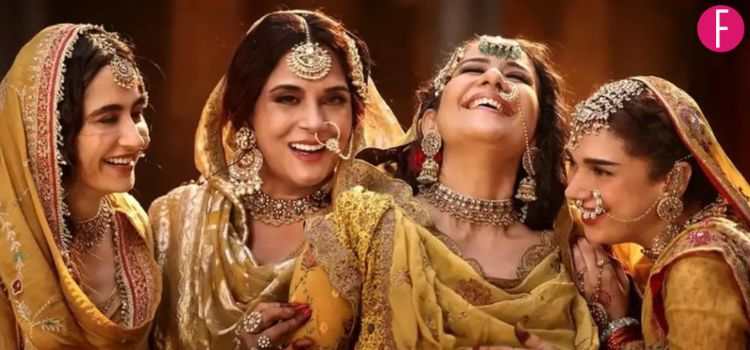
The song “Sakal Ban” gained widespread acclaim after its inclusion in Sanjay Leela Bhansali’s “Heeramandi“, beautifully capturing the spirit of Basant, Spring, and folk tradition. With vibrant aesthetics and soulful vocals by Raja Hasan, Bhansali’s interpretation added depth to its timeless allure. But, did you know that Sakal Ban has a deeply rich history dating back nearly 800 years? Join us to delve into its fascinating origins and journey through time.
The History Behind Sakal Ban
Amidst the colorful pattern of Indian folklore, Sakal Ban finds its roots in the devotion of Amir Khusro, an Indo-Persian Sufi singer, poet, and scholar. Khusro, a loyal disciple of Hazrat Nizamuddin Auliya, embarked on a quest to uplift his Pir’s spirits following the loss of his beloved nephew, Khwaja Taqiuddin Nuh.
Driven by the dedicated desire to witness his Pir smile once more, Khusro began a transformative journey that would shape the course of history. In a serendipitous encounter, he stumbled upon Hindu women adorned in yellow attire, offering mustard flowers to their deity. Inspired by their unwavering devotion, Khusro embraced their traditions and adorned himself in yellow attire, symbolizing hope and renewal. Armed with mustard flowers, he presented himself before Hazrat Nizamuddin Auliya, serenading him with the heartfelt composition of “Sakal Ban.”
The melodic strains of the song struck a chord with Hazrat Nizamuddin Auliya, evoking a radiant smile that illuminated the hearts of all present. From that moment forth, Sakal Ban became synonymous with Basant Panchami celebrations at Hazrat Nizamuddin Auliya’s shrine, an annual tradition marked by yellow attire and soul-stirring qawwalis.
Over the centuries, Sakal Ban travelled through different regions of India, absorbing diverse cultural influences and evolving into various forms. Its journey mirrored the rich tapestry of Indian history, spanning the reigns of mighty empires and the rise and fall of civilizations. Despite the passage of time, Sakal Ban remained a steadfast symbol of devotion and unity, transcending religious and cultural boundaries. Its melodies echoed through the ages, carrying with them the collective hopes and aspirations of past generations.
For those curious to explore beyond Heeramandi, there’s a wealth of alternate versions waiting to be discovered. Whether it’s a traditional rendition steeped in classical nuances or a modern interpretation infused with experimental flair, each version offers a new experience. So, why not take a moment to listen and explore these diverse renditions? Get a sneak peek below!
Heeramandi – The Bhansali Version
In Raja Hasan’s heartfelt rendition of Sakal Ban in Heeramandi, viewers are enthralled by the presence of Manisha Koirala as Mallika Jaan, Aditi Rao Hydari as Bibbo Jaan, Sanjeeda Sheikh as Waheeda, and Richa Chadda as Lajjo. Each actress, draped in vibrant shades of mustard, yellow, and gold, exudes elegance and charm, adding depth to the visual blend of the performance But do you know why they wore this color?
Women wear shades of yellow or gold in Sakal Ban as a homage to the tradition of Basant Panchami, symbolizing renewal, prosperity, and the arrival of spring. Yellow, the color of mustard flowers, holds symbolic significance, representing hope, joy, and new beginnings. It mirrors the vibrant energy of the season, combining the performance with a sense of warmth and vitality.
Coke Studio Season 8 – The Traditional Cover
In Coke Studio’s Season 8 in 2015, a traditional cover of Sakal Ban was masterfully performed by Rizwan & Muazzam Ali Khan. This version swiftly captured the hearts of the audience with its soulful and authentic portrayal. Despite its initial acclaim, the release of the Heeramandi version brought Coke Studio’s Sakal Ban to even greater prominence, attracting a wider audience and renewed interest.
Sabri Brothers – The Vintage Classic
It’s impossible to discuss an old classic without mentioning Sabri Brothers’ take on it. Around 1976, Ghulam Farid Sabri and Maqbool Ahmed Sabri performed a vintage classical version of Sakal Ban. This version holds a special place in the hearts of many, being widely regarded as the most beloved version of the song.
You might be surprised to know that a single song holds so much depth within it, right? But we’re curious, which from these three is your favorite? Take the poll & let us know below!

