

Despite the repeal of Section 89, children across Pakistan remain vulnerable to corporal punishment due to fragmented laws and outdated institutional policies.
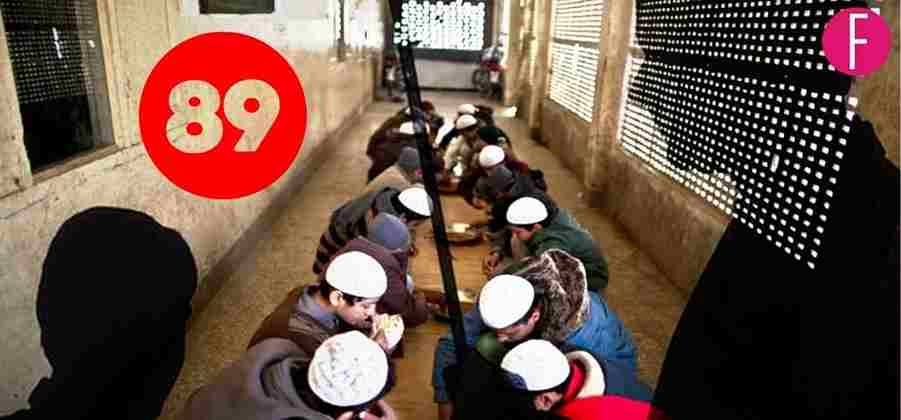
The death of 14-year-old Farhan Ayaz – a student at an unregistered madrassa in Khwazakhela, Swat – has reignited national outrage over corporal punishment in religious and educational institutions. Beaten for missing class, Farhan succumbed to his injuries after being tortured by three teachers, including the madrassa head and his son. The brutality of his death has shaken the country’s conscience – but it has also exposed the gap between legal reform and ground reality.
At the heart of this debate lies Section 89 of the Pakistan Penal Code – a colonial-era clause that for years allowed teachers and guardians to inflict physical punishment “in good faith” on children under the age of 12.
What Is Section 89 – And Why Was It Suspended?
Section 89 was long used to justify corporal punishment in classrooms, homes, and care institutions. Its vague language enabled adults to claim that beatings were administered with good intent – and walk free even when harm was evident. Whether it was a slap that cost a child his eyesight or violence that resulted in death, the law made room for the abuser’s defence.
In 2019, Zindagi Trust, led by education reformist and activist Shehzad Roy, challenged the legality of this provision. The Islamabad High Court, under Chief Justice Athar Minallah, ruled in their favor in 2020, declaring that Section 89 violated the Constitution and suspended it within the federal capital.
While this marked a major legal victory, the clause still exists in national and provincial laws, allowing corporal punishment to persist under other names.
“This Law Is Over in Pakistan” – Shehzad Roy’s Response
In the aftermath of Farhan’s death, Shehzad Roy issued a public statement reiterating the importance of ending impunity for child abuse.
“There used to be a law in this country – Section 89 – that allowed every form of cruelty to be hidden under the excuse of ‘good faith. But now, Section 89 can no longer protect anyone. This law is over in Pakistan.”
He said in a video
He urged the public not to normalize violence, even when it’s presented as light or disciplinary. “Even if someone slaps a child jokingly or causes a small injury – even if it doesn’t leave a mark – please file a complaint,” he said. “People must know that Section 89 no longer exists.”
Roy also clarified that being a teacher does not entitle anyone to use force:
“No teacher can lay a hand on children anymore. Farhan’s killer has been caught.”
The Role of Public Pressure – And Why It Still Matters
Despite legal progress, implementation remains weak. In Farhan’s case, the madrassa was sealed, and one suspect arrested, but two accused remain at large. According to the family, Farhan had previously reported abuse, yet no action was taken.
This reflects a familiar pattern: authorities only act when public pressure becomes impossible to ignore. Figures like Shehzad Roy and lawyer-activist Jibran Nasir play a key role in demanding justice. Nasir called Farhan’s killing a “reflection of toxic masculinity” and demanded systemic reform to change the violent mindset that underpins such acts.
Without media attention or activist voices, many cases never reach courtrooms. That’s why public engagement remains as important as policy.
What Still Needs to Change
Despite the repeal of Section 89, corporal punishment remains legally permissible in several settings across Pakistan. In homes, parents and guardians are still allowed to “discipline” children using physical force; a loophole that puts children at continued risk of harm under the pretext of tradition or authority. Parents must remain cautious, as such acts can quickly cross into abuse. In alternative care settings like foster homes and orphanages, only Sindh has implemented a full legal ban. The same provincial gap exists in daycares and after-school facilities, where protections for young children are inconsistent and largely absent outside Sindh.
In schools, the legal picture remains uneven. Sindh and Islamabad have enacted full bans on corporal punishment across all educational institutions, but in Punjab and Khyber Pakhtunkhwa, only government schools fall under such laws. This leaves children in private schools at continued risk of abuse without strong legal recourse. The problem is further compounded in penal institutions, where outdated laws such as the Prisons Act (1894) and the Borstal Act (1926) still permit whipping as a disciplinary tool. Judicial corporal punishment, including under Sharia law, also remains legal for minors in certain cases – highlighting the urgent need for comprehensive reform.
To ensure every child’s right to safety and dignity, Pakistan must move toward a national, uniform ban on corporal punishment across all settings – home, school, alternative care, and the justice system. Without it, children will continue to fall through the cracks of a fragmented legal framework
Farhan’s Death Should Lead to Action – Not Silence
Farhan Ayaz was not the first child to die in a place meant to educate. But his death must be the last of its kind. Pakistan can no longer afford legal ambiguity or cultural justifications for violence against children.
The courts have done their part by suspending Section 89. Now, Parliament must take the next step – a full repeal of this clause from the Penal Code and a clear, countrywide prohibition of corporal punishment in every setting.
Children deserve safe classrooms, accountable institutions, and the right to grow up without fear. Farhan deserved that too.
Sources: End Corporal Punishment, News Week Pakistan, NCRC

