

Doctor Bahu isn’t just giving us drama—it’s giving us female characters who make us a little uncomfortable. Not in the “villain exposed” or “tragic meltdown” way we’re used to, but in a quieter, more interesting way. The kind of discomfort that comes when a woman simply says no, stands her ground, or takes up space without softening the edges for anyone’s approval.
Because if you really think about it, television hasn’t given us a lot of middle ground when it comes to women. It’s usually one of two extremes: either she’s perfectly palatable soft spoken, endlessly adjusting, always choosing peace over herself or she’s framed as “strong and independent” but only by making her abrasive, outright rude, almost badtameez. Strength, in that sense, often comes packaged with a kind of harshness that feels just as one-dimensional as the overly sacrificing heroine.
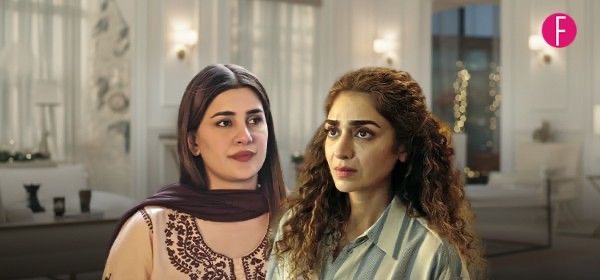
And that’s why characters like Kubra Khan’s in Doctor Bahu or Mina feel so different. They’re not trying to be agreeable, but they’re also not written to be deliberately unlikeable. When Kubra’s character refuses to skip her exam even when her father-in-law insists it’s not dramatic or disrespectful for the sake of it. She’s calm, clear, and unwavering. And somehow, that lands harder than any loud confrontation could. Similarly, Mina’s moment with Dr. Amber isn’t polished or socially “perfect” it’s awkward, a little bold, maybe even slightly uncomfortable to watch but it’s also honest in a way we don’t often see. She’s just acting on impulse, emotion, insecurity things we don’t often allow female characters to express without neatly categorizing them as either good or bad.
And maybe that’s the point. These women aren’t softened to be liked, and they’re not exaggerated to prove a point. They exist in that messy, in-between space where real people actually live where you can stand your ground without raising your voice, where you can assert yourself and still not fit neatly into a box.
And maybe that’s where the discomfort comes from. We’re not used to seeing women occupy that middle ground. The space where they’re not perfect, not polite all the time, not packaged for approval—but also not exaggerated into caricatures of defiance.
These characters don’t ask for permission to take up space. They don’t dilute themselves to make others comfortable, but they also don’t perform rebellion for the sake of it. They just exist as they are and that feels unfamiliar enough to make us uneasy.
But it’s a good kind of uneasy.
Because it pushes us to rethink what we’ve been conditioned to expect. Why does a woman simply standing her ground feel so loaded? Why do we instinctively try to label her either justify her or judge her when maybe she just… is?
If television starts leaning into this space more, we might finally get female characters who feel less like tropes and more like people. Messy, composed, awkward, assertive, restrained all at once.
But honestly, maybe we just need to build a little tolerance for that discomfort. Because if a woman calmly saying “no” without a dramatic background score or a full emotional breakdown is enough to rattle us, that’s… slightly concerning for us, not her. And let’s be real this isn’t some groundbreaking feminist revolution, it’s literally just a woman standing her ground without turning into either a saint or a villain. The bar is low. Painfully low. So if a bit of second hand embarrassment is what it takes to finally get female characters who feel like actual human beings, I think we’ll manage. After all, we’ve sat through far worse in the name of “entertainment.”

