

The Taliban’s recent family law regulation, formally titled the “Principles of Separation of Spouses”, has once again pushed Afghanistan into global scrutiny over the rapidly shrinking rights of women and girls. On paper, it is presented as a legal framework governing marriage, divorce, and separation. In reality, it reflects something far more concerning: the institutionalization of child marriage and the strengthening of a system where women’s consent is no longer central to their own lives.
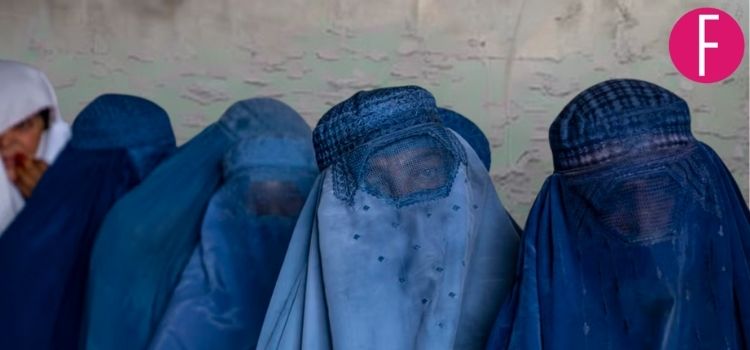
What makes this development particularly alarming is not just the existence of such provisions, but the way they are being normalized through formal law. Instead of treating child marriage as a violation, the regulation absorbs it into legality and builds procedural pathways around it, effectively shifting the conversation from prevention to acceptance. Against the backdrop of Afghanistan’s already collapsing women’s rights infrastructure, this becomes another layer in a system that is steadily removing autonomy from women and girls.
Legalizing Child Marriage Through “Option of Puberty”
At the core of this regulation lies a concept that has drawn widespread criticism: the idea that marriage contracted during childhood remains valid, and can only be questioned later under limited conditions. Rather than prohibiting child marriage, the law accepts it as a starting point and offers what it calls a post-puberty “option” to challenge it.
In practical terms, this means a girl married as a child does not have the legal ability to prevent the marriage from happening in the first place. Instead, she may attempt to contest it only after reaching puberty, and even then, only through a court process that requires approval, evidence, and often conditions that are difficult to meet in reality.
The burden, therefore, is not on preventing forced or premature marriages, but on the child to undo something that was imposed without her meaningful consent. This reverses the very idea of child protection. A system that should safeguard minors instead places them inside legally recognized marriages and then gives them conditional, delayed access to escape.
Consent, Silence, and the Erosion of Choice
One of the most controversial aspects of the regulation is its treatment of consent. The law introduces a framework where a girl’s silence after reaching puberty can be interpreted as agreement to marriage. On the surface, this may appear procedural, but in practice it becomes deeply problematic.
Silence in such contexts cannot be separated from social pressure, fear, dependency, or lack of safe avenues to resist. In a society where women face restrictions on mobility, limited access to legal institutions, and strong family control over decisions, silence is rarely a neutral act. Yet the regulation treats it as consent, effectively lowering the threshold for validating a girl’s marriage while maintaining stricter standards in other comparable cases.
This creates an uneven legal structure where boys and previously married women are not subjected to the same assumptions, reinforcing a gendered imbalance in how autonomy is interpreted. The result is a legal system that does not equally recognize consent, but instead builds different expectations based on gender and marital status.
Guardianship, Male Authority, and Controlled Autonomy
Another defining feature of the regulation is the central role assigned to male guardians in determining marriage decisions. Fathers and paternal grandfathers are granted significant authority to arrange marriages on behalf of minors, with extended family members also recognized under certain conditions.
This structure places decision-making power outside the individual entirely. A girl’s marriage becomes a matter of family authority rather than personal choice, reducing her legal identity to that of someone represented, rather than someone who represents herself.
In cases where guardians misuse this authority—whether due to financial pressure, social norms, or vulnerability such as poverty or addiction—the child has little to no practical protection. The system does not meaningfully interrogate consent at the point of marriage, but instead legitimizes guardian-led decisions as legally binding.This reinforces a long-standing patriarchal model where women and girls are positioned as dependents rather than independent rights-holders, particularly in matters that shape their entire future.
Afghanistan’s Wider Reality: A System Built on Exclusion
These legal changes cannot be understood in isolation. They sit within a much broader reality where women and girls in Afghanistan are already facing severe restrictions across education, employment, and public life. Over the past years, girls have been systematically barred from secondary and higher education, while women’s participation in work and public institutions has been heavily restricted or eliminated.
In such a context, child marriage becomes more than a legal issue—it becomes part of a survival structure shaped by economic hardship, lack of opportunity, and shrinking public space. When education is inaccessible and economic independence is removed, early marriage often becomes one of the few remaining social pathways, even if it is not freely chosen.
This is why the regulation has triggered strong criticism from human rights bodies and international observers. It is not only about marriage laws, but about what kind of society is being constructed: one where girls are pushed out of education systems early, and then legally funneled into marital structures with limited ability to resist or exit.
The Taliban’s family law regulation does more than redefine marriage procedures—it reshapes the very idea of consent, autonomy, and childhood in Afghanistan’s legal system. By recognizing child marriage as valid, weakening the concept of free consent, and strengthening male guardianship over marital decisions, it formalizes a structure where gender inequality is not incidental, but embedded.
The concern is not only the presence of these laws, but their direction. They signal a steady normalization of practices that international human rights frameworks define as harmful, particularly for girls. In a country where existing protections for women have already been dismantled, this regulation does not stand alone—it completes a pattern.
Ultimately, what is at stake is not just family law, but the broader question of whether Afghan girls are being recognized as individuals with independent rights, or as subjects whose choices are permanently mediated by others.
Sources: Irish Legal News, Amnesty International, Kabul Now
For more news, head over to our Instagram:

