

Are you currently viewing HIIT workouts all over your feed? Tempted to try them for your summer bod? Don’t get pressured into following the trend, instead, find out if HIIT is the right workout for you!
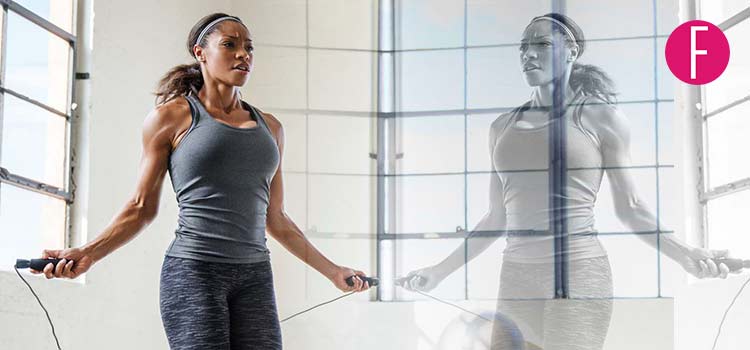
With the summer season upon us, it’s no secret we all are in some explicit or implicit stress to get fit. Be it for your travel plans, your beach days or just to flaunt your new summer dress. We get quite fixated on losing weight or just toning up ASAP. Many of us also knowingly or unknowingly end up doing HIIT workouts.
But let’s breakdown what HIIT workouts essentially are
A HIIT workout session involves intervals of exercises that range from between 10 seconds and eight minutes working your heart rate to 80-90% of its capacity and then coming to a complete rest or switching to a lower intensity exercise such as going from a sprint to a jog. This could include anything from sprinting on a treadmill to doing burpees, push-ups or squats. After each high-intensity exercise, you’ll rest for a short period of time (usually 10-30 seconds) before moving on to the next exercise. This pattern of high-intensity exercise followed by rest is repeated for the duration of the workout (usually around 20-30 minutes).
You can use your bodyweight as a form of resistance and additional equipment is usually not needed. HIIT workouts also don’t require a large space or various equipment or machines and can be ideally done at home. HIIT workouts can be integrated into various exercise formats, such as running (outdoors or on a treadmill), dancing, rowing machines, stationary bicycles, or stair climbers.
Benefits Of HIIT
HIIT can help to decrease body fat, increase strength and endurance and improve health outcomes but it is not necessarily better than other exercise formats.
Its main appeal is that it can achieve similar fitness and health benefits in a shorter duration and that it includes periods of rest.
One of the biggest benefits of HIIT is that it can help you burn a lot of calories in a short amount of time. Because you’re working at such a high intensity, your body has to work harder to recover during the rest periods, which means you’ll continue to burn calories even after your workout is over. Additionally, HIIT has been shown to improve cardiovascular health, increase muscle mass, and even boost metabolism.
You can easily customize your HIIT workouts to your preference and fitness levels. The biggest plus is you never get bored since there is so much variation available and exercises to choose from. So if you’re looking for a fun, effective, and efficient way to work out, give HIIT a try. Just be prepared to work hard and sweat a lot.
While HIIT (High-Intensity Interval Training) can be a great workout for many people, it’s not necessarily the right choice for everyone.
Here are a few reasons why you might want to avoid HIIT
If You Are A Fitness Newbie
If you’re just starting out with exercising, HIIT might be too intense for you as a beginner. It’s important to first build up your endurance and strength over time, so starting with lower intensity workouts like walking, yoga, or low-impact aerobics might be better suited.
You Get Easily Dizzy
HIIT involves exercises that increase your heart rate quick at rapid speed that causes your blood pressure to drop quickly, sometimes making you feel dizzy. If you experience this, you should take a break until you are ready to continue or shift to a low-intensity workout instead.
Susceptible To Injury Or Are Recovering
HIIT can be tough on your joints and muscles, so if you have an injury or medical condition that affects your ability to exercise, you might want to avoid HIIT. Also, if you are recovering from an injury, it would not be wise to put that kind of pressure on the injury.
You Are Suffering From Cardiac Issues
High intensity workouts can increase stress on the heart. During HIIT, your heart rate increases rapidly, which can put a lot of stress on your heart. If you have heart disease or another heart condition, this extra stress can be dangerous and may increase your risk of a heart attack or other cardiac event.
Pregnant Women And New Mothers
This is a given but even if you didn’t know, you don’t want to risk your child’s life in the womb. Expectant mothers or new mothers should only introduce a new or any kind of exercise after consultation with their doctor.
Suffering From Hormonal Problems
Women who are suffering from hormonal problems for e.g., PCOS or Endometriosis should aim for low intensity workouts as they are better at not increasing their cortisol levels which are your stress hormones and thus don’t progress their symptoms. For women with hormonal imbalances, these changes in hormone levels could further disrupt their system and exacerbate their condition.
In general, HIIT can be a great workout for many people, but it’s not the only option. It’s important to find a workout style that you enjoy and that works well for your body and fitness level.
Disclaimer: Please consult your doctor before embarking on any new workouts whether you are suffering from any of the issues above or not.
Read to find out more about women lifting weights as we dispel myths.
Resources: WellnessWinz, ERNEARME, Healthshots

