

The name that doesn’t need an introduction. James Bond doesn’t need a reboot, a trailer, or even a reminder that he exists. The name itself does the job. “Bond” is one of those rare cultural symbols that lives beyond cinema — it sits somewhere between fantasy, legacy, and global identity. Every generation thinks it discovered him, yet Bond has been reinventing himself quietly for decades, surviving changing politics, evolving audiences, and completely different eras of filmmaking.
From Sean Connery’s controlled charisma to Daniel Craig’s bruised intensity, Bond has never been one man. He has always been an idea dressed in different suits – sometimes charming, sometimes violent, sometimes emotionally distant, but always carrying the same weight of expectation: elegance under pressure.
That’s exactly why the current conversation around casting the next Bond feels less like entertainment news and more like cultural forecasting.
Why Casting Bond Feels Bigger Than Casting a Hero
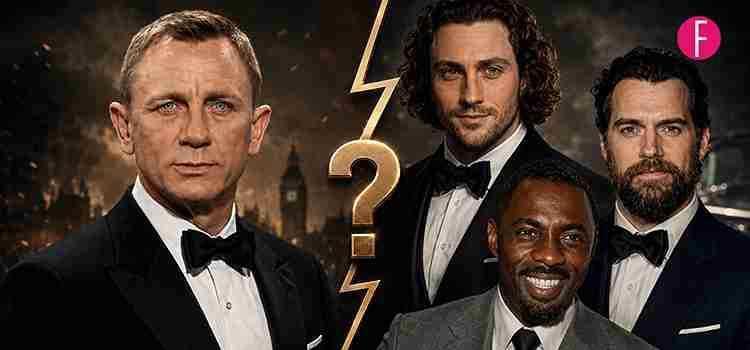
Every time a new Bond is discussed, the internet reacts like it’s an election, not a film role. Names like Henry Cavill, Aaron Taylor-Johnson, Idris Elba, and others circulate endlessly , not just because they fit the physical mould, but because each represents a different version of what people want Bond to become.
Cavill is often seen as the “safe” classic Bond – polished, old-school, almost too perfect. Aaron Taylor-Johnson carries the modern action-star energy, more chaotic and physically grounded. Idris Elba, even though he has repeatedly stepped away from the idea, remains a symbolic fan choice — not just for talent, but for what Bond could represent in a changing global culture.
And that’s where it becomes interesting: Bond casting is no longer just about acting ability. It’s about identity, representation, nostalgia, politics, and even generational taste. People aren’t just asking “who can play Bond?” — they’re asking “what should Bond be now?”
That’s a much harder question.
Because Bond isn’t just a spy. He’s a reflection of the world that produces him.
The Gen Z Question: Do We Even Care About Bond Anymore?
Here’s the uncomfortable truth: Gen Z doesn’t consume Bond the way older audiences do — at least not instinctively.For many younger viewers, Bond sits in an odd space. He isn’t part of the childhood franchise ecosystem like Marvel or Harry Potter. He isn’t bingeable like Netflix series. And he isn’t culturally ironic enough to become meme culture in the same way Fast & Furious or Mission Impossible sometimes do.
But that doesn’t mean Gen Z doesn’t care. The interest just looks different.
For film lovers, especially those who actively explore cinema rather than passively consume it , Bond becomes less about loyalty and more about curiosity. Daniel Craig’s era, especially films like Skyfall, brought a psychological edge that felt closer to modern storytelling tastes. It made Bond feel less like a perfect agent and more like a damaged system trying to keep itself together.
That version of Bond connects more with Gen Z sensibilities: flawed authority figures, emotional complexity, and characters shaped by systems rather than above them.
But at the same time, there’s a quiet distance. Gen Z doesn’t treat Bond as “sacred cinema” in the way older generations might. There’s admiration, yes — but not attachment. So the question becomes: is Bond still a cultural obsession, or is he now a legacy brand being carried forward by momentum?
The answer might be both.
What It Actually Means to Be James Bond Now
The modern Bond is no longer just about martinis, gadgets, and suave dialogue. Those are surface traits. The real expectation today is much heavier.
Whoever becomes Bond now has to carry contradictions: classic but modern, violent but restrained, global but British-coded, emotionally distant but still believable as human. On top of that, they are stepping into a franchise where the audience itself is divided — between those who want Bond to stay untouched and those who want him completely reimagined.
That tension is why casting rumours never die. Because the role is no longer just about filling a character — it’s about defining the next era of cinema masculinity itself.
Bond has always been a mirror of power. In the Cold War era, he was control and dominance. In the post-9/11 era, he became fractured and self-questioning. The next Bond will likely reflect something else entirely — perhaps surveillance culture, AI-era paranoia, or a world where identity itself is unstable.
Whoever takes it on won’t just be playing a spy. They’ll be stepping into a symbol that everyone projects their expectations onto.
The Obsession That Never Actually Ends
So why does the Bond conversation never die?
Because Bond isn’t really about casting, or films, or even storytelling. It’s about continuity. In a film world where franchises come and go, Bond is one of the few that feels permanent — even when it pauses. Every new rumour, every fan casting, every debate about “who should be Bond” is really just people negotiating with nostalgia and the future at the same time.
And maybe that’s why Gen Z still ends up pulled into it, even if indirectly. Not because Bond defines their viewing habits, but because Bond still defines what a global cinematic icon looks like.
The name remains unchanged. The face always changes. And that tension is exactly what keeps it alive. Because James Bond was never just a character.He’s an argument that never ends.
Head over to our Instagram to catch up on more!

