

The Supreme Court of Pakistan has set a crucial precedent on women’s right to Khula, ruling that a woman’s unwillingness to continue her marriage is sufficient grounds for dissolution. Here’s all you need to know.
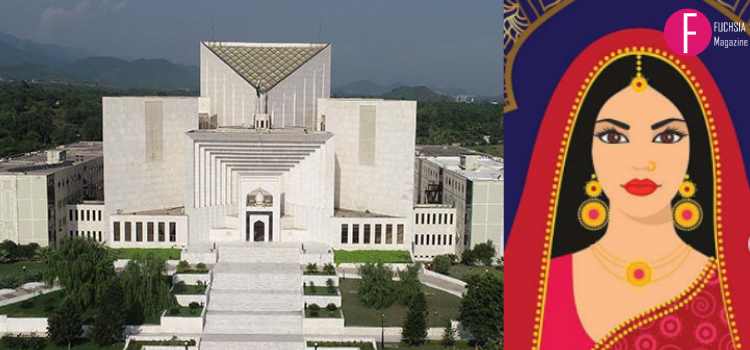
Marriage in Islam is meant to bring peace, not endurance. When that peace disappears, both partners have the right to walk away. For women, that right is called Khula — an option firmly grounded in Islamic teachings and recognized under Pakistani law. Yet, it’s often misunderstood, mishandled, or made unnecessarily complicated by social taboos and outdated court practices.
In Shariah, Khula is a woman’s right to seek separation from her husband when she no longer wishes to remain in the marriage. It’s not a privilege granted by the husband — it’s a right given by Allah. The Quran describes marriage as a bond based on mutual kindness and comfort. When that bond breaks, Khula becomes a means for a woman to end the contract respectfully and lawfully.
Importantly, Islam does not require her to justify her decision through evidence of cruelty, neglect, or wrongdoing. Her inability to continue the relationship “within the limits prescribed by Allah” is enough.
Khula in Pakistani Law
Pakistan’s legal system protects this right through the Dissolution of Muslim Marriages Act, 1939, and the Family Courts Act, 1964. A woman seeking Khula files a suit in the Family Court, where the process begins with an effort at reconciliation — a chance for both sides to resolve differences if they choose.
However, if reconciliation fails, and the woman remains firm in her stance, the court is bound to grant her Khula. It’s not meant to be a long or adversarial battle, but a structured process that upholds dignity and fairness.
The Role of Family Courts
Family Courts were designed to handle personal matters like marriage, divorce, custody, and maintenance with sensitivity and efficiency. They are expected to balance reconciliation with the right to separation — ensuring that both parties are heard, but that no one is forced to remain in an unwanted relationship.
In practice, however, women often faced resistance — being asked to “prove” their reasons or justify their unhappiness. This is exactly where the Supreme Court’s new ruling steps in to clarify what the law — and religion — already say.
What the Supreme Court Ruled
In its recent judgment, authored by Justice Ayesha Malik, the Supreme Court of Pakistan reaffirmed that Khula is an independent and absolute right of a Muslim woman. The Court clarified that once reconciliation efforts have failed and the woman expresses her unwillingness to continue the marriage, the Family Court is obligated to dissolve it — without questioning her motives or demanding proof.
Justice Malik emphasized that courts are not to judge a woman’s reasons or emotions. The test is simple: if the relationship has broken down beyond repair, Khula must be granted.
This ruling sets the narrative straight after years of confusion in lower courts, where judgments sometimes treated Khula as conditional upon “grounds” such as cruelty or incompatibility. The Supreme Court’s stance makes it clear that a woman’s decision itself — her unwillingness to remain married — is sufficient.
Second Marriage and Consent
The judgment also touched on issues surrounding second marriages. Under Pakistani law, a man cannot contract another marriage without formal permission from the Arbitration Council and the consent of his existing wife. Ignoring this requirement is not just unethical — it’s illegal, and it can form legitimate grounds for separation.
By reaffirming this, the Court reminded men that Islamic rights come with equal responsibility and procedural respect — not unilateral freedom.
Justice Ayesha Malik’s Contribution
Justice Ayesha Malik, Pakistan’s first female Supreme Court judge, has consistently upheld the importance of equality and dignity in family law. Through this judgment, she reinforced that women are not secondary participants in a marriage contract — they are equal parties with equal rights.
Her reasoning reflects a return to the essence of Islamic justice: fairness, consent, and compassion. Khula, as she highlighted, is not a rebellion against religion but an act permitted by it.
Why This Matters
The ruling isn’t just a legal milestone — it’s a reset of perception. It removes unnecessary hurdles that have long made women feel powerless in exercising a right that was always theirs.
By distinguishing between reconciliation and coercion, the Supreme Court has reminded lower courts to prioritize consent and choice. It’s a message that aligns law, faith, and fairness — and restores balance to how we understand women’s rights in marriage. At its heart, the judgment reinforces a simple truth: Khula is not an act of defiance; it’s an act of dignity.
Sources: Tribune, ResearchGate, LEX, The Honorary Society of the Middle temple
