

A major international investigation has revealed that several universities in the UK allegedly paid a private security company to monitor students and academics involved in pro-Palestinian activism. The findings have raised serious concerns about privacy, academic freedom, and the handling of political expression on university campuses.
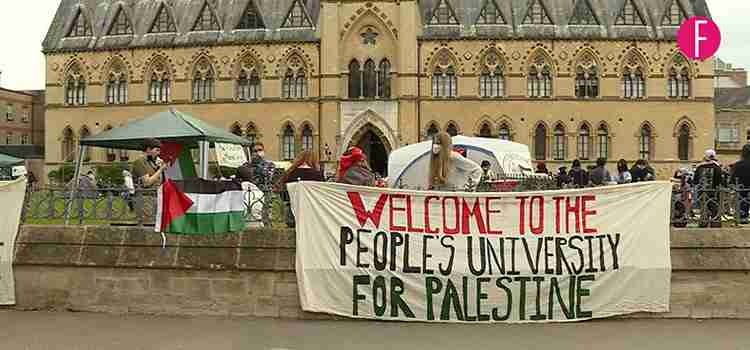
According to the investigation conducted by Al Jazeera English and Liberty Investigates, around 12 UK universities collectively paid more than £440,000 to a private intelligence firm called Horus Security Consultancy Limited. The company is reportedly run by former military intelligence officials and provides services such as online monitoring, risk assessment, and security intelligence.
The reports say the firm was used to monitor students’ social media activity, track protest movements, and produce background checks on individuals connected to campus events. This included students, academics, and guest speakers, particularly those expressing solidarity with Palestine during ongoing protests related to the situation in Gaza.
Among those reportedly monitored were a Palestinian academic invited to speak at Manchester Metropolitan University and a PhD student at the London School of Economics involved in pro-Gaza activism. The firm is also said to have flagged student protest groups and provided universities with “alerts” about planned demonstrations and political activity on campuses.
Some internal documents suggest that universities requested information specifically related to pro-Palestinian protests, while also including other activist groups in their monitoring lists. The investigation also claims that in some cases, universities received detailed reports based on publicly available social media content and open-source intelligence tools.
The universities named in the report include major institutions such as the University of Oxford, University College London (UCL), King’s College London, Imperial College London, the University of Sheffield, the University of Leicester, the University of Nottingham, and Cardiff Metropolitan University. Some of these universities have not publicly commented on the findings, while others have defended their actions.
Several universities stated that their use of external security services was intended for campus safety and risk management, especially during periods of protest activity. They argued that such monitoring helps them prepare for large demonstrations and ensure the safety of students, staff, and visitors. Some also said that the information used by the firm was publicly available and not private data.
However, the revelations have triggered strong criticism from civil rights organisations, academics, and student groups. Critics argue that monitoring students’ political views, especially through surveillance-style tools, could violate privacy rights and discourage free expression on campuses. They also warn that such practices could create a “chilling effect,” where students avoid expressing political opinions due to fear of being watched or reported.
Human rights organisations have further raised concerns about the use of counter-terrorism frameworks in relation to student activism. They argue that linking peaceful protest activity to security threats may unfairly target certain political viewpoints, particularly those related to Palestine.
The security company involved has reportedly defended its work, stating that it operates legally, ethically, and within professional intelligence standards. It claims its services are based on open-source information and are designed to help organisations manage potential risks, not to unlawfully spy on individuals.
The controversy has also drawn attention from international observers, including United Nations-linked experts, who have warned that such surveillance practices could negatively impact freedom of assembly and academic independence. Some experts have described the situation as part of a wider trend of increasing scrutiny on student activism in Western universities.
Overall, the investigation has sparked a broader debate in the UK about how universities should balance security concerns with the protection of civil liberties. While universities argue that their actions are precautionary and lawful, critics insist that the scale and nature of monitoring raise serious ethical and legal questions.
As the discussion continues, pressure is growing on universities to be more transparent about their relationships with private security firms and to clarify how student data and political activity are being handled on campus.
Sources: Al Jazeera, DAWN News, and Minute Mirror.

