

In recent weeks, global maritime security has once again turned its attention toward the waters off Somalia, where a worrying pattern of ship hijackings and attempted attacks has re-emerged after years of relative calm.
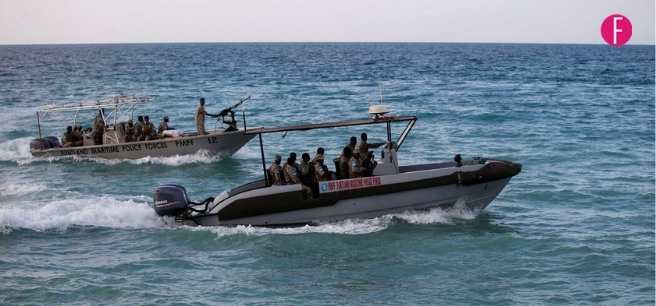
Reports of multiple vessels being seized or targeted in the Gulf of Aden and the wider Indian Ocean have raised alarms among shipping operators, naval authorities, and international analysts, who now warn that Somali piracy may be entering a renewed and more sophisticated phase. To understand why this matters, it is important to recall that Somalia sits on one of the world’s most strategically vital maritime corridors. Its coastline borders key shipping lanes linking Europe, the Middle East, and Asia through the Red Sea and the Suez Canal.
The situation is particularly alarming for the international shipping industry because it is unfolding at a time when global maritime routes are already under exceptional pressure. Major shipping lanes in and around the Middle East are facing overlapping disruptions, and risk perception across the region has sharply increased. This has created what analysts describe as a “high-tension maritime environment,” where even limited piracy activity can have disproportionate global consequences.
The three recent hijackings off Somalia
Recent maritime security reporting confirms that at least three vessels were successfully hijacked in a short span off the Puntland coastline in April 2026, marking the most concentrated resurgence of piracy activity in over a decade. The first vessel reported was the motor tanker Honour 25, carrying fuel with a crew of 17, intercepted on April 21 while transiting off Puntland. Armed men boarded the ship at sea and took control, redirecting it toward Somali territorial waters.
A second incident occurred on April 25, involving a fuel tanker operating between Berbera and Mogadishu, which was also seized by armed attackers in the same broader maritime zone. The third hijacking took place on April 26, when the cargo vessel Sward, a cement carrier en route from Egypt to Kenya, was boarded approximately six nautical miles off the Puntland coast near Garacad. The ship, carrying an international crew, was taken over and steered toward shore under pirate control.
While investigations are still ongoing, maritime analysts note that the proximity and timing of these attacks suggest coordinated activity rather than isolated opportunistic piracy, a worrying sign of organizational revival.
Why Somalia became the world’s piracy hotspot
Somali piracy did not emerge suddenly—it developed over decades of state collapse and maritime lawlessness. Following the fall of Somalia’s central government in 1991, the country’s vast coastline became effectively unregulated. With no functioning navy or coast guard, foreign fishing vessels operated freely, often illegally, while local communities claimed their resources were being exploited.
Early armed groups began intercepting vessels under the justification of protecting territorial waters. However, as economic collapse deepened and organized crime structures formed, these groups evolved into professional piracy networks.
By the late 2000s, Somalia had become the epicentre of global piracy. Between 2008 and 2011, the region saw hundreds of attacks annually, peaking in 2011 with over 200 reported incidents. Pirates typically hijacked vessels and held entire crews hostage for ransom, with negotiations sometimes lasting months. Payments often reached millions of dollars per ship, making piracy one of the most lucrative criminal industries in the region.
How the world suppressed piracy – and why it returned
The decline in Somali piracy after 2012 was the result of sustained international naval intervention, improved shipboard security systems, armed private escorts, and better intelligence coordination. These measures significantly increased the risk for pirate groups and sharply reduced successful hijackings.
However, the underlying conditions on land – poverty, weak governance, and lack of economic opportunity – were never fully resolved. As a result, piracy networks were largely dormant rather than destroyed.
Today, experts believe several factors are contributing to the renewed activity. Reduced sustained naval presence in Somali waters, combined with shifting global security priorities, has created enforcement gaps. At the same time, coastal regions of Somalia, particularly Puntland, continue to face severe economic hardship, making piracy an attractive high-risk financial option for armed groups.
Importantly, the motive remains consistent with historical patterns: piracy is primarily ransom-driven, not politically or ideologically motivated. Ships are targeted based on opportunity and vulnerability rather than nationality of crew or cargo. In this context, whether crews are Pakistani, Filipino, or otherwise is incidental – the objective is control of the vessel for negotiation leverage.
A more unstable maritime environment today
The resurgence is also occurring in a broader context of heightened maritime instability across nearby strategic waterways. Shipping routes in the wider region are experiencing increased risk perception due to geopolitical tensions affecting key chokepoints such as the Red Sea corridor and surrounding Arabian Sea routes.
While some claims circulating in public discussions suggest severe disruptions such as widespread closures of key maritime passages or large-scale blockades, the reality is more complex: major shipping lanes remain operational, but they are subject to elevated security monitoring and risk premiums. Even without formal closures, this heightened risk environment matters significantly. When maritime threat levels rise, insurance costs increase, shipping routes are adjusted, and transit decisions become more cautious. As a result, even limited piracy activity off Somalia can have outsized global economic impact.
What makes the current situation particularly concerning is not just the hijackings themselves, but the timing. Global shipping is already navigating multiple overlapping pressures, and any additional instability increases costs and complexity across international supply chains. Insurance premiums for vessels operating near Somali waters are already beginning to reflect higher perceived risk. If piracy incidents continue, even at modest levels, the financial impact could extend far beyond the region.
Somali piracy remains a ransom-based maritime crime economy, shaped by opportunity, instability, and weak coastal enforcement. While international naval cooperation previously suppressed it successfully, the current resurgence highlights how quickly dormant threats can reappear when enforcement pressure weakens and regional instability rises.
Whether this marks a temporary flare-up or the beginning of a broader resurgence will depend on how quickly global maritime forces, insurance regimes, and regional governance structures respond. For now, Somalia’s waters are once again being watched closely – not just as a local security issue, but as a potential pressure point in global trade stability.
Sources: Al Jazeera, BBC, SeaTrade Maritime News,


Comments 2