

Curious about how your favorite dramas reflect real-world struggles? Zard Patton Ka Bun, Jafaa, and Noor Jahan reveal the hidden battles women face every day.
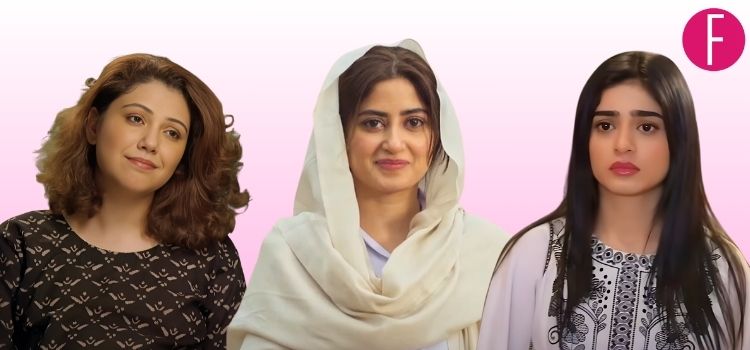
In Pakistani society, women navigate a labyrinth of challenges—from battling educational barriers and navigating societal constraints on marriage to confronting gender biases in childbirth and enduring inadequate health care. Often shrouded in cultural norms and social expectations, these issues remain hidden from everyday conversations. But what if we told you that your favorite Pakistani dramas are not just for entertainment but also shedding light on these very struggles? This article delves into how three compelling stories —Zard Patton Ka Bun, Jafaa, and Noor Jahan are offering a revealing look into the real-life issues faced by women in Pakistan.
1. Health Care Challenges in Zard Patton Ka Bun
Zard Patton Ka Bun provides a striking depiction of the disparities in women’s healthcare, especially in rural, lower income areas. Despite access to some level of care, medical negligence and inadequate and comprehensive maternal care are some issues women deal with daily. Furthermore, women are expected to give birth to multiple children, with little or no gap in pregnancies. Many often die in childbirth, leaving a family of children without a mother, and hence, often providing the husband reasons to remarry and provide a mother to his children.
The rural setting exposes the dire situation faced by women in underserved areas. The drama depicts how traditional birth attendants, lacking formal medical training, handle childbirth, often resulting in severe complications. In one poignant scene, a woman dies during childbirth due to the lack of proper medical intervention. This tragedy highlights the critical need for improved maternal health care in rural areas. The drama also introduces Dr. Nofil, a male doctor in the village who, despite his good intentions, is not a gynecologist and faces resistance from the community. His presence represents a glimmer of hope for future improvements in maternal health care, exemplified by Meenu’s aspiration to become a doctor in order to serve her community better.
2. Societal Judgment in Jafaa
Jafaa explores how society scrutinizes women intensely, especially regarding their personal choices and relationships. The drama follows Andaleeb, affectionately known as Deebu, whose college relationship with a classmate triggers familial and societal backlash. The society views Deebu’s romantic involvement as a threat to family honor, forcing her into a marriage with Dr. Numair. This dramatic turn showcases how society harshly judges women for their personal decisions. In contrast, society often dismisses a boy’s similar mistakes with less severity, and such mistakes rarely impact the family’s honor. This disparity highlights the societal pressure that punishes women for their personal choices while imposing unrealistic standards, exposing a deeply ingrained bias in how society perceives mistakes based on gender.
Post-marriage, Deebu faces further mistreatment from Dr. Numair’s mother, who continuously taunts her about her past mistakes. This treatment illustrates the broader issue of how women are rarely forgiven for their personal errors and are often subjected to prolonged judgment and blame. Despite the harsh treatment from her family and mother-in-law, Deebu’s character finds some solace in the supportive treatment from her sister-in-law and Dr. Numair. Dr. Numair, who strives to understand and support Deebu, represents a rare positive force in the drama. His efforts to build a compassionate relationship with Andaleeb offer a counter-narrative to the prevailing norms of harsh judgment and societal pressure.
3. Gender Preference in Noor Jahan
Noor Jahan addresses the pervasive issue of gender preference through the character of Safeena, who struggles with the societal bias against female children. After the loss of one daughter, Safeena faces immense pressure to produce a male heir. She however, gives birth to another baby girl, intensifying the familial and societal pressure on her. Safeena’s struggle is further complicated by the bias of her mother-in-law, Noor Jahan. Noor Jahan, despite her success as a self-made jewelry designer, exhibits a clear preference for her grandson over her granddaughter. This preference is not just a subtle bias but is actively expressed through her treatment of Safeena and her granddaughter.
Noor Jahan’s behavior underscores a significant cultural issue, where gender discrimination persists even among the educated class. Her actions reveal deeply ingrained gender bias, challenging the notion that success and modernity necessarily lead to progressive attitudes. In contrast, Safeena’s husband, Hunaid, attempts to counterbalance his mother’s discriminatory behavior by actively supporting and caring for their daughter. His efforts, alongside Safeena’s determination to empower her daughter despite the harsh treatment from Noor Jahan, illustrate a positive shift towards creating a more supportive environment for female children.
Furthermore, Safeena’s recurrent dialogues to Hunaid where she questions how her mother in-law can be so biased about daughters, being a woman herself, highlight the inherent irony in our society where women and often, mothers in-law themselves are a woman’s greatest enemy? In this case, it is Noor Jahan, Safeena’s mother in-law who is refusing to celebrate the birth of a daughter.
Have something to add? Drop us a comment to tell us which Pakistani drama you’re following avidly and why.
Catch Up More On Drama Gup With FUCHSIA
Zard Patton Ka Bun, Jafaa, and Noor Jahan offer powerful commentaries on the various challenges faced by women in Pakistani society. By addressing issues such as inadequate health care, societal judgment, and gender preference, these dramas provide a platform for important discussions and reflection. Their portrayal of these issues not only sheds light on the persistent challenges but also encourages a broader conversation about the need for systemic change and greater gender equality. Through their narratives, these dramas play a crucial role in raising awareness and advocating for a more just and equitable society.

