

Given what’s happening right now, the most important thing every Pakistani can do is educate themselves about their history. Drama Dastaan is just the right pick for you, based on our struggle for independence, it shows exactly what it meant—and what it cost—to gain our freedom.
In the middle of the night, when most Pakistanis were asleep, India attacked Pakistan. And it didn’t stop there—it went on for four long, painful days. The silence of the night was shattered, and for many, it brought back the heavy weight of history. We’ve seen this before. In 1947, when the Partition chaos and violence ripped through the subcontinent, millions were displaced, women were violated, and families were torn apart—some never reunited. Then came 1965, 1971, and Kargil. The faces may have changed, but the pain remained the same. War has never been just about borders or politics—it’s about the people who live through it, the ones who lose everything, and the generations that carry the trauma forward. This recent attack reminded us that peace is fragile and history, if ignored, always finds a way to repeat itself.
Back in 2010, Dastaan gave us a story so raw and honest, that many of us weren’t ready for it. Maybe because, deep down, we still hoped things would get better. Maybe we believed that bridging the gap between India and Pakistan was possible if we just looked away from the past. But Dastaan didn’t let us look away. It showed us the truth—ugly, heartbreaking, and necessary. It reminded us what Partition did to us and the harm that hate can still do if left unchecked. If you haven’t watched Dastaan yet, now is the time. Not just because it tells the story of our independence, but because it forces us to spot the warning signs we often miss. And maybe—just maybe—it can help us remember what’s really at stake.
Here are 3 reasons why watching Dastaan in today’s world is not just relevant—it’s necessary.
1. Dastaan – An Advocate Of The Two Nation Theory
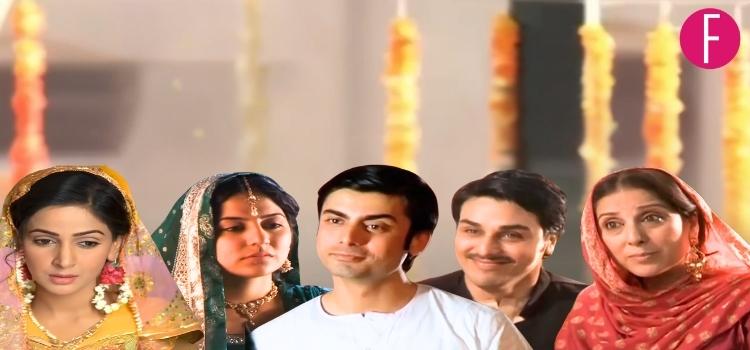
For a long time, many of us believed in bridging the gap between India and Pakistan. We said, “We’re all human, we share humanity, we’ve lived together for centuries.” But what happened just a few days ago made it painfully clear why the Two Nation Theory was created—and why Pakistan came into being in the first place. Dastaan, back in 2010, showed us this very reality. Saleem (Ahsan Khan) was one of those who openly opposed the idea of partition. He kept saying, “Hindus and Muslims are brothers, we’ve always lived together—why do we need a separate country?” But when tensions escalated during Partition, it was those very same “brothers”—the Hindus and Sikhs he trusted—who attacked his home. Saleem, along with his entire family, was brutally killed. The women in the house, including Suraiyya (Saba Qamar), who was pregnant at the time, hid on the rooftop in fear. Some, including Suraiyya, committed suicide to save themselves from what was coming. The rest were raped and murdered by the same people they once called brothers.
Bano (Sanam Baloch) and her mother, played by Samina Peerzada, were the only ones left alive. Two of Saleem’s closest Hindu friends came to “rescue” them. But even that moment shattered all trust—because one of them tried to rape Bano. She was thankfully saved by the other. Later, those same Hindus and Sikhs refused to give Bano and her mother shelter—not even for a single night. They eventually joined a caravan headed to Pakistan, only for it to be attacked by Hindu and Sikh mobs. The women were gang raped and slaughtered—again, by the same people they once called brothers.
And now, when the Pahalgam attack happened, every Pakistani condemned it and felt truly sorry. But when India attacked Pakistan in the middle of the night and killed a 7-year-old child, most of the people on the other side of the border celebrated it. They called it a “win,” justifying their actions by claiming to kill a “terrorist.” That’s when it hit us—this is exactly why Jinnah demanded a separate homeland for Muslims. This is what the Two Nation Theory was warning us about. And once again, sadly, it proved itself right.
2. Based On A Novel That Tells Real Stories
Dastaan is based on the heart-wrenching novel Bano by the legendary Razia Butt, a writer who didn’t just write fiction—she captured history through the eyes of those who lived it. Bano isn’t just a story; it’s a collection of silent screams, broken dreams, and truths too painful to ignore. The novel itself is inspired by real events that happened during and after Partition. Every heartbreak, every betrayal, every ounce of suffering you see in the drama—most of it actually happened to someone, somewhere, in those dark days. The violence, the displacement, the shattered identities—none of it is exaggerated, because the reality was far worse. Samira Fazal’s screenplay transformed Razia Butt’s raw, emotional storytelling into something that feels so real, it stays with you long after the credits roll. When you watch Dastaan, you’re not just watching a drama—you’re reliving a piece of history through the eyes of those who survived it.
3. The True Cost Of Independence
Dastaan doesn’t just tell a story of freedom—it shows you the price people had to pay for it. When Pakistan came into existence, it wasn’t just a celebration of independence; it was a painful, bloody struggle that left scars on millions of lives. Over 1 million people were killed in the war for independence. Entire families were torn apart, homes were burned, and villages were destroyed in a matter of days. In the chaos of migration, more than 75,000 women were raped, and countless children were lost forever. The world stood by as the innocent paid the ultimate price for something as basic as survival. This wasn’t a war for borders or governments—it was a fight for the right to live, to exist in a place where people could be free from the violence of hatred.
For generations like ours, who’ve grown up in the relative peace of this homeland, it’s hard to truly understand what it took to create Pakistan. The sacrifices made, the bloodshed that stained the land—it’s not something we can easily grasp. We didn’t feel the fear of being attacked on the streets, or the anguish of losing everything in an instant, or fleeing the life we had known, and exchange it for something entirely new, uncertain and unknown. But Dastaan brings all that pain to the forefront. It reminds us that freedom doesn’t come without sacrifice, and that the cost of independence is written in the blood of those who fought for it. Watching it, we are left with a reminder: the freedom we have today was bought at a price many could not survive to see.
I saw a tweet the other day after the May 7 attack that hasn’t left my mind. Someone wrote, “My dadi said: main aik aur jung nahi dekh sakti.” And in that one line, generations of pain came flooding in. Because only those who have lived through war know what it really means. War isn’t just the sound of missiles or breaking news. It’s the sound of your mother crying quietly in a corner. It’s the fear in your father’s eyes as he turns off the lights and tells you to stay away from the window. It’s not something that stays at the border—it crosses over. It walks right into your living room, sits at your dinner table, and breaks the rhythm of ordinary life. And once it enters, it never really leaves. And in the early hours of May 7, it felt like the present was becoming too much like the past.
So, it’s our responsibility now. We must advocate for what is ours, as it was given to us by the sacrifices of our ancestors. It’s our turn to carry that legacy forward and take Pakistan to new heights. Through education, hard work, and dedication, we must make Pakistan proud. We should feel proud of our nation because what we have today is something our past generations gave their lives for. The future of Pakistan lies in our hands, and it’s up to us to honor the struggles of those who came before us by building a brighter, stronger tomorrow.
Dastaan, a 2010 masterpiece that aired on HUM TV, was a collaborative triumph. Written by Razia Butt (novel) and adapted for television by Samira Fazal, it was brought to life by the masterful direction of Haissam Hussain. The stellar cast, featuring Fawad Khan, Sanam Baloch, Saba Qamar, Ahsan Khan, Samina Peerzada, Asma Abbas, Saba Hamid, Mehreen Raheel, Daniyal Raheel, Humaira Ali, Sangeeta, Babrik Shah and more delivered unforgettable performances

