

Nine passengers traveling from Balochistan to Punjab were brutally killed late Thursday night in the Sardhaka area at the inteception of Zhob and Loralai districts, triggering a wave of national outrage and renewed calls for decisive action against terrorist groups operating in the region.
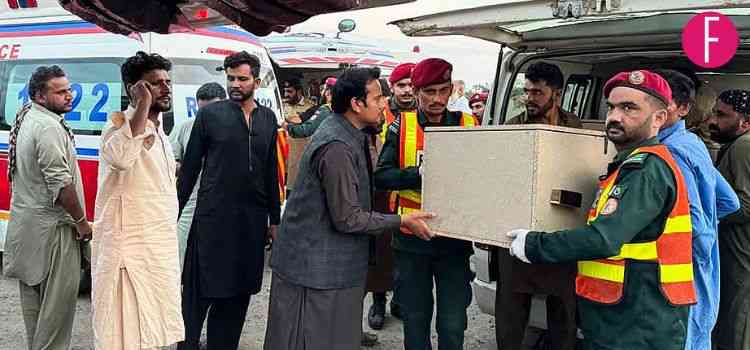
According to local officials, unidentified gunmen intercepted two passenger buses, forced passengers off after checking identity cards, and selectively killed nine individuals—all hailing from Punjab. Their bullet-riddled bodies were later discovered in a nearby mountainous area and transported to their hometowns Friday morning.
Balochistan Chief Minister Sarfaraz Bugti, while chairing a high-level security meeting in Quetta, strongly condemned the killings and said there would be “no mercy” for those responsible. “These cowards who murder innocent civilians will be hunted down to the last man,” he declared. The Inspector General of Police briefed the CM on the incident, and a full-scale operation against suspected terrorist networks is reportedly underway.
Bugti labelled the attack as an “unforgivable crime” and reiterated the province’s resolve to dismantle the terror infrastructure that has plagued Balochistan for years.
Officials say the killings bear the signature of the banned Balochistan Liberation Army, a separatist group known for targeting non-Baloch civilians, which has since claimed responsibility for the attack, according to the army.
Rind also noted that coordinated attacks were attempted in Mastung and Kalat on the same day but were foiled by security forces. However, there was no prior specific threat alert for the Sardhaka area.
Prime Minister Shehbaz Sharif and President Asif Ali Zardari both issued strong statements condemning the attack, vowing that the blood of innocent civilians would not go unavenged. “This was not just an act of terror but a targeted killing based on ethnicity,” said the Prime Minister. “We will respond with full force.”
Interior Minister Mohsin Naqvi echoed those sentiments, blaming “Indian-sponsored elements” and pledging that such acts of violence will be met with uncompromising action.
This is the latest in a string of attacks in Balochistan where Punjabi laborers and travelers have been singled out and killed. Earlier this year, seven people were gunned down in a similar fashion in Barkhan, and numerous other attacks have targeted workers from Punjab across Gwadar, Harnai, and Musakhail.
As Balochistan continues to battle complex insurgencies, the growing frequency and brutality of ethnic targeting has raised alarm across the country. Rights groups have also voiced concern, with the Human Rights Commission of Pakistan urging the government to seek political solutions to end the cycle of violence and protect civilians, regardless of ethnicity or origin.
The victims’ families, meanwhile, mourn with unanswered questions and renewed fears. One survivor, who lost two brothers in the incident, told local media: “We had no enmity, no political ties. We were just returning home for a funeral. Why did they have to die?”
Sources: Dawn, DW, Al Jazeera, Geo News

