

The BDS Movement has been on our radar for a while. Just recently, it announced the importance of the upcoming days, and this is what you should know.
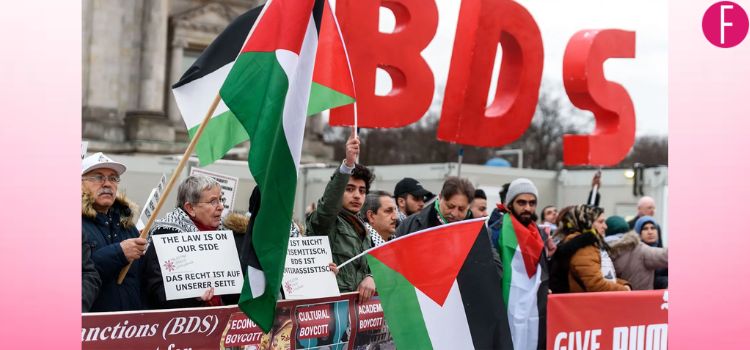
In 2024, the Boycott, Divestment, and Sanctions (BDS) movement surged unprecedentedly, leaving a ripple effect across global markets and political discourse. From major corporations severing ties with controversial entities to high-profile boycotts reshaping consumer behavior, the BDS campaign became more than just a movement—it became a force to reckon with. This year highlighted the power of grassroots activism, proving that coordinated action can influence decisions at the highest levels and challenge complicity in human rights abuses. Let’s take a closer look at the milestones BDS achieved and its worldwide impact.
The Boycott, Divestment and Sanctions movement is a Palestinian-led movement founded in 2005. It advocates for non-violent means to pressure Israel to comply with International Law and human rights. BDS calls for an end to Israel’s occupation of Palestinian territories, equal rights for the Palestinian citizens and the right of return for refugees.
Over the years, BDS has garnered immense support and an impact, especially economically for international corporations and organizations, which are as follow:
A Pressure to Impose Sanctions on Israel
Governments hold the legal obligation to halt complicity in violations of international law. On September 18, 2024, the UN General Assembly voted by 124 states to impose sanctions on Israel, aligning with historic rulings by the International Court of Justice. It is also important to advocate for an effective and comprehensive arms embargo to prevent the use of military resources and equipment in worsening the ongoing human rights violations.
BDS Targets and Boycott List
The year 2024 marked a turning point for the BDS movement (Boycott, Divestment, and Sanctions), as it surged in global recognition and influence. From pushing corporations to sever ties with oppressive regimes to reshaping consumer behavior and public opinion, the movement’s impact is undeniable. Here’s a breakdown of how BDS has gained ground and the tangible effects it has had so far.
1. AXA
The French insurance company Axa has reportedly divested $20 million from three Israeli banks accused by the United Nations of supporting illegal settlements in the occupied West Bank, according to advocacy group Eko.
In a report published on Wednesday, Eko detailed Axa’s “clear, fast, and intentional divestment” from Bank Hapoalim, Bank Leumi, and Israel Discount Bank. Between September 30, 2023, and June 24, 2024, Axa sold 2.5 million shares in these institutions following sustained pressure from pro-Palestine activists.
The report also noted that Axa has not reinvested in the First International Bank of Israel or Mizrahi-Tefahot Bank since at least December 31, 2022. These banks were previously highlighted in a 2019 Eko report accusing Axa of financial involvement in alleged Israeli war crimes.
2. Puma
The global Boycott PUMA campaign has announced that PUMA will officially end its sponsorship of the Israel Football Association (IFA) on December 31, 2024.
The campaign, which began in 2018, was launched after 215 Palestinian sports teams urged the German sportswear brand to sever ties with the IFA. The association includes teams from illegal Israeli settlements built on stolen Palestinian land and has worked alongside the Israeli government to sustain these settlements.
Over five years, activists worldwide organized global action days, staged protests at PUMA offices and stores, and pressured the company through persistent campaigns. These efforts saw sports teams, athletes, and artists cutting ties with PUMA, while retailers stopped stocking its products. As PUMA defended its sponsorship—despite Amnesty International and other organizations labeling the Israeli regime as apartheid—campaigners flooded its inboxes, jammed phone lines, and hijacked its online presence, calling out the company’s stance as deceptive and hypocritical.
3. McDonald’s
Global sales at McDonald’s outlets open for at least a year dropped by 1.5% between July and September, marking the largest decline in four years and more than double analysts’ predictions. This followed a 1% decrease in the April to June period, marking the first consecutive quarterly declines since the peak of the Covid crisis in 2020.
The company has faced boycotts and protests over its alleged pro-Israeli stance and financial ties to the country. In April, McDonald’s took back control of its 30-year-old Israel franchise from Alonyal, which operates 225 restaurants and employs over 5,000 people. The controversy intensified after Alonyal announced, following the October 7 Hamas attack, that it would donate free meals to the Israeli military.
5. KFC
Kentucky Fried Chicken (KFC), the American fast-food chain, has shut down over 100 outlets in Malaysia following a months-long boycott campaign over U.S. support for Israel’s war on Gaza.
According to Chinese media reports, QSR Brands, which operates the KFC franchise, temporarily closed 108 out of its 600 outlets in the country, with most closures occurring in the predominantly Muslim Kelantan state.
In a statement, QSR Brands attributed the closures to “challenging economic conditions” and assured employees the option to transfer to busier branches. The company emphasized its positive contribution to Malaysia’s economy, noting it provides job security for 18,000 workers, 85% of whom are Muslim.
6. Carrefour
Carrefour announced the closure of all its branches in Jordan as of November 4, 2024, citing the decision to cease operations amid an intensive boycott campaign led by the BDS movement. The campaign targeted Carrefour for its alleged affiliations with Israeli entities and perceived complicity during the Gaza conflict.
7. Starbucks
Starbucks has reportedly closed dozens of stores across Malaysia amid a widespread boycott of brands perceived as pro-Israel, driven by the country’s and global community’s response to the conflict in Gaza.
According to Malaysian news outlet The Rakyat Post, 50 out of Starbucks’ 408 stores nationwide have been temporarily shut down. While the closures were not explicitly linked to the anti-Israel boycott, it was acknowledged that the decision is tied to ongoing unrest in the Middle East.
Berjaya Food, the company operating Starbucks in Malaysia, noted in a report published in August that the “significantly lower revenue and pre-tax loss” in the recent quarter were primarily due to public sentiment surrounding the conflict in the region.
A Pressure to Impose Sanctions on Israel
Governments hold the legal obligation to halt complicity in violations of international law. On September 18, 2024, the UN General Assembly voted by a majority of 124 states to impose sanctions on Israel, aligning with historic rulings by the International Court of Justice. It is also important to advocate for an effective and comprehensive arms embargo to prevent the use of military resources and equipment in worsening the ongoing human rights violations.
UN’s Suspension of Israel
BDS and its allies also advocate for Israel’s suspension from international bodies, including the UN, FIFA, and the Olympics, to enforce accountability for its ongoing violations of international law. Despite joining the UN in 1949 with commitments to uphold UNGA Resolution 194, Israel continues to breach these obligations through actions in Gaza, the West Bank, and beyond. Removing Israel from global organizations sends a strong message against its systemic human rights violations.
BDS movement highlights the following days as crucial for support and movement for the Palestinian cause.
International Day of Commemoration and Dignity of the Victims of Genocide
This day, which is 9th December honors victims of genocide and highlights the global responsibility to prevent such atrocities. Following the events of October 7th, 2023, the years long conflict escalated to unprecedented levels. Reports from human rights organizations, including Amnesty International, have described the situation as genocide, citing systematic targeting of civilians, enforced displacement, and denial of basic necessities to over 2.3 million Palestinians.
The BDS movement has condemned these actions and highlighted the complicity of international powers in failing to impose accountability measures. It echoes calls by Amnesty International and others for targeted sanctions on Israel, emphasizing the urgency of international action to halt the atrocities.
UDHR
10th December marks the Universal Declaratio of Human Rights in 1948, which celebrates principles, equality, dignity and justice. The BDS movement underscores the violation of such principles. It critiques the violation and denial of human rights to Palestine under the ongoing genocide, occupation and apartheid and advocates for global solidarity to address these violations.
Every action we take supports the broader aims of the BDS movement, which strives for justice, equality, and human rights for Palestinians. By holding governments accountable, mobilizing communities, and pressuring institutions, we can challenge systemic injustices and work toward a fair and lasting resolution. Now is the time to join the movement and stand for human dignity.

