

Behind the closed doors of many married couples seemingly blissful happily ever after, a horrifying reality persists – marital rape. While the world celebrates advancements in human rights, a legal loophole allows a partner to become their spouse’s worst nightmare.
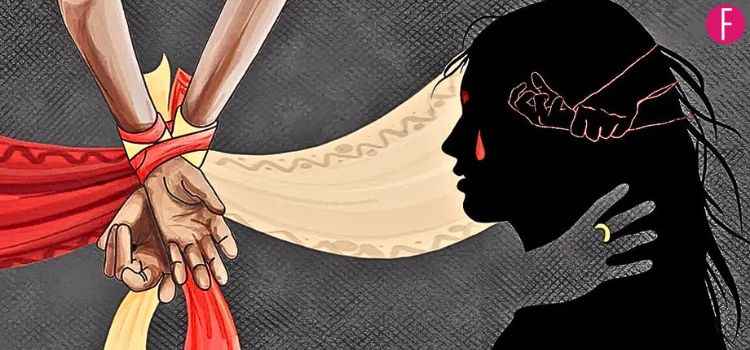
In the shadows of a deeply religious and patriarchal society, the issue of marital rape resembles a silent scream echoing through countless homes. Here, where the sanctity of marriage is revered, the brutal reality of forced sexual relations within wedlock exposes a conflict between religious interpretations, evolving moral compasses, and a legal system struggling to keep pace.
The Religious Labyrinth: Consent Lost in Translation
Traditional interpretations of Islamic law cast a long shadow over the discourse on marital rape. Some scholars cite specific Quranic verses, arguing that marriage implies perpetual consent to sexual relations. This viewpoint, however, is far from monolithic. Progressive interpretations emphasize the importance of a wife’s willingness and the Quran’s overall emphasis on mutual respect within marriage. They argue that verses urging good treatment of wives cannot be reconciled with the idea of forced intimacy. The concept of marital rape is further obscured by the lack of a direct Arabic term for it. This linguistic gap is often used to downplay the issue, dismissing it as a Western construct, inapplicable in Islamic societies. However, this argument ignores the historical context of Islamic jurisprudence, where jurists condemned acts that would be classified as marital rape today.
The Moral Imperative: A Shift in the Sands of Societal Norms
Morally, the tide is turning. The concept of marital rape is increasingly seen as a violation of a woman’s fundamental right to bodily autonomy. The idea of marital bliss built on coercion is met with growing public disapproval. Consent, once a peripheral concept, is now recognized as the cornerstone of healthy sexual relationships, regardless of marital status. This shift in moral perspective finds voice in social media activism and public discourse. Survivors’ stories, once shrouded in shame, are finding a platform. Documentaries and dramas are challenging societal norms, sparking conversations about a topic long deemed taboo. Women’s rights organizations are at the forefront, demanding legal recognition and support services for victims.
The Legal Quagmire: A Broken System in Need of Repair
In Pakistan, Section 6 of the Hudood Ordinance defines rape as a man engaging in sexual intercourse with a woman “against her will and consent.” Despite this legal definition, the number of reported cases remains very low due to societal norms that view it as a private matter between spouses, the stigma surrounding the issue, and religious influences. Section 375, the primary legislation concerning rape, makes no mention of marriage. This issue is further exacerbated by a patriarchal society where women are often seen as mere objects of pleasure.
While a 2006 amendment removed a husband’s exemption from rape charges, the law itself doesn’t explicitly mention marital rape. This ambiguity creates challenges. Prosecutors can attempt to use existing provisions like “unnatural offenses” as seen in a recent Sindh High Court decision, but nationwide applicability is uncertain. Legislative reform to explicitly criminalize marital rape is crucial to strengthen legal protections for victims and ensure clear prosecution pathways. The 2021 Sindh High Court decision recognizing marital rape as a crime under existing provisions offered a beacon of hope, but its nationwide applicability remains unclear. Legislative reform explicitly criminalizing marital rape is urgently needed. This requires political will and a willingness to challenge entrenched interpretations of Islamic law.
Beyond Legislation: A Multifaceted Approach
The fight against marital rape goes beyond legal reform. A multi-pronged approach is needed to dismantle the walls of silence and build a society where women’s bodily autonomy is respected within marriage. This includes:
- Religious Reinterpretation: Scholarly discourse needs to challenge interpretations that condone marital rape. Highlighting verses emphasizing respect and a wife’s agency can provide a stronger moral foundation for legal reform.
- Education and Awareness: Public education campaigns are crucial to raise awareness, dispelling myths and normalizing conversations about consent within marriage.
- Support Services: Establishing accessible hotlines, shelters, and trauma-informed counseling can provide a lifeline for victims and empower them to seek justice.
Reaching the Masses, Where It Matters Most!
In recent years, some Pakistani dramas have steered the conversation towards marital rape in a sensitively charged narrative, one such project aired on HUM TV in 2021 – Qissa Meherbano Ka starring Mawra Hocane and Ahsan Khan shed light on the issue, sending out a clear message, consent of a woman even when she has entered into a marital relationship is paramount. The drama, penned by Fakhra Jabeen and directed by Iqbal Hussain, triggered multiple conversations – a step, no doubt, in the right direction.
Breaking the Silence: A Collective Responsibility
Marital rape is a complex issue with deep roots. Addressing it requires not just legal reform but also a shift in religious interpretations, societal attitudes, and the legal system’s capacity to uphold women’s rights. Breaking the silence requires open discussions, challenging the status quo, and holding perpetrators accountable. The fight for justice for victims of marital rape is a fight for a future where all spouses are treated with dignity and respect, within the confines of marriage and beyond.
sources: Dawn & Canadian Lawyer

