

What begins as celebration often ends in mourning. In Pakistan, aerial firing has become a given manner of celebration at Independence Day festivities, weddings, and even political rallies but every year, it leaves behind funerals, grieving families, and a tally of lives lost to stray bullets. This year in Karachi alone, three people were killed, including a seven-year-old girl watching fireworks from her balcony, while more than a hundred were injured on the eve of Independence Day. What many still dismiss as “fun” continues to claim innocent lives.
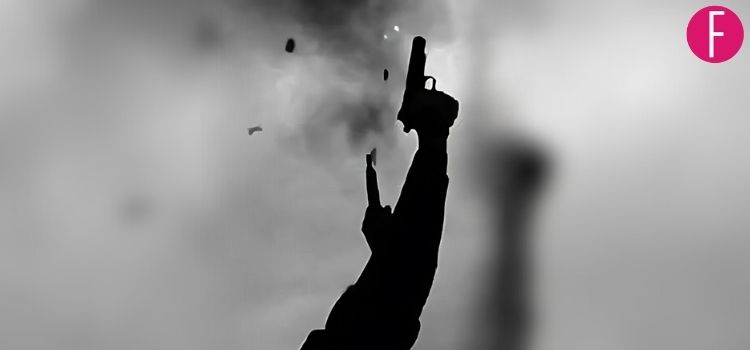
Each year tells a similar story. In 2023, at least ten people, seven of them children, were killed, and more than 200 injured across the city by stray bullets. The victims were not participants, not the ones firing shots into the air, but bystanders, families, children. And that is the cruel truth behind aerial firing: it turns festivals into funerals and it is never harmless.
The Law and Its Loopholes
Aerial firing is not a grey area under Pakistani law, it is clearly illegal. Section 337-H(ii) of the Pakistan Penal Code (PPC) deals with negligent acts that endanger human life, directly applicable to celebratory gunfire. Offenders can face imprisonment, fines, or both. In cases where aerial firing leads to death or serious injury, charges can escalate, and in situations linked to terror or sectarian violence, the Anti-Terrorism Act can also apply.
Beyond that, Pakistan’s Arms Ordinance, 1965 requires licenses for all firearms. Carrying a weapon without one is an offense, and open display or carrying of arms is prohibited in cities and public spaces. Gun-free zones are mandated around schools, courts, and government offices. On paper, these laws seem strict. In practice however, weak enforcement and cultural acceptance mean aerial firing often goes unpunished or treated lightly. Even when arrests are made and weapons are seized, the deterrent effect is minimal because the very next celebration witnesses the same reckless gunfire.
A Culture That Costs Lives
The persistence of aerial firing is not just a failure of enforcement, but of mindset. Too many people still see it as tradition – a way to express joy at a wedding, to mark a national holiday, or to display pride. In some areas, it is even linked with honor and masculinity. Yet each bullet fired upward must come down, often with deadly force.
Doctors, rights groups, and the media have raised alarms for years, urging stronger legislation and zero-tolerance policing. Calls have been made to make aerial firing a cognizable offense – allowing police to act without waiting for complaints – and to treat such cases as attempted murder when injuries occur. But without a cultural shift, laws alone will not solve the problem.
How many more children must be buried before we stop calling this “celebration”? How many more Independence Days must families spend in hospitals instead of at festivities? The truth is simple: aerial firing is not tradition, not culture, not celebration. It is recklessness with a gun – and until we, as a society, call it out for what it is, the line between joy and tragedy will remain fatally blurred.
Sources: Dawn, Tribune, Khaleej Times.


Comments 1